
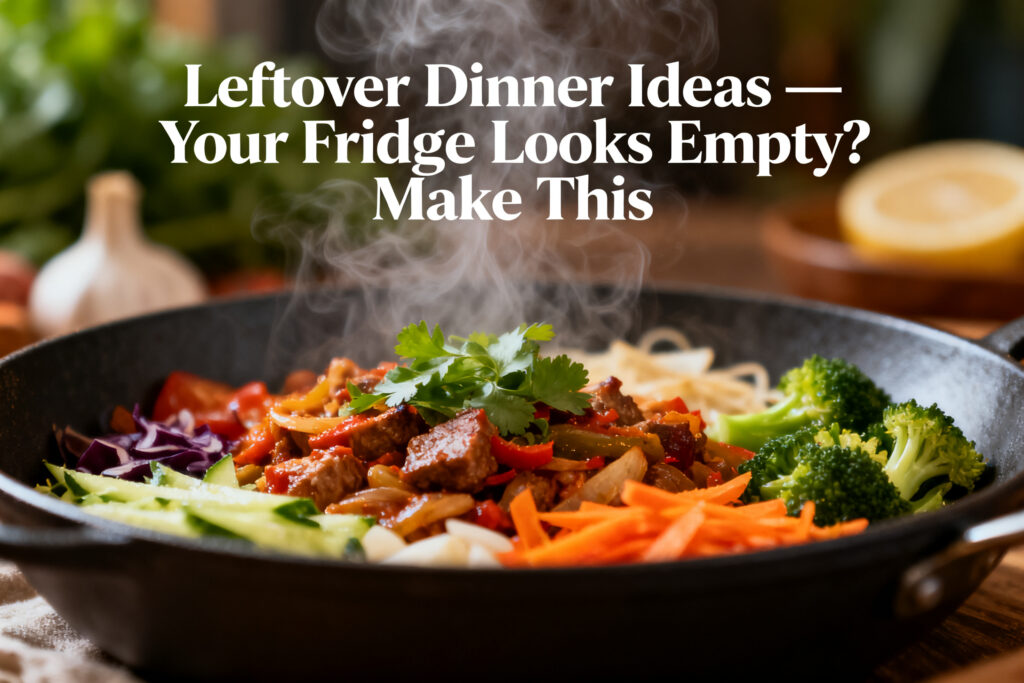
You know that moment when you open the fridge and it looks like there’s nothing to eat? A few lonely vegetables, half a chicken breast, maybe some rice from two nights ago.
Good news: that’s dinner waiting to happen. This simple “clean-out-the-fridge” skillet turns scraps into something cozy, colorful, and surprisingly satisfying. It’s fast, flexible, and doesn’t require a special trip to the store.
Use what you have, waste less, and eat well.
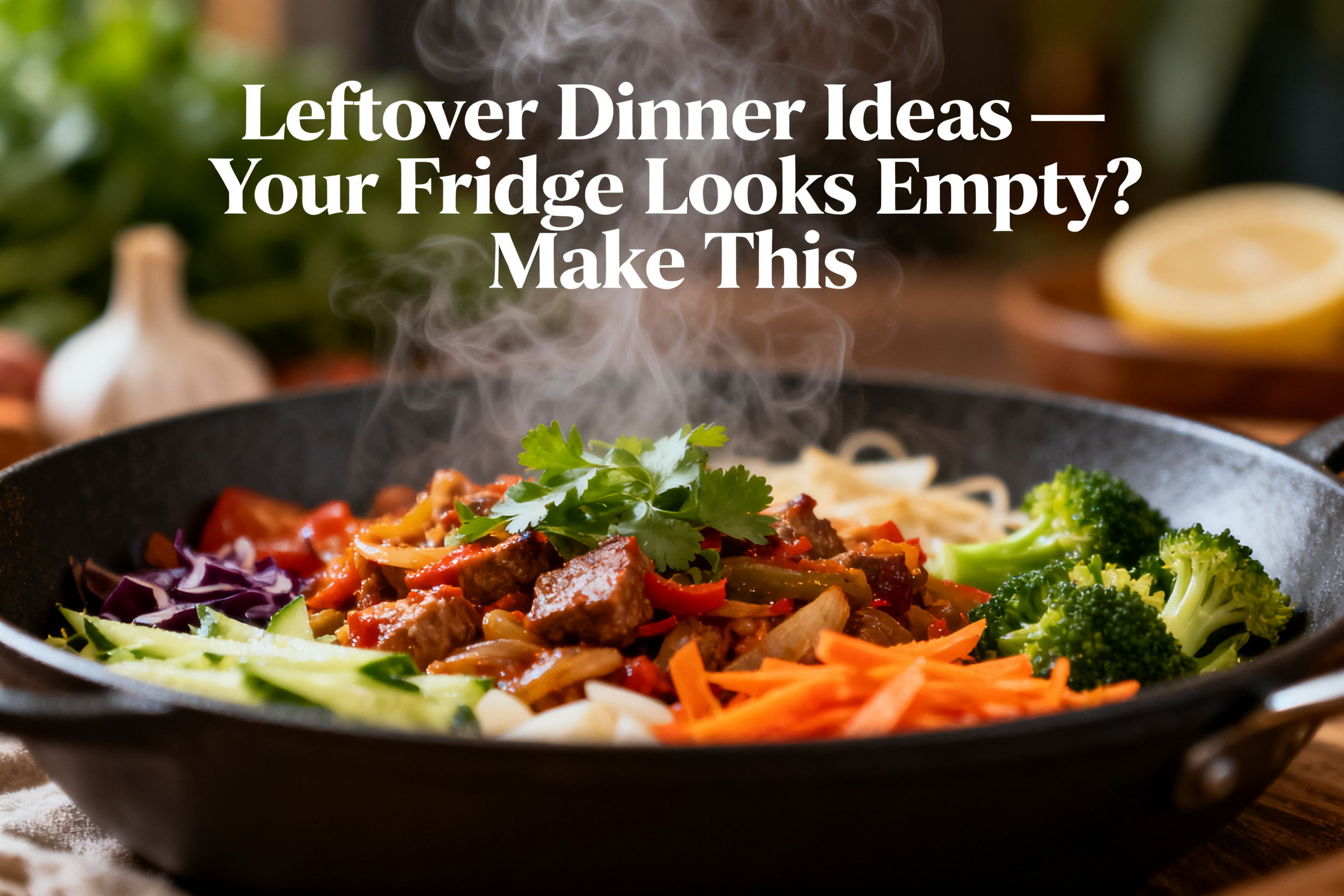
Leftover Dinner Ideas — Your Fridge Looks Empty? Make This - A Flexible, Flavor-Packed Skillet
Ingredients
Method
- Prep what you’ve got: Chop leftover protein and vegetables into bite-size pieces. If using leafy greens, chop them roughly. Break up any clumpy rice or pasta so it reheats evenly.
- Make a quick sauce: In a small bowl, mix soy sauce, vinegar, and honey or brown sugar. Add sesame oil if you have it. Taste and adjust—more vinegar for brightness, more honey if you like a hint of sweet, a splash of water if it’s too salty.
- Heat the pan: Set a large skillet over medium-high heat. Add oil and let it get hot until it shimmers.
- Sauté aromatics: Add onion and cook 2–3 minutes until softened. Add garlic (and ginger, if using) and cook 30 seconds until fragrant. Don’t let it burn.
- Cook sturdy veggies first: Add firmer vegetables like carrots, broccoli, or mushrooms. Season with a pinch of salt and pepper. Stir-fry 3–5 minutes until they begin to soften and get a little color.
- Add quick-cooking veggies: Toss in softer vegetables like zucchini, peas, corn, or greens. Cook 2–3 minutes, just until crisp-tender.
- Warm the protein: Push veggies to the side. Add a touch more oil if the pan is dry. Add your leftover protein and let it heat through, 2–3 minutes. If using beans or tofu, let them sear a bit for texture.
- Fold in the starch: Add rice, pasta, or potatoes. Break up clumps and toss everything together. Cook 2–3 minutes so it gets a little toasty and absorbs flavor.
- Sauce it up: Pour in the sauce. Toss to coat. Cook another 1–2 minutes until everything is glossy and hot. Taste and adjust—add a squeeze of citrus, more soy for salt, or a dash of hot sauce for heat.
- Finish and serve: Turn off heat. Top with herbs, green onions, sesame seeds, cheese, or a dollop of yogurt. Serve straight from the skillet.
What Makes This Recipe So Good
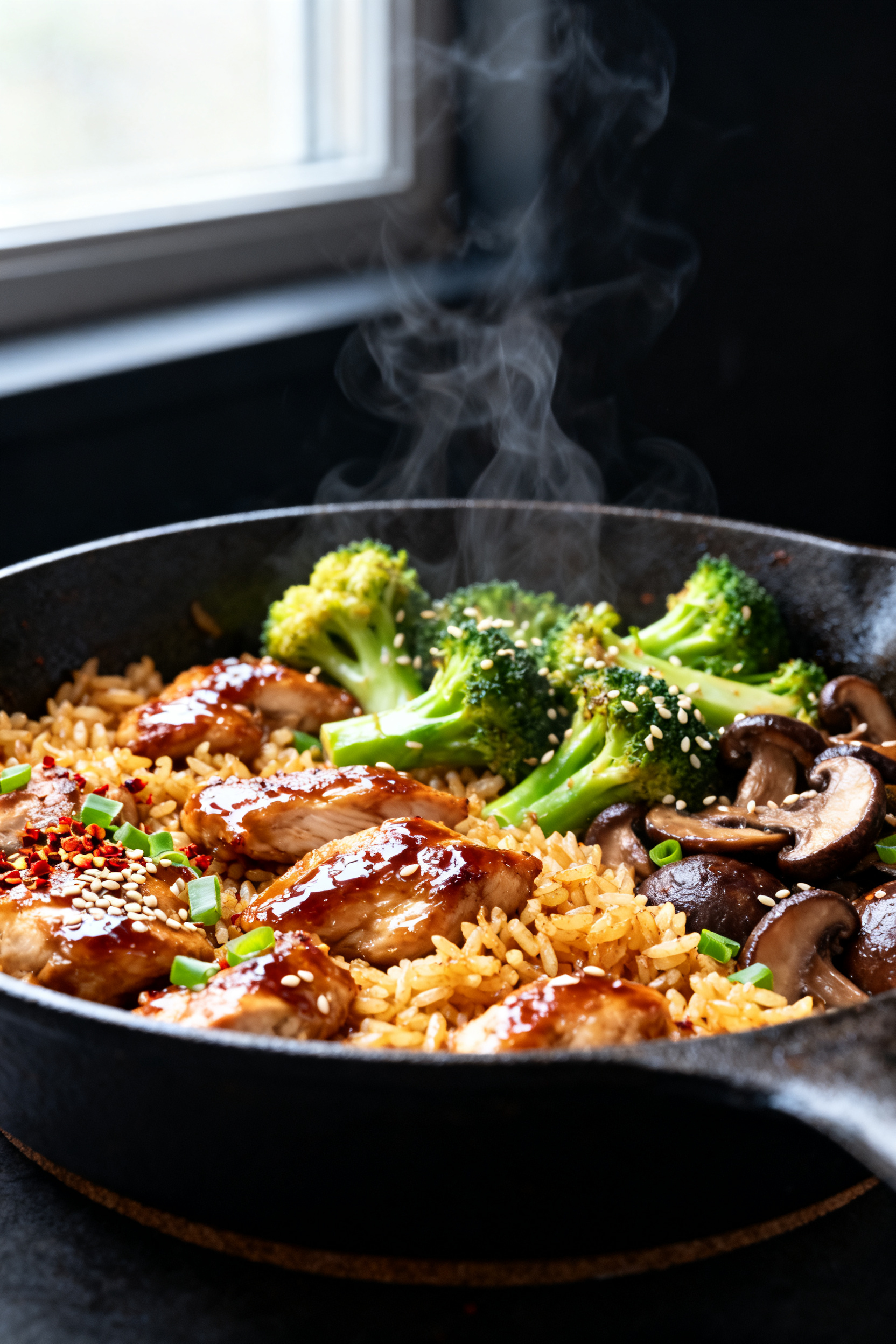
- Ultra-flexible: Works with nearly any mix of protein, veggies, and carbs. No exact measurements needed.
- Fast and one-pan: Cooks in about 20 minutes in a single skillet, start to finish.
- Budget-friendly: Saves your leftovers and your grocery bill.
- Big on flavor: A simple sauce ties everything together, so even random bits taste cohesive.
- Balanced and hearty: Get protein, fiber, and carbs in one warm bowl.
Ingredients
Use this as a guide. Mix and match based on what’s in your fridge.
- Leftover protein (1–2 cups): Cooked chicken, steak, pork, tofu, tempeh, sausage, beans, or lentils.
- Vegetables (2–3 cups, chopped): Bell peppers, onions, carrots, broccoli, mushrooms, zucchini, spinach, kale, peas, corn, or cabbage.
- Cooked starch (2–3 cups): Rice, quinoa, pasta, roasted potatoes, farro, or couscous.
- Aromatics: 1 small onion or 2–3 green onions, 2 cloves garlic (or 1 tsp garlic powder), 1-inch ginger (optional).
- Oil: 1–2 tablespoons olive oil, avocado oil, or butter.
- Sauce base: 2 tablespoons soy sauce or tamari, 1 tablespoon vinegar (rice, apple cider, or white), 1–2 teaspoons honey or brown sugar, 1 teaspoon sesame oil (optional).
- Boosters (optional): Chili flakes or hot sauce, lemon or lime, a spoonful of pesto, a splash of BBQ sauce, or a dollop of yogurt or sour cream for serving.
- Garnishes: Fresh herbs, green onions, sesame seeds, shredded cheese, or chopped nuts.
- Salt and pepper: To taste.
How to Make It
- Prep what you’ve got: Chop leftover protein and vegetables into bite-size pieces.
If using leafy greens, chop them roughly. Break up any clumpy rice or pasta so it reheats evenly.
- Make a quick sauce: In a small bowl, mix soy sauce, vinegar, and honey or brown sugar. Add sesame oil if you have it.
Taste and adjust—more vinegar for brightness, more honey if you like a hint of sweet, a splash of water if it’s too salty.
- Heat the pan: Set a large skillet over medium-high heat. Add oil and let it get hot until it shimmers.
- Sauté aromatics: Add onion and cook 2–3 minutes until softened. Add garlic (and ginger, if using) and cook 30 seconds until fragrant.
Don’t let it burn.
- Cook sturdy veggies first: Add firmer vegetables like carrots, broccoli, or mushrooms. Season with a pinch of salt and pepper. Stir-fry 3–5 minutes until they begin to soften and get a little color.
- Add quick-cooking veggies: Toss in softer vegetables like zucchini, peas, corn, or greens.
Cook 2–3 minutes, just until crisp-tender.
- Warm the protein: Push veggies to the side. Add a touch more oil if the pan is dry. Add your leftover protein and let it heat through, 2–3 minutes.
If using beans or tofu, let them sear a bit for texture.
- Fold in the starch: Add rice, pasta, or potatoes. Break up clumps and toss everything together. Cook 2–3 minutes so it gets a little toasty and absorbs flavor.
- Sauce it up: Pour in the sauce.
Toss to coat. Cook another 1–2 minutes until everything is glossy and hot. Taste and adjust—add a squeeze of citrus, more soy for salt, or a dash of hot sauce for heat.
- Finish and serve: Turn off heat.
Top with herbs, green onions, sesame seeds, cheese, or a dollop of yogurt. Serve straight from the skillet.
How to Store
- Fridge: Store leftovers in an airtight container for 3–4 days. Cool slightly before sealing to avoid condensation.
- Reheat: Skillet over medium heat with a splash of water or broth to loosen, 3–5 minutes.
Microwave in 45-second bursts, stirring in between.
- Freezer: Most combos freeze well for up to 2 months. Avoid high-water greens; they can get mushy. Reheat from frozen in a covered skillet with a bit of water.
Benefits of This Recipe
- Reduces food waste: Uses what you already have instead of tossing it.
- Balanced nutrition: Protein, fiber, and carbs in one pan.
- Time-saving: Great for busy weeknights; about 20 minutes start to finish.
- Customizable: Adjust flavor profile with just a few pantry staples.
- Kid- and budget-friendly: Mild base flavors with the option to add heat for adults.
Common Mistakes to Avoid
- Overcrowding the pan: Too much at once steams everything.
If needed, cook in batches to keep veggies crisp and browned.
- Skipping the sauce: A simple sauce makes random ingredients taste unified. Don’t skip it.
- Adding delicate greens too early: Spinach and kale go in near the end so they don’t turn soggy.
- Not seasoning in layers: Add small pinches of salt as you go—aromatics, veggies, then sauce. This builds flavor.
- Using wet starch: If rice or pasta is clumpy, break it up first.
A quick toss in a dry pan helps it re-toast.
Recipe Variations
- Southwest Skillet: Black beans, corn, peppers, onion, rice or potatoes. Season with cumin, chili powder, and lime. Top with cilantro and a little cheese or avocado.
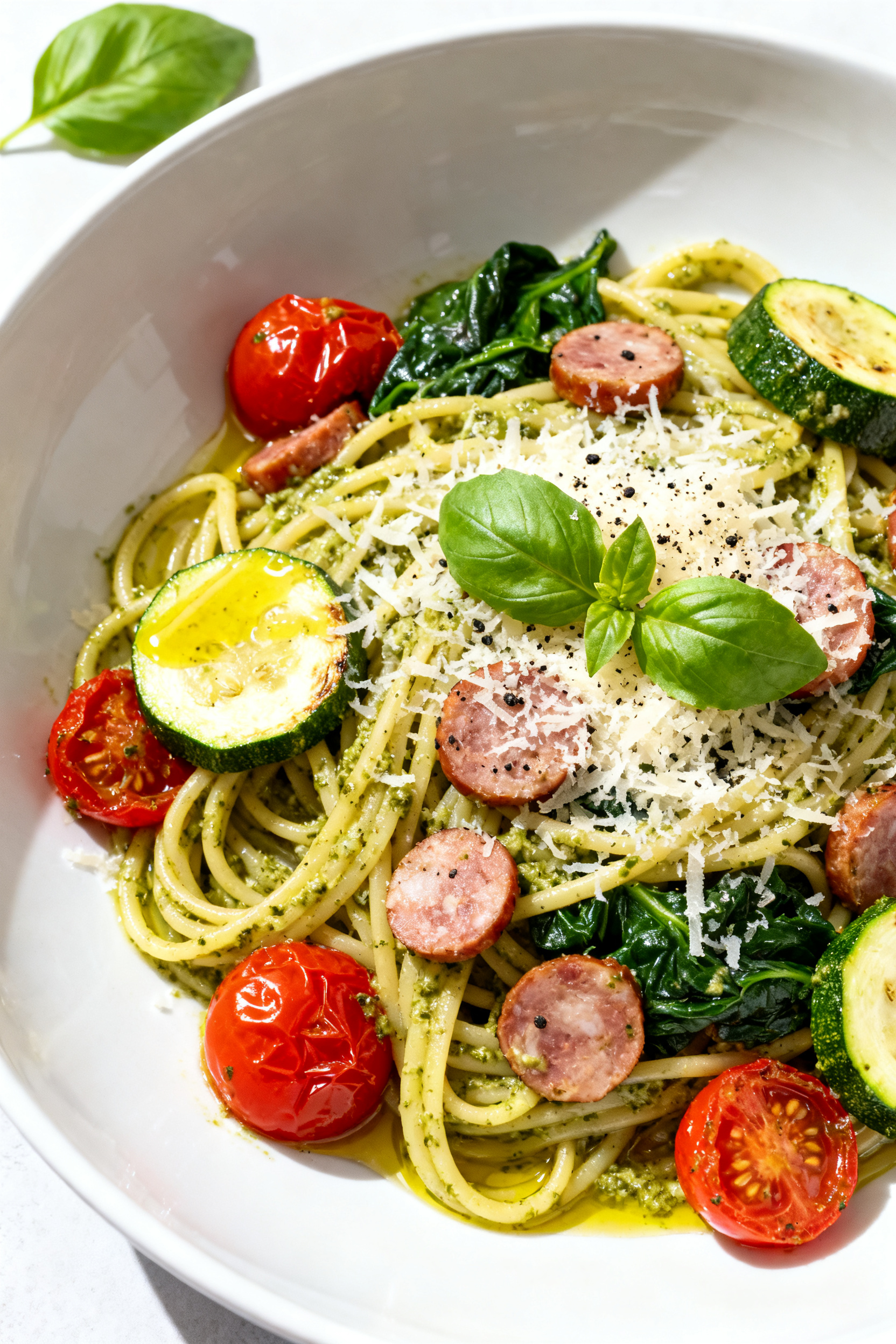
- Italian-Inspired: Leftover chicken or sausage, zucchini, cherry tomatoes, spinach, and pasta.
Toss with olive oil, garlic, a spoonful of pesto, and a shower of parmesan.
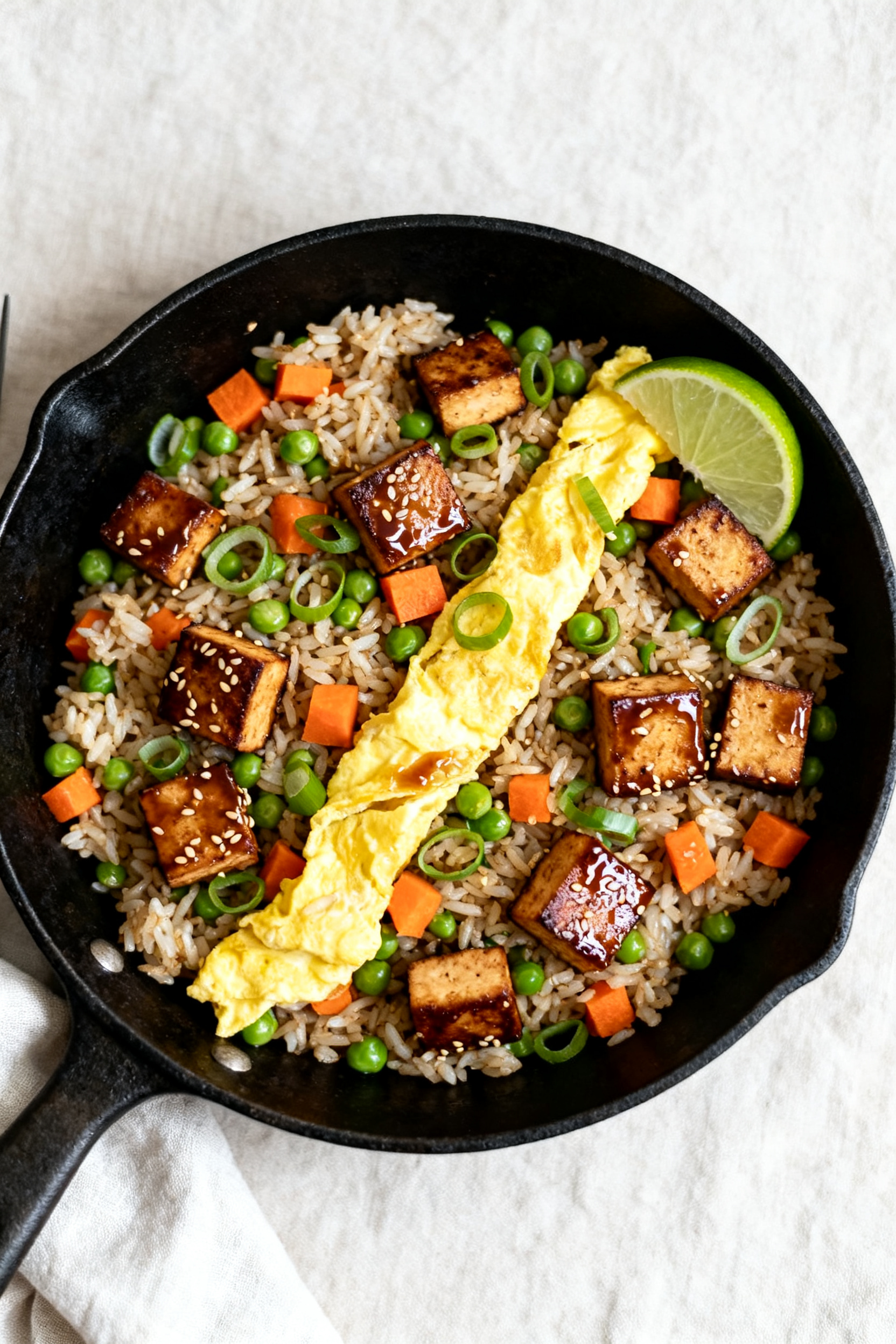
- Fried Rice Style: Day-old rice, peas, carrots, green onion, and any protein. Push to the side and scramble an egg, then mix in. Season with soy sauce and a drizzle of sesame oil.
- Mediterranean Bowl: Chickpeas, peppers, red onion, spinach, and couscous.
Season with lemon, oregano, and olive oil. Finish with feta and olives.
- BBQ Twist: Shredded pork or chicken, onions, peppers, and potatoes. Toss with a light splash of BBQ sauce and a touch of vinegar.
Top with green onions.
- Curry Comfort: Veggies and protein of choice with rice or quinoa. Stir in a spoonful of curry paste or powder and a splash of coconut milk. Brighten with lime.
FAQ
Can I make this without any leftover protein?
Yes.
Use a can of beans, scramble a couple of eggs, or sauté tofu. You can also go veggie-only and add nuts or seeds for crunch and a bit of protein.
What if I don’t have soy sauce?
Use Worcestershire plus a pinch of salt, coconut aminos, or even a bit of miso whisked with water. In a pinch, season with salt and add a splash of vinegar and a tiny bit of sugar for balance.
How do I keep the skillet from getting soggy?
Cook sturdy veggies first over medium-high heat to drive off moisture.
Add delicate greens at the end, and don’t drown the dish in sauce. If your starch is wet, let it toast briefly before saucing.
Is this good for meal prep?
Absolutely. It reheats well and stays tasty for 3–4 days.
Keep garnishes separate and add them fresh for the best texture.
Can I make it spicy?
Yes. Add chili flakes, sriracha, gochujang, or a sliced fresh chili with the aromatics. Adjust heat at the end with hot sauce so everyone can customize their bowl.
What pan works best?
A large nonstick or cast-iron skillet is ideal.
Use a wok if you have one; the high sides help with tossing and quick searing.
Final Thoughts
This is the kind of recipe that meets you where you are. A little rice, a few veggies, and a simple sauce become a cozy dinner in one pan. Trust your taste, season as you go, and don’t stress about exact amounts.
When the fridge looks empty, this skillet proves you’ve already got what you need.
Printable Recipe Card
Want just the essential recipe details without scrolling through the article? Get our printable recipe card with just the ingredients and instructions.