
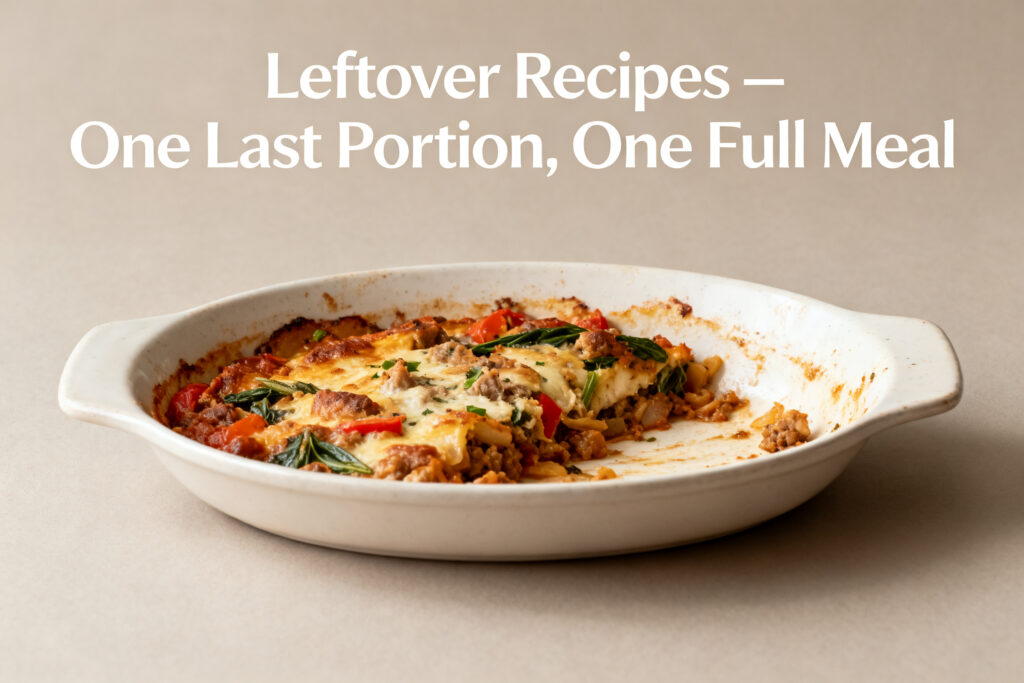
Sometimes the fridge looks like a patchwork quilt: half a cup of rice, a lonely roasted carrot, a sliver of chicken, and a spoonful of beans. It’s not quite dinner, but it’s not nothing either. This recipe is a flexible, smart way to turn that “almost enough” into a full, delicious meal with a few pantry helpers.
Think of it as a warm, saucy skillet that hugs whatever leftovers you have. It’s comforting, fast, and uses what you’ve already paid for.
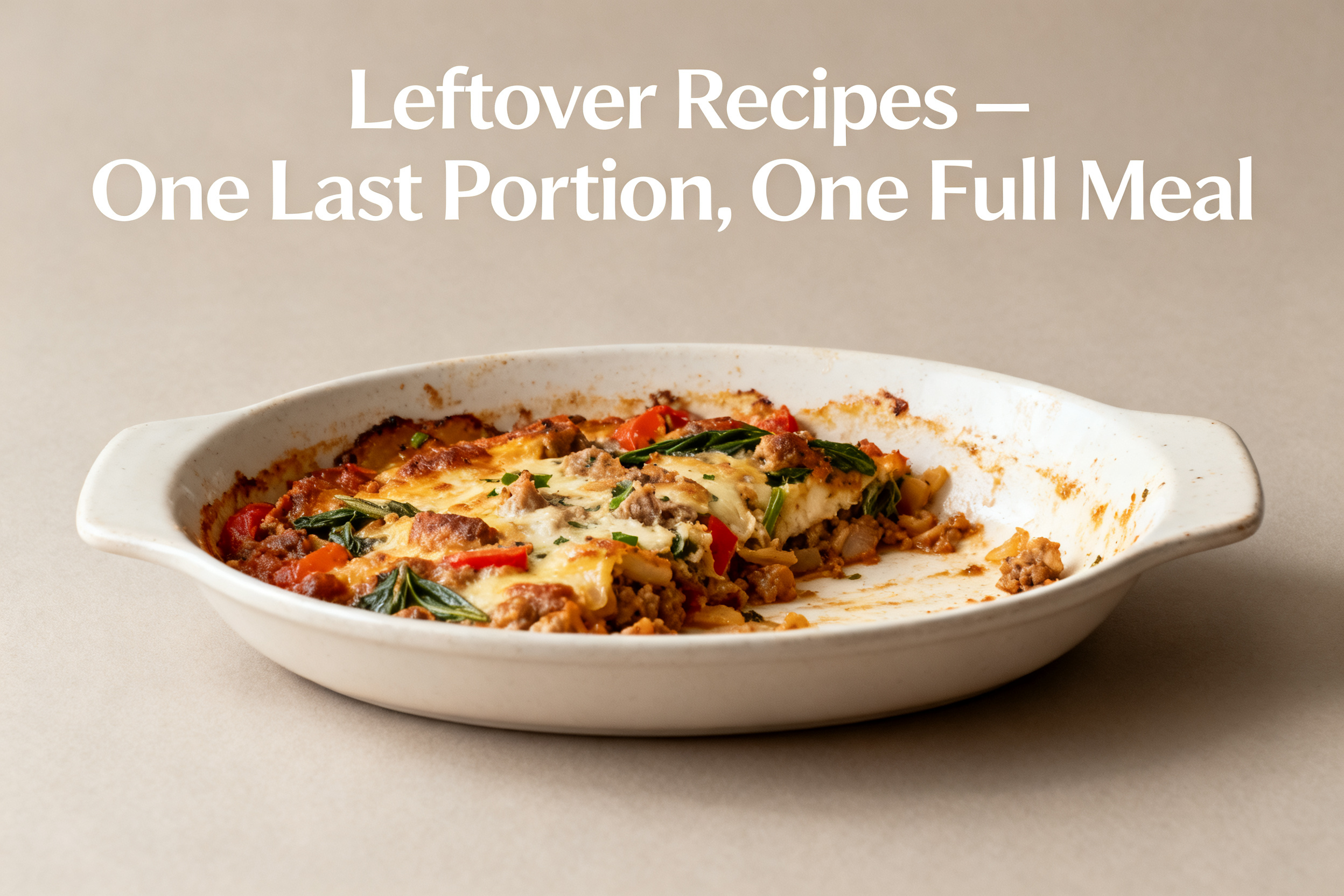
Leftover Recipes — One Last Portion, One Full Meal - Turn Scraps Into Something Satisfying
Ingredients
Method
- Prep the odds and ends: Chop any large leftover pieces into bite-size cubes or shreds. Aim for similar sizes so everything reheats evenly.
- Warm the pan: Set a large skillet over medium heat and add the oil. When it shimmers, add onion (and ginger if using). Cook 3 to 4 minutes, stirring, until soft and lightly golden. Add garlic and cook 30 seconds.
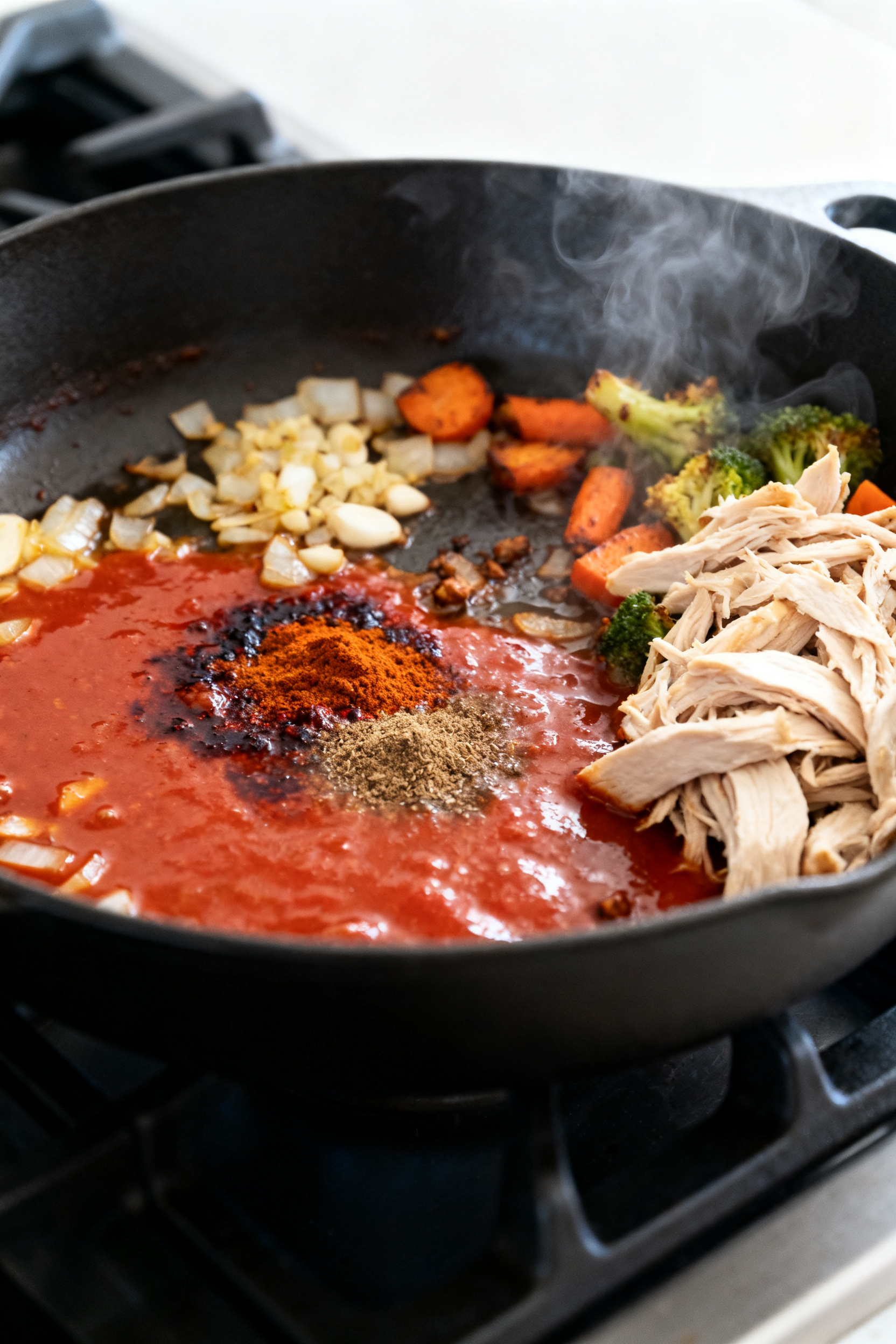
- Build the flavor base: Stir in tomato paste and your spice blend. Cook 1 minute until the paste darkens slightly and smells toasty. This step adds depth and tames any “leftover” taste.
- Make it saucy: Pour in broth (start with ¾ cup). Scrape up browned bits. Simmer 2 minutes until slightly thickened.
- Add proteins and veggies: Fold in your leftover protein and vegetables. Simmer 2 to 3 minutes to warm through. If using delicate fish, add it later to avoid overcooking.
- Stir in the base: Add rice, pasta, potatoes, or grains. Toss to coat in the sauce. If it looks dry, add a splash more broth or water.
- Leafy greens go last: Stir in spinach or kale and cook 1 to 2 minutes until just wilted. Season with salt and pepper.
- Finish bright: Off the heat, add vinegar or lemon juice. Taste and adjust seasoning. If you want creaminess, swirl in yogurt, cream, coconut milk, or butter now.
- Top and serve: Sprinkle with herbs or cheese. Add a drizzle of olive oil or a dollop of yogurt. Serve hot, straight from the pan.
What Makes This Recipe So Good
- Flexible by design: Proteins, veggies, grains—use what you’ve got. It’s a method, not a strict formula.
- Fast and weeknight-friendly: 20 minutes on the stove, minimal chopping, and just one pan.
- Budget-smart: It rescues small portions and reduces food waste without feeling like a compromise.
- Deep flavor, low effort: A quick sauce base (garlic, tomato paste, broth, spices) makes old odds and ends taste brand new.
- Balanced and filling: Builds a complete meal with protein, carbs, veggies, and a bright finish.
Ingredients
Use what you have.
The amounts below are guides; scale as needed for one generous serving or two lighter plates.
- Leftover base (1 to 1½ cups total): Any mix of cooked grains (rice, quinoa, farro), pasta, or roasted potatoes.
- Leftover protein (½ to 1 cup): Shredded chicken, steak slices, tofu, beans, lentils, sausage, or salmon bits.
- Leftover veggies (½ to 1 cup): Roasted peppers, broccoli, carrots, zucchini, peas, corn, greens—anything cooked.
- Aromatics: 1 small onion or 2 shallots (sliced), 2 cloves garlic (minced), 1 tsp grated ginger (optional).
- Tomato paste: 1 to 2 tbsp (or use salsa or curry paste for a twist).
- Liquid: ¾ to 1 cup low-sodium broth (chicken or veggie) or water.
- Spice blend (choose one):
- Italian-ish: 1 tsp dried oregano, ½ tsp chili flakes, black pepper
- Smoky: 1 tsp smoked paprika, ½ tsp cumin, pinch cayenne
- Curry-style: 1 tbsp mild curry powder, pinch turmeric
- Leafy boost (optional): 1 to 2 cups baby spinach, kale, or shredded cabbage.
- Acidity: 1 to 2 tsp red wine vinegar, lemon juice, or rice vinegar.
- Creaminess (optional): 2 tbsp yogurt, cream, coconut milk, or a knob of butter.
- Fresh finish (optional): Chopped herbs (parsley, cilantro, basil), green onions, or a sprinkle of cheese.
- Olive oil or neutral oil: 1 to 2 tbsp.
- Salt and pepper: To taste.
Instructions
- Prep the odds and ends: Chop any large leftover pieces into bite-size cubes or shreds. Aim for similar sizes so everything reheats evenly.
- Warm the pan: Set a large skillet over medium heat and add the oil. When it shimmers, add onion (and ginger if using).
Cook 3 to 4 minutes, stirring, until soft and lightly golden. Add garlic and cook 30 seconds.
- Build the flavor base: Stir in tomato paste and your spice blend. Cook 1 minute until the paste darkens slightly and smells toasty.
This step adds depth and tames any “leftover” taste.
- Make it saucy: Pour in broth (start with ¾ cup). Scrape up browned bits. Simmer 2 minutes until slightly thickened.
- Add proteins and veggies: Fold in your leftover protein and vegetables.
Simmer 2 to 3 minutes to warm through. If using delicate fish, add it later to avoid overcooking.
- Stir in the base: Add rice, pasta, potatoes, or grains. Toss to coat in the sauce.
If it looks dry, add a splash more broth or water.
- Leafy greens go last: Stir in spinach or kale and cook 1 to 2 minutes until just wilted. Season with salt and pepper.
- Finish bright: Off the heat, add vinegar or lemon juice. Taste and adjust seasoning.
If you want creaminess, swirl in yogurt, cream, coconut milk, or butter now.
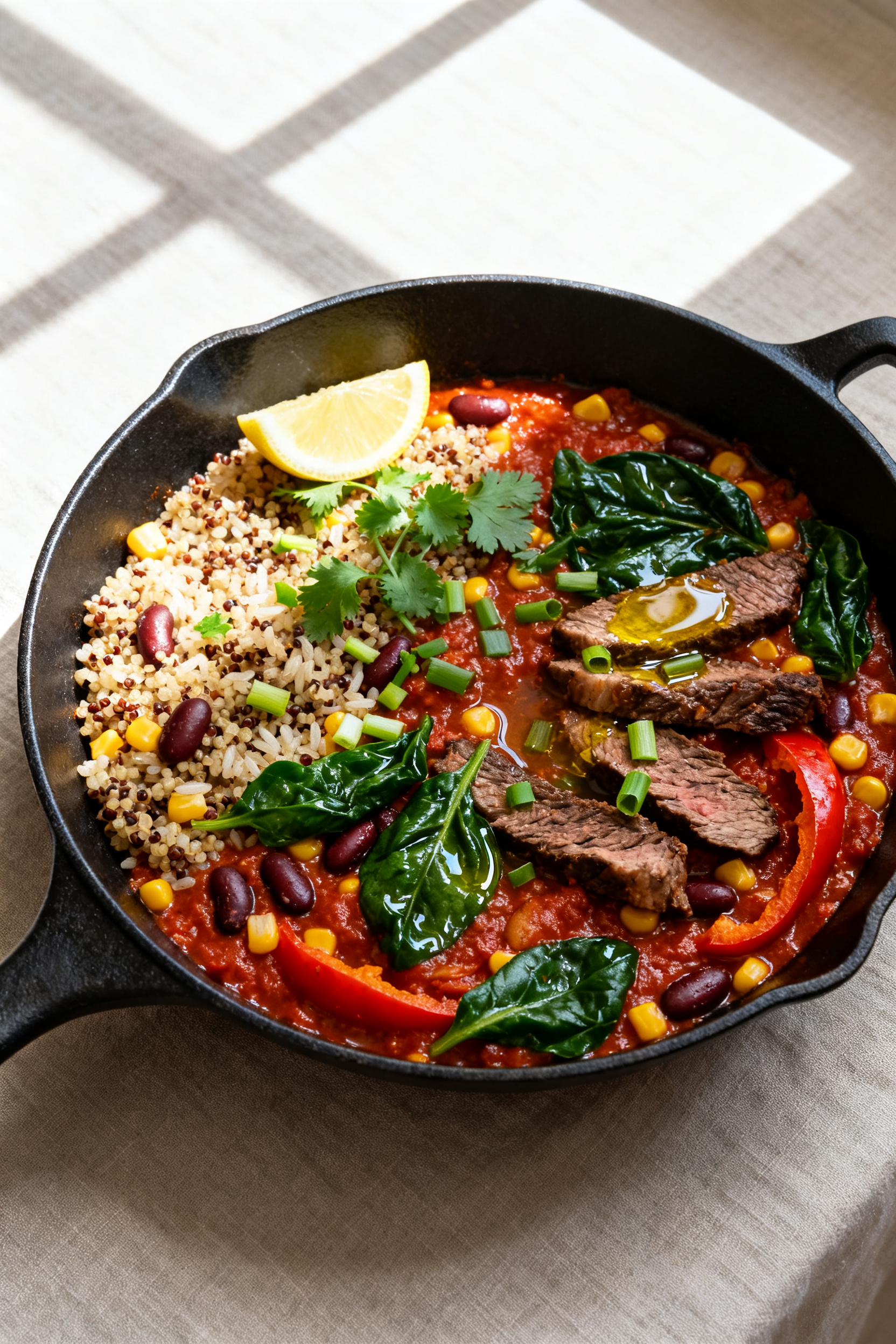
- Top and serve: Sprinkle with herbs or cheese. Add a drizzle of olive oil or a dollop of yogurt. Serve hot, straight from the pan.
Keeping It Fresh
- Hot fast, gentle heat: Reheat leftovers quickly over medium heat, adding a splash of water.
Overheating dries them out.
- Store smart: Refrigerate any extra portions in shallow, airtight containers within 2 hours. Eat within 2 to 3 days.
- Layer wisely: If you’re planning ahead, store sauce and base separately. Combine when reheating for the best texture.
- Freeze only the sturdy stuff: Saucy grain-and-protein mixes freeze well; delicate greens and dairy finishes do not.
Add those fresh after thawing.
Health Benefits
- Balanced macros: Combining leftovers lets you hit protein, complex carbs, and fiber in one bowl, keeping you full longer.
- Lower sodium, higher control: You set the salt and seasonings, unlike takeout or packaged meals.
- Vegetable variety: Mixing odds and ends bumps up micronutrients—vitamins A, C, K, plus minerals like iron and potassium.
- Reduced food waste: Using what you have supports your wallet and the planet by cutting trash and resource use.
Pitfalls to Watch Out For
- Clashing flavors: Curry and Alfredo rarely play nice. Choose a single flavor direction and season to match your strongest leftover.
- Overcooking proteins: Already-cooked meat and fish just need warming. Add fish at the end; keep the heat moderate.
- Soggy pasta or rice: Add dry rice or pasta?
No. Stick with pre-cooked, and don’t drown it—add liquid gradually.
- Forgetting acidity: A squeeze of lemon or splash of vinegar wakes up day-old food. Don’t skip it.
- Under-seasoning: Leftovers can be flat.
Taste after every step and add salt, pepper, and heat as needed.
Alternatives
- Brothy bowl: Skip tomato paste. Simmer aromatics with ginger and garlic in broth, add soy sauce and sesame oil, then toss in veggies, protein, and noodles for a quick soup.
- Creamy skillet: Use ½ cup cream or coconut milk with garlic and paprika. Finish with lemon and parsley.
Great with chicken and mushrooms.
- Spicy taco-style: Swap tomato paste for salsa and cumin. Add beans, corn, shredded meat, and rice. Serve with avocado and lime.
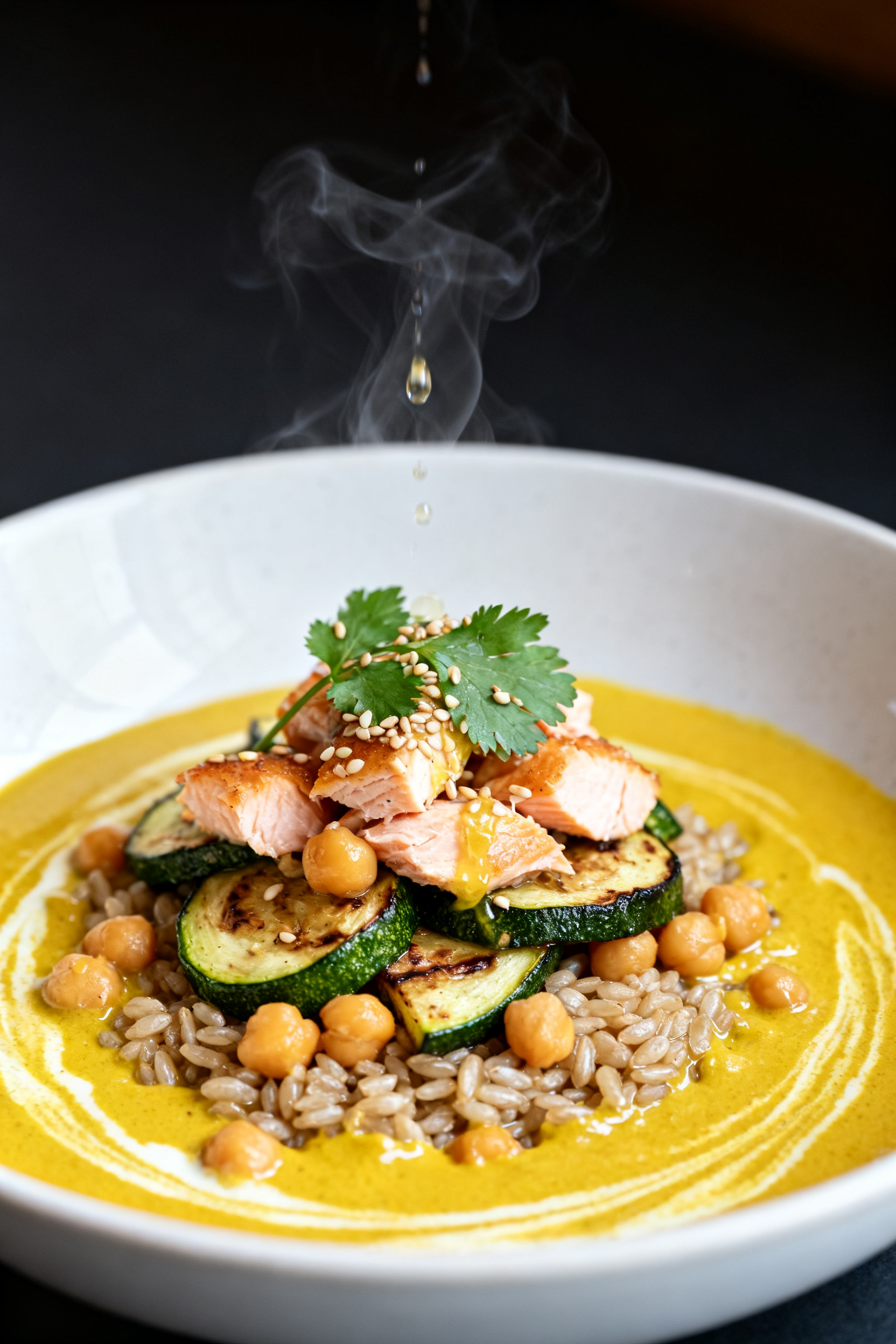
- Curry upgrade: Use curry paste and coconut milk.
Add chickpeas and spinach. Serve over leftover rice.
- Egg on top: Crack in an egg or two near the end, cover, and steam until just set. Instant richness and extra protein.
FAQ
Can I make this vegetarian or vegan?
Absolutely.
Use beans, lentils, tofu, or tempeh for protein. Choose vegetable broth and finish with olive oil or coconut milk instead of dairy. Add nuts or seeds for extra texture and healthy fats.
What if I only have a tiny amount of one ingredient?
That’s the point.
Combine small amounts—¼ cup of beans, a few broccoli florets, a handful of rice—and let the sauce pull it together. If you’re short on bulk, add a slice of toast or a fried egg to round it out.
How do I keep pasta from getting mushy?
Reheat pasta briefly and gently. Add it near the end, with just enough sauce to coat.
If it’s very soft to start with, consider chopping it and treating it like dumplings in the sauce for a fun texture.
Can I use raw vegetables instead of cooked leftovers?
Yes, but sauté them first. Start with harder veggies like carrots and peppers for 4 to 5 minutes, then add softer ones. Once they’re crisp-tender, proceed with the sauce and the rest.
What if my leftovers are heavily seasoned?
Lean into that flavor.
Skip strong spices in the sauce and use neutral broth. Add lemon or vinegar to balance, and taste before salting. You can also dilute with extra grains or veggies.
How do I make it spicy?
Add chili flakes with the aromatics, stir in a spoonful of harissa or gochujang with the tomato paste, or finish with hot sauce.
Start small and build to taste.
Can I meal prep this?
Yes. Cook the sauce and base together, then store proteins and greens separately. Combine and reheat just before eating to protect texture and flavor.
What pan works best?
A wide skillet or sauté pan is ideal.
More surface area means faster evaporation, better browning, and less sogginess. A saucepan works in a pinch.
How do I avoid food safety issues?
Use leftovers within 3 to 4 days. Reheat to steaming hot (165°F/74°C).
Don’t reheat more than once, and refrigerate promptly after cooking.
What if it still tastes like “leftovers”?
Add acidity, fresh herbs, and a touch of fat. A squeeze of lemon, chopped parsley, and a small pat of butter or drizzle of olive oil can transform the dish instantly.
Wrapping Up
Leftovers don’t have to be a shrug. With a quick sauce, a clear flavor direction, and a bright finish, you can turn scraps into a meal you’re actually excited to eat.
Keep this method in your back pocket and use it whenever “almost enough” is all you’ve got. It’s practical, cozy, and easy on the wallet—exactly what a weeknight needs.
Printable Recipe Card
Want just the essential recipe details without scrolling through the article? Get our printable recipe card with just the ingredients and instructions.