
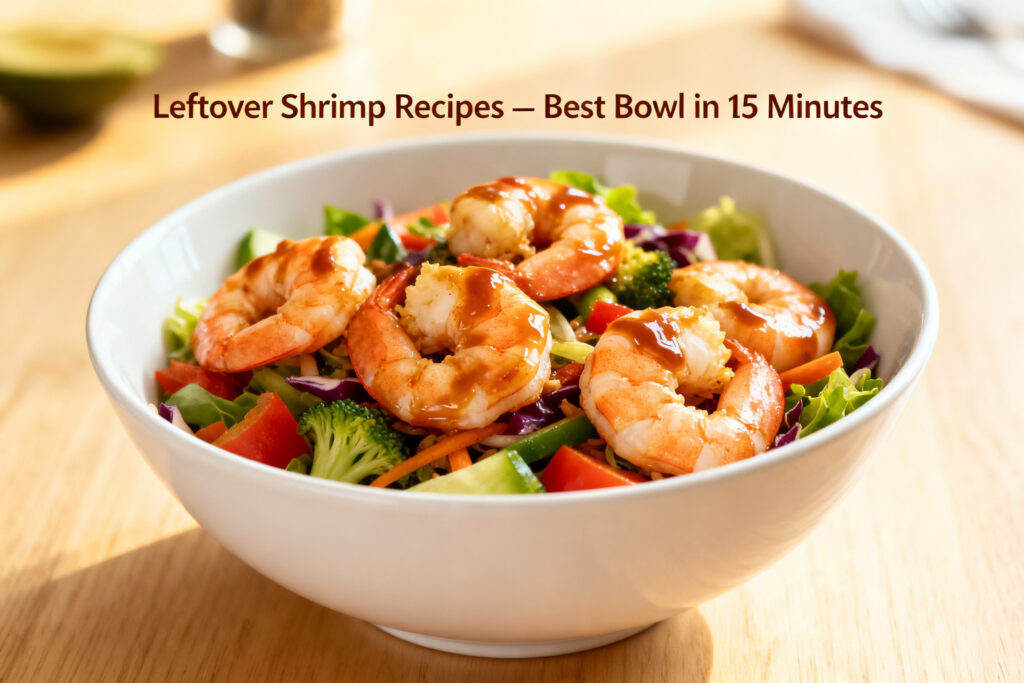
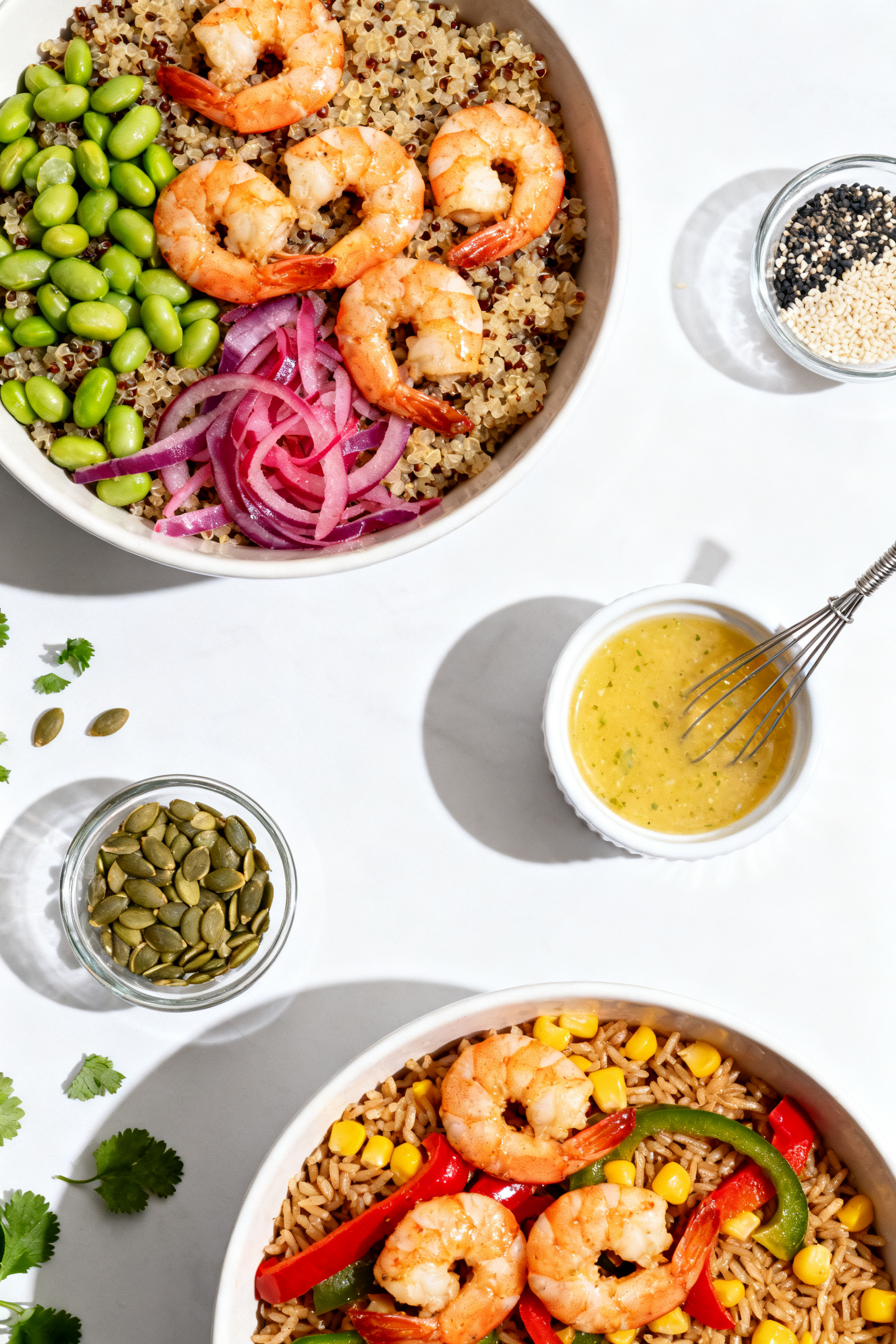
If you’ve got leftover shrimp hanging out in the fridge, this is your sign to turn it into a quick, satisfying bowl. It’s fast, flexible, and uses pantry staples you probably already have. No complicated steps, no fancy equipment—just a bright, balanced meal in 15 minutes.
Whether it’s lunch between meetings or dinner after a long day, this bowl delivers bold flavor with minimal effort.
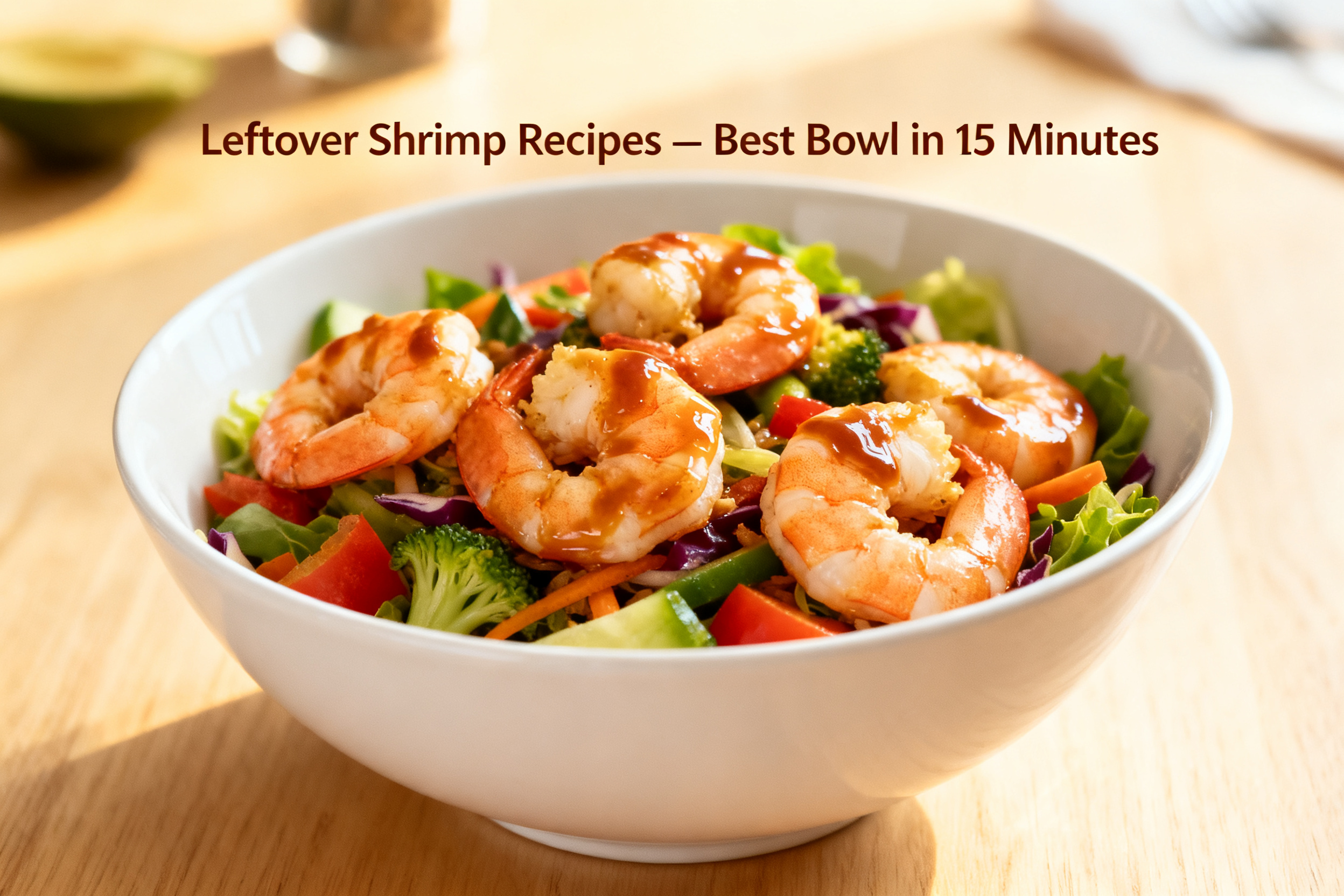
15 Minutes to the Best Shrimp Bowl → "Leftover Shrimp Recipes — Best Bowl in 15 Minutes" - Fast, Fresh, and Flavor-Packed
Ingredients
Method
- Warm your base: Reheat cooked grains in the microwave or on the stove with a splash of water until hot and fluffy. Season lightly with salt.
- Mix the sauce: Whisk olive oil, soy sauce, citrus juice, honey, garlic, and chili flakes in a small bowl. Taste and adjust—more citrus for brightness, more honey if too sharp.
- Prep the veggies: Chop cucumbers, shred cabbage, and slice peppers or carrots. Keep pieces bite-sized for easy eating.
- Refresh the shrimp: Pat the shrimp dry. If they’re well-seasoned already, leave them as is. If plain, toss with a spoonful of the sauce.
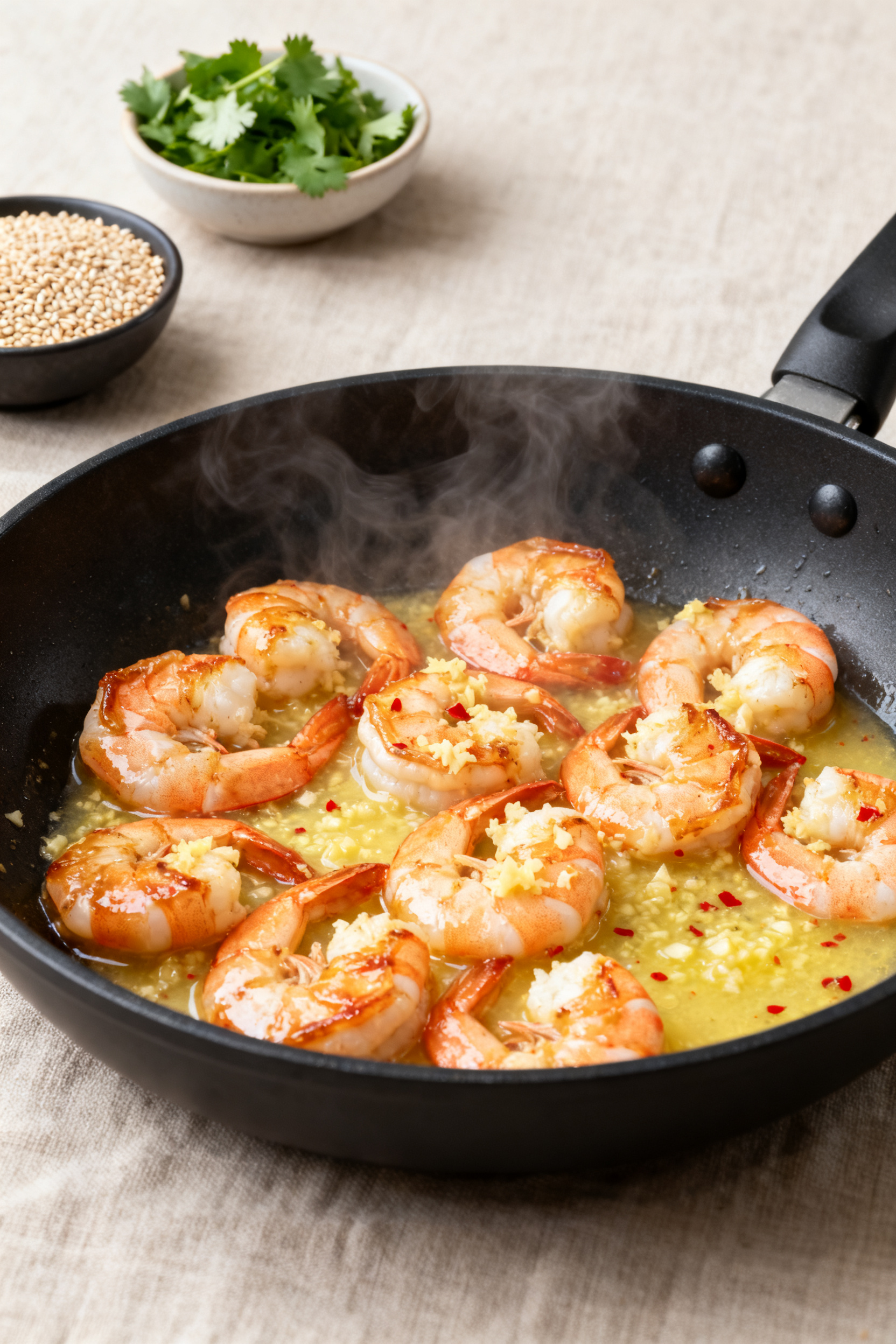
- Reheat gently (optional): If you’d like warm shrimp, heat a nonstick skillet over medium-low, add a drizzle of oil, and warm shrimp for 1–2 minutes until just heated. Do not overcook.
- Assemble the bowl: Add grains to a bowl, arrange shrimp, veggies, and avocado on top. Drizzle with the sauce.
- Finish with crunch and herbs: Sprinkle sesame seeds or nuts and fresh herbs. Add a final squeeze of citrus if you like.
- Serve immediately: Enjoy warm grains with cool, crisp toppings and bright, tangy shrimp.
Why This Recipe Works
- Quick and efficient: You’re using cooked shrimp, so the “cooking” is mostly reheating and assembling.
- Balanced flavors: A simple citrus-garlic sauce, crunchy veggies, and warm grains make every bite satisfying.
- Flexible base: Rice, quinoa, or salad greens—use what you have and what you like.
- Great texture: Warm grains meet cool toppings and juicy shrimp for a bowl that feels restaurant-worthy.
- Smart use of leftovers: Avoids waste and turns day-old shrimp into something fresh and exciting.
What You’ll Need
- Leftover cooked shrimp: 8–12 ounces, tails removed if you prefer
- Cooked grains: 2 cups (rice, quinoa, farro, or cauliflower rice)
- Crunchy veggies: 1 cup total (cucumber, shredded cabbage, bell pepper, or carrots)
- Creamy element: 1/2 avocado, sliced (optional but great)
- Fresh herbs: 1/4 cup chopped cilantro, parsley, or green onion
- Citrus-garlic sauce:
- 2 tablespoons olive oil
- 1 tablespoon soy sauce or tamari
- 1 tablespoon lime or lemon juice
- 1 teaspoon honey or maple syrup
- 1 small garlic clove, grated or minced
- 1/2 teaspoon chili flakes or a squeeze of sriracha (optional)
- Extras (choose 1–2): Pickled onions, corn, edamame, cherry tomatoes, or sliced radish
- Toppings: Sesame seeds, pepitas, or crushed peanuts for crunch
- Salt and pepper: To taste
Step-by-Step Instructions
- Warm your base: Reheat cooked grains in the microwave or on the stove with a splash of water until hot and fluffy. Season lightly with salt.
- Mix the sauce: Whisk olive oil, soy sauce, citrus juice, honey, garlic, and chili flakes in a small bowl. Taste and adjust—more citrus for brightness, more honey if too sharp.
- Prep the veggies: Chop cucumbers, shred cabbage, and slice peppers or carrots.
Keep pieces bite-sized for easy eating.
- Refresh the shrimp: Pat the shrimp dry. If they’re well-seasoned already, leave them as is. If plain, toss with a spoonful of the sauce.
- Reheat gently (optional): If you’d like warm shrimp, heat a nonstick skillet over medium-low, add a drizzle of oil, and warm shrimp for 1–2 minutes until just heated.
Do not overcook.
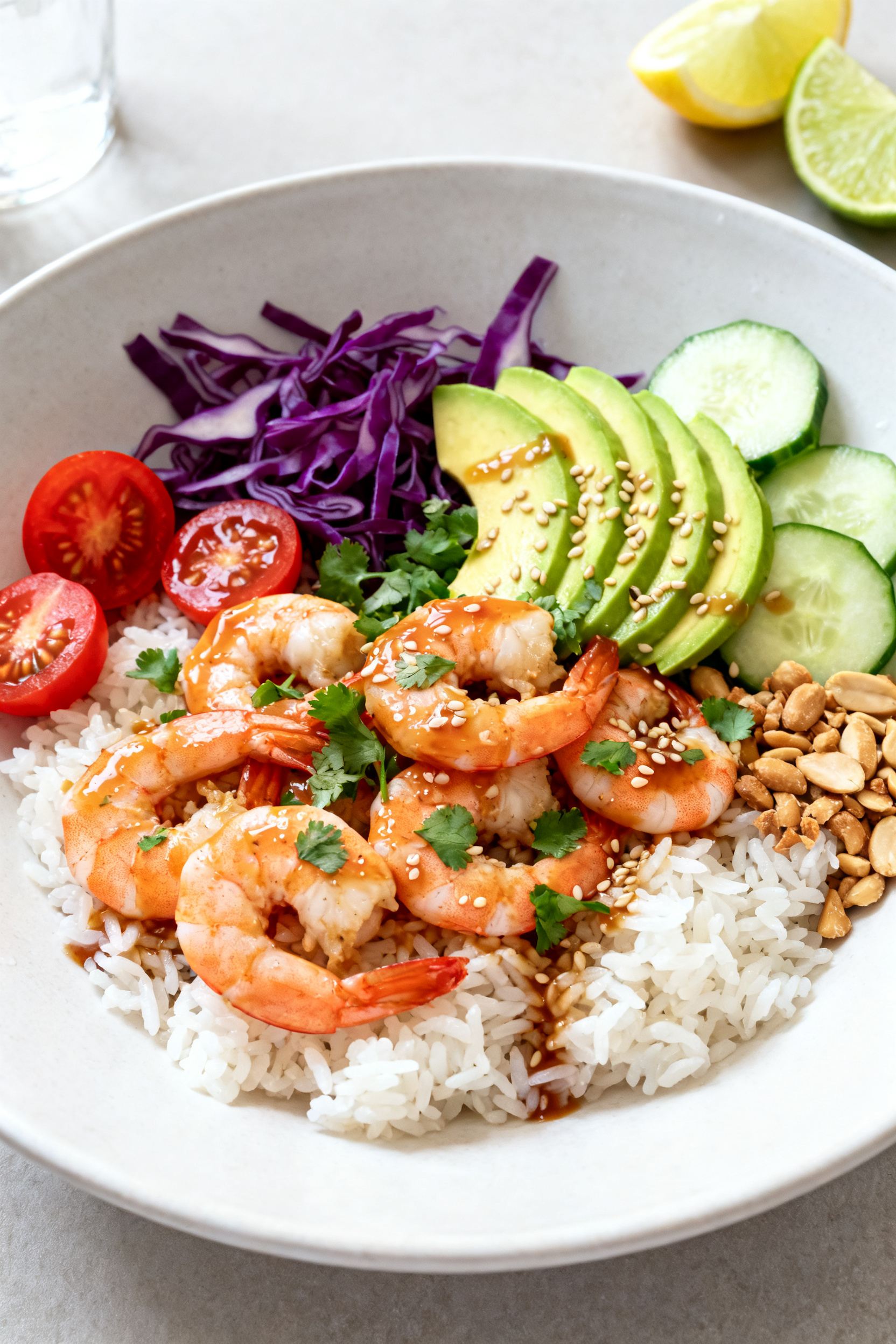
- Assemble the bowl: Add grains to a bowl, arrange shrimp, veggies, and avocado on top. Drizzle with the sauce.
- Finish with crunch and herbs: Sprinkle sesame seeds or nuts and fresh herbs. Add a final squeeze of citrus if you like.
- Serve immediately: Enjoy warm grains with cool, crisp toppings and bright, tangy shrimp.
Storage Instructions
- Fridge: Store components separately in airtight containers for up to 2 days.
Keep the sauce in a small jar.
- Avoid sogginess: Don’t mix the sauce with the veggies until ready to eat. Dress right before serving.
- Reheating: Warm grains and shrimp gently. Microwave shrimp 20–30 seconds or pan-warm briefly to avoid rubbery texture.
- Freezer: Not recommended for leftover cooked shrimp in a bowl format—it can turn mushy.
Health Benefits
- Lean protein: Shrimp is high in protein and low in calories, helping keep you full.
- Omega-3s and nutrients: Shrimp provides selenium, B12, iodine, and small amounts of omega-3s.
- Fiber from add-ins: Brown rice, quinoa, cabbage, and veggies support digestion and steady energy.
- Healthy fats: Olive oil and avocado offer heart-friendly monounsaturated fats.
- Lower sugar, balanced plate: The sauce uses just a touch of sweetness, balanced by protein, fiber, and fats.
Pitfalls to Watch Out For
- Overcooking shrimp: Already cooked shrimp need only a brief warm-up.
Heat gently to avoid a rubbery chew.
- Watery bowl: Pat shrimp and veggies dry. Excess moisture dilutes flavor and softens grains.
- Over-salting: Soy sauce is salty. Taste before adding extra salt to the grains or shrimp.
- Heavy-handed sauce: Dress lightly first.
You can always add more, but you can’t take it away.
- Clashing flavors: If your leftover shrimp is heavily seasoned (like Cajun or garlic-butter), match the bowl accordingly and tweak the sauce.
Recipe Variations
- Spicy Cajun Bowl: Use Cajun-seasoned shrimp, swap lime for lemon, add corn, black beans, and a dollop of yogurt or sour cream.
- Mediterranean Style: Use lemon, olive oil, and oregano in the sauce; add cherry tomatoes, cucumber, olives, feta, and parsley over farro or brown rice.
- Asian-Inspired: Add grated ginger to the sauce, use sesame oil, sriracha, cucumbers, edamame, and pickled onions over jasmine rice. Top with sesame seeds.
- Low-Carb Greens Bowl: Replace grains with a big bed of mixed greens or cabbage slaw. Keep avocado and nuts for fullness.
- Tropical Twist: Add pineapple or mango, red cabbage, and cilantro.
Use lime and a pinch of chili powder in the sauce.
- Garlic-Butter Upgrade: Briefly warm shrimp in a teaspoon of butter and minced garlic, then assemble with rice and steamed broccoli. Finish with lemon.
FAQ
Can I use frozen cooked shrimp?
Yes. Thaw overnight in the fridge or under cold running water, then pat very dry.
Proceed as directed, warming gently if desired.
What if my shrimp smells strong?
Fresh shrimp should smell clean and briny, not sour or ammonia-like. If it smells off, it’s safer to discard it.
How long is leftover shrimp safe to eat?
Cooked shrimp is best within 2–3 days when refrigerated properly. Keep it chilled and don’t leave it at room temperature for more than 2 hours.
Can I make this dairy-free and gluten-free?
Yes.
It’s naturally dairy-free. For gluten-free, use tamari or coconut aminos instead of soy sauce and ensure grains like rice or quinoa are certified gluten-free if needed.
What grains work best?
Any you like. Brown rice and quinoa are great for fiber.
Jasmine rice is fragrant and tender. Cauliflower rice works if you want a lighter option.
Do I have to reheat the shrimp?
No. It’s excellent cold, especially on hot days.
Just assemble the bowl with warm or room-temperature grains and cool toppings.
How can I add more protein?
Add a soft-boiled egg, extra shrimp, edamame, or a scoop of black beans. A sprinkle of nuts or seeds adds protein and healthy fats.
What can I use instead of honey?
Maple syrup or agave works. If you prefer no added sweetener, skip it and add a splash more citrus to balance the soy sauce.
Wrapping Up
This 15-minute shrimp bowl turns leftovers into a fresh, complete meal with big flavor and little effort.
Keep the formula simple: warm grains, crisp veggies, a bright sauce, and tender shrimp. Adjust the seasonings to match what you’ve got, and don’t overthink it. With a few pantry staples and a squeeze of citrus, dinner is done—and delicious.
Printable Recipe Card
Want just the essential recipe details without scrolling through the article? Get our printable recipe card with just the ingredients and instructions.