

You cooked a glorious chicken and now your fridge looks like a Tupperware convention. Great news: those leftovers can taste even better tomorrow—if you store them right. This guide gives you crystal-clear timelines, zero guesswork, and a few hacks to keep your chicken safe and juicy. Ready to avoid the dreaded mystery-meat roulette?
1. The Golden Window: How Long Leftover Chicken Lasts

Let’s cut straight to the chase: timing matters. Store chicken correctly and you’ll enjoy tender, tasty meals for days. Mess it up, and you’re one reheated bite away from regret.
Key Timelines (Commit These To Memory)
- Cooked chicken in the fridge: 3–4 days
- Cooked chicken in the freezer: Best quality up to 4 months (safe longer)
- Chicken on the counter: 2 hours max at room temp (1 hour if above 90°F/32°C)
- Shredded vs. whole pieces: Same safety window, but shredded reheats faster
These timelines apply to rotisserie, roasted, grilled, sautéed, or shredded chicken. Sauces don’t magically extend life; they just mask problems. Use the fridge for short-term wins, and the freezer for meal-prep glory.
Why It’s Awesome
- You save money by using every bite.
- You meal-prep smarter with zero guesswork.
- You dodge foodborne drama—seriously, no one has time for that.
Use this window when batch-cooking or planning weeknight meals. You’ll eat better, waste less, and feel like a kitchen wizard.
2. Chill Out Fast: Cooling And Storing For Max Freshness
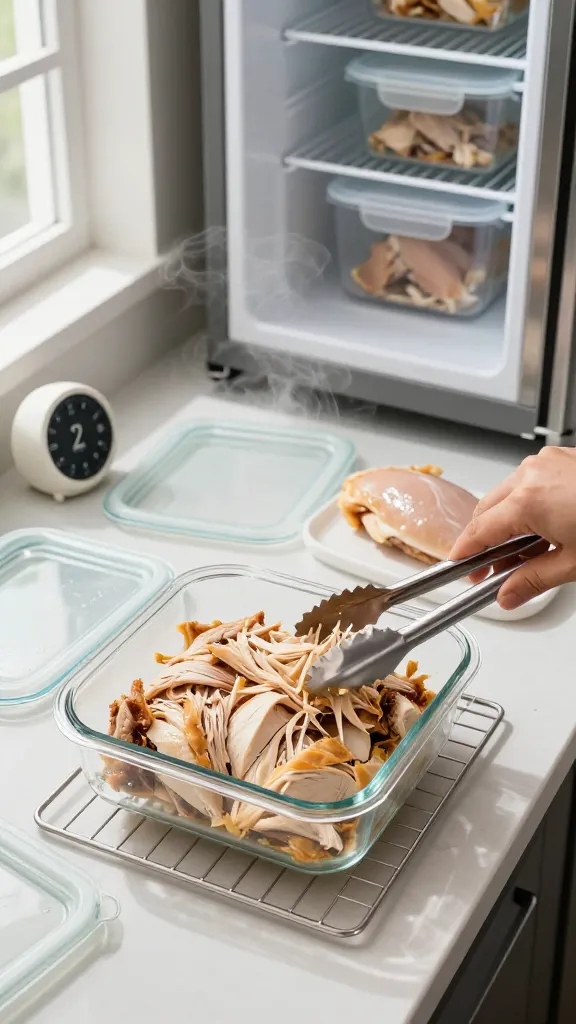
Leftover chicken spoils fastest while it cools. Speed is your friend here. Cool it quickly, stash it right, and you lock in flavor and safety.
Quick-Cool Game Plan
- Within 2 hours: Get that chicken into the fridge.
- Spread it out: Slice or shred large pieces so they cool evenly.
- Shallow containers: Use 2-inch-deep containers to avoid warm centers.
- Leave lids ajar for 20–30 minutes: Then seal tight once steam dissipates.
Storage Tips That Actually Work
- Air is the enemy: Use airtight containers or wrap tightly in foil, then bag.
- Label like a pro: Date it. Future-you will thank present-you.
- Fridge placement: Stash on the middle shelf, not the door. The door temperature fluctuates too much.
- Flavor guard: If saucy, keep sauce separate when possible to maintain texture.
Done right, you keep chicken tender and safe without drying it out. Perfect for quick lunches, salads, and wraps all week long.
3. Freeze Like You Mean It: Pack, Portion, And Prevent Freezer Burn
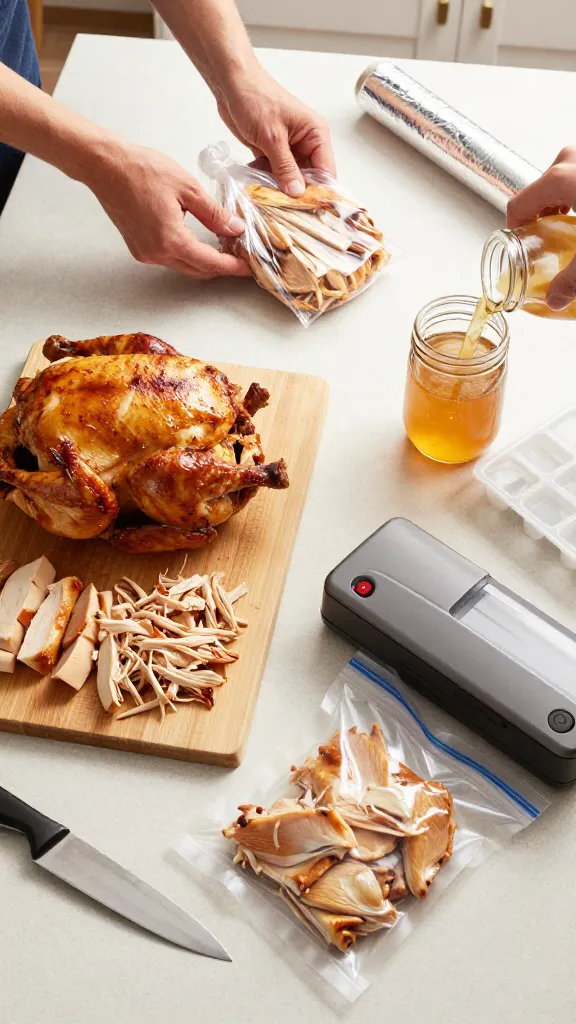
Freezing saves the day when you won’t finish the bird in time. A few tiny tweaks make the difference between succulent and sad. Think portion control, tight wraps, and smart add-ins.
Freezer-Friendly Methods
- Double-wrap method: Wrap in plastic or foil, then place in a freezer bag. Squeeze out extra air.
- Flat-freeze portions: Spread shredded chicken flat in bags. It thaws fast and stacks neatly.
- Vacuum-seal FTW: Best texture and longest quality—IMO worth it if you freeze often.
- Stock trick: Freeze chunks submerged in a little chicken broth to lock in moisture.
Labeling That Saves Your Sanity
- Date + cut + seasoning: “Jan 12 – Thighs – Lemon Herb” beats “Mystery Chicken.”
- Portion notes: Mark cup counts for easy recipe planning.
Quality Timeline
- Best quality: Up to 4 months
- Still safe beyond that: Yes, if kept frozen at 0°F (-18°C), but texture and flavor decline
Freeze when the chicken tastes great, not when it’s on day four and sketchy. Future you deserves an easy win.
4. Thaw And Reheat Without Ruining It
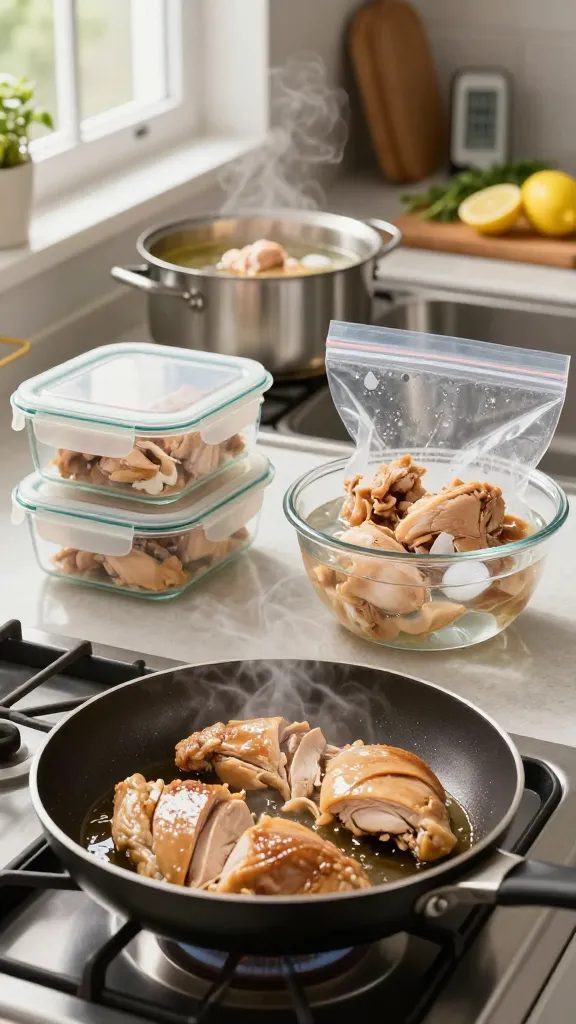
You nailed storage—don’t blow it at the finish line. Thaw safely and reheat gently to keep chicken juicy and delicious. Microwaves can help, but they need coaching.
Safe Thawing Options
- Fridge thaw (best): 24 hours for a pound. Keep in a container to catch drips.
- Cold water bath: Submerge sealed bag in cold water; change water every 30 minutes. 1–2 hours for most portions.
- Straight from frozen: Totally fine in soups, stews, or skillets with sauce.
Reheating Without Drying Out
- Skillet + splash: Warm in a pan with a little broth or water, covered, low heat.
- Oven method: 300–325°F (150–165°C), covered with foil, add a spoon of broth; check every 10 minutes.
- Microwave cheat: Cover with a damp paper towel, use 50% power in short bursts, stir or flip.
- Sauce shield: Toss with salsa, BBQ, or gravy before reheating to protect moisture.
Reheat To Safe Temp
- Target: 165°F (74°C) in the thickest part. No thermometer? Piping hot with no cold spots.
This approach keeps texture on point and avoids rubbery, sad chicken. Perfect for tacos, grain bowls, and quick pasta bakes.
5. Smart Leftover Moves: What To Keep, What To Toss, And When To Repurpose
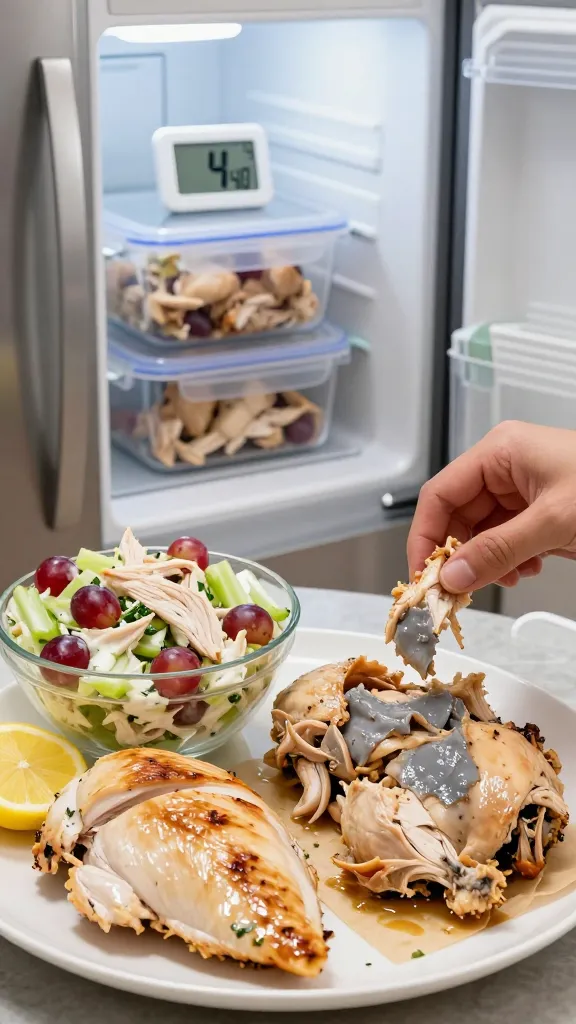
Not all leftovers deserve a second life. Use your senses and a few rules to stay safe and still eat like a champ. When in doubt, toss—your stomach will applaud.
Signs Your Chicken Has Peaced Out
- Smell test: Sour, eggy, or just “off”? Hard pass.
- Texture: Slimy or tacky surface means bacteria party.
- Color shift: Gray or dull patches can signal spoilage.
- Time’s up: Past 4 days in the fridge? Let it go, Elsa.
Use-First Ideas (Before The Clock Runs Out)
- Day 1–2: Chicken salad with crisp celery, grapes, and lemony yogurt dressing.
- Day 2–3: Toss into fried rice, quesadillas, or a quick ramen with greens.
- Day 3–4: Shred and drown in sauce—buffalo sliders, tikka masala, or enchilada bake.
Food Safety Non-Negotiables
- Two-hour rule: Don’t leave cooked chicken out longer than 2 hours (1 hour if it’s hot out).
- No double-dipping: Avoid cross-contamination with raw meat or dirty utensils.
- Reheat once: Repeated reheating wrecks texture and ups risk. Only warm what you’ll eat.
- Lunchbox logic: Pack with an ice pack and eat within 4 hours of leaving the fridge.
These habits save you cash, time, and unnecessary drama. FYI, they also make your leftovers taste like you planned them that way—because you did.
Leftover chicken should feel like a gift, not a gamble. With clear timelines and a few smart storage tricks, you’ll turn yesterday’s dinner into today’s MVP. Now go label those containers like the organized legend you are—trust me, future-you is already cheering.