

You’ve got a cold, a busy week, or both—and a store-bought rotisserie chicken staring you down. Perfect. We’re turning those leftovers into soup so cozy you’ll want to hug the bowl. Expect big flavor, tiny effort, and a fridge stocked with meals that taste even better the next day. Ready to turn scraps into superstar status?
1. Build A Flavor-First Broth (Your Secret Weapon)
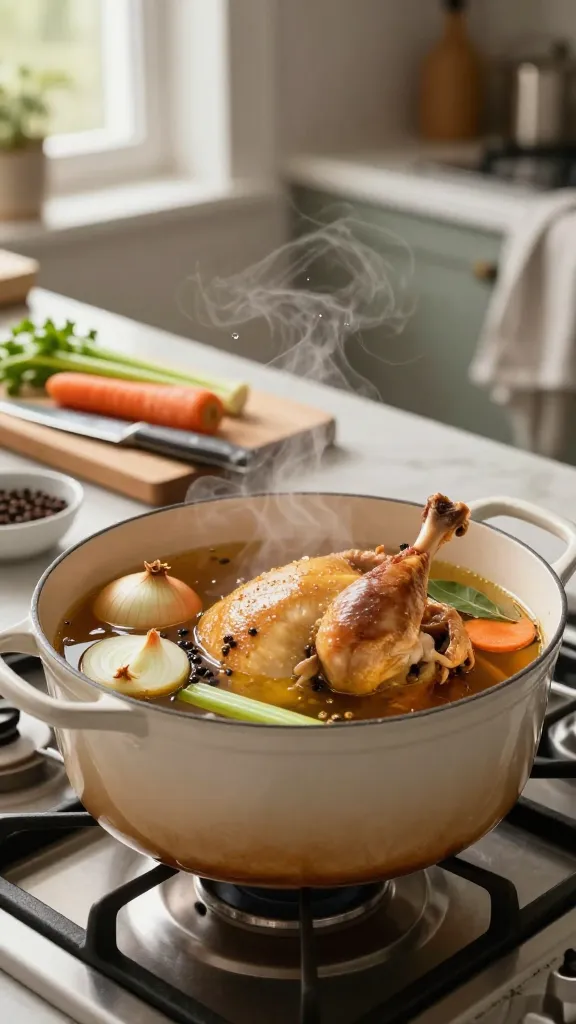
Everything great in this soup starts with the broth. You’ll use the rotisserie carcass—yes, the bones and skin—to pull every last drop of flavor. It’s like composting, but delicious.
Why It Works
- Roasted bones = instant umami that beats boxed broth, no contest.
- Herb-and-salt rubs from the chicken infuse your stock automatically.
- Zero waste and it simmers while you do anything else.
Toss the carcass into a pot with onion ends, a halved carrot, a celery stalk, a few peppercorns, and a bay leaf. Cover with water by an inch or two and simmer for 45–90 minutes. Skim foam when you feel like it—no need to babysit.
Pro Tips
- Got lemon rinds or parmesan rinds? Add them. Thank me later.
- Salt lightly now; finish seasoning at the end so you don’t overshoot.
- Strain and discard the solids. You just made liquid gold.
Use this whenever you want your soup to taste like you labored for hours (you didn’t, FYI).
2. Sauté Your Base Like You Mean It
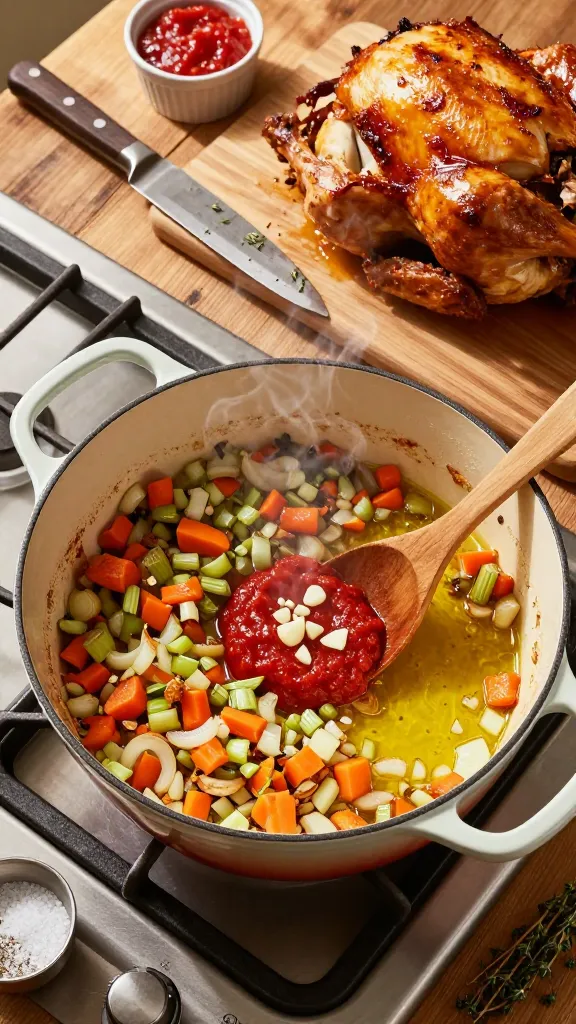
We’re not dumping raw veg into broth and hoping for the best. A quick sauté wakes up sweetness and deepens flavor fast. Think of it as makeup for vegetables—enhances everything without hiding the real you.
Aromatics That Earn Their Keep
- Onion + carrot + celery (classic mirepoix) for sweet, earthy balance.
- Garlic for warmth—add it last so it doesn’t burn.
- Tomato paste for a subtle savoriness and a richer color.
Heat a slick of olive oil or butter in a Dutch oven. Add chopped onion, carrot, and celery with a pinch of salt. Cook until glossy and tender, about 6–8 minutes. Stir in garlic for 30 seconds, then a spoon of tomato paste for another minute until it darkens slightly.
Flavor Boosters (Optional But Excellent)
- Smoked paprika for gentle smokiness.
- Red pepper flakes if you like a little sass.
- Thyme or rosemary to echo that roasted-chicken vibe.
This step makes your soup taste restaurant-worthy with almost no work. Seriously, don’t skip it.
3. Choose Your Adventure: Noodles, Rice, Or Veg-Forward
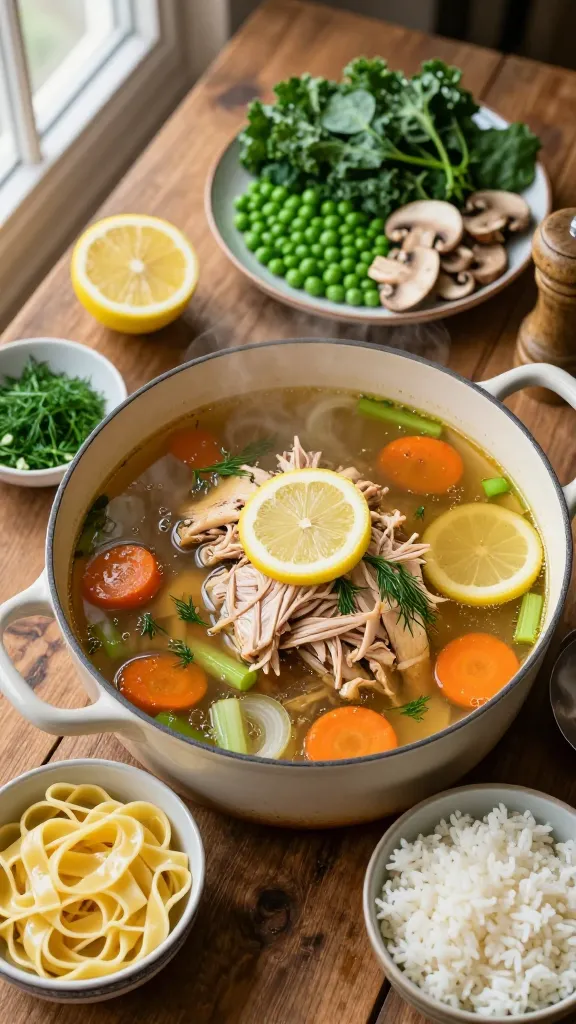
Here’s where you customize. Rotisserie chicken plays nicely with almost any carb or veggie combo. Pick your lane based on mood, pantry, or how much energy you’ve got left.
Option A: Classic Chicken Noodle
- Use wide egg noodles or any short pasta.
- Cook noodles in a separate pot and add to bowls to keep them from getting mushy.
- Season the broth with dill and lemon at the end for that deli magic.
Perfect for sick days or when nostalgia calls shotgun.
Option B: Cozy Chicken And Rice
- Simmer 1/2 cup rinsed jasmine or basmati right in the broth until tender.
- Stir often for a lightly creamy texture, almost congee-adjacent.
- Finish with scallions and a drizzle of sesame oil for a simple twist.
Use this when you want hug-in-a-bowl energy that actually fills you up.
Option C: Veggie-Loaded And Bright
- Go heavy on zucchini, kale, spinach, peas, or cauliflower.
- Add cannellini beans or chickpeas for extra protein and fiber.
- Finish with pesto or chimichurri for color and zing.
Ideal for cleaning out the crisper and flexing your wholesome side, IMO.
4. Add The Chicken Last (And Make It Luxe)

Rotisserie chicken has already done its job twice—don’t punish it with more heat. Add the shredded meat at the end so it stays juicy and tender. You’ll get maximum payoff with minimal effort.
Smart Shredding
- Pull meat into bite-size pieces so every spoonful feels balanced.
- Mix white and dark meat for the best texture and flavor.
- Warm in the hot broth for 2–3 minutes, not longer.
Make-It-Luxe Variations
- Lemon-Parmesan Finish: Stir in lemon zest, a squeeze of juice, and a shower of grated Parm.
- Creamy Dreamy: Add a splash of cream or evaporated milk and a knob of butter.
- Herb Bomb: Toss in chopped parsley, dill, or tarragon right before serving.
Use this step to tailor the vibe: homey, bright, or downright indulgent. Your call.
5. Finishing Touches, Storage Magic, And Serve-It-Right
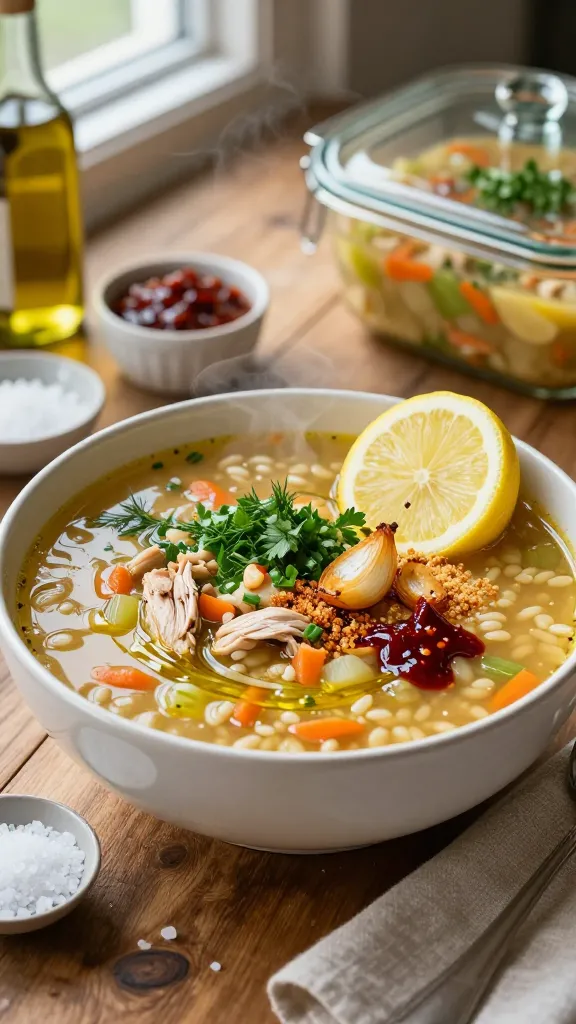
Little details turn good soup into “omg give me the recipe.” Finish with acidity, garnish like you care, and store like a pro so day-two leftovers taste chef-y.
Seasoning And Brightness
- Acid: Lemon juice or a splash of vinegar at the end wakes everything up.
- Salt check: Rotisserie seasoning varies—taste before salting.
- Fresh herbs: Parsley, dill, or chives make it taste alive.
Toppings That Slap
- Crispy bits: Toasted breadcrumbs, croutons, or fried shallots.
- Heat: Chili crisp, hot sauce, or a pinch of Aleppo pepper.
- Richness: Olive oil drizzle or a dollop of Greek yogurt.
Storage And Reheat Tips
- Keep noodles/rice separate so they don’t steal your broth.
- Fridge: Up to 4 days. Freezer: Up to 3 months (without pasta).
- Reheat gently until steaming; add herbs and acid after warming to keep flavors bright.
Serve this for weeknights, sick days, or when you need something reliable and low-drama. It delivers every time, trust me.
That’s your game plan: build big flavor, treat the chicken kindly, and finish with flair. Grab that rotisserie hero from the fridge and turn it into the coziest bowl of soup you’ve had all week. Your future self will be very pleased with your life choices.