
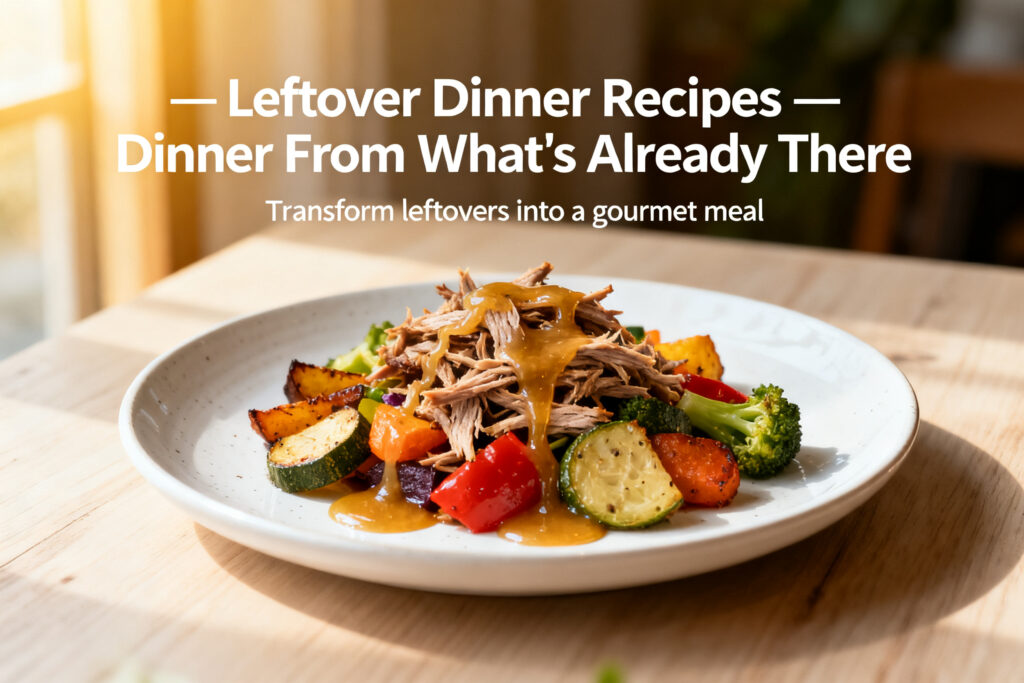
You open the fridge, see a few containers, and wonder how to make them into dinner. Good news: you’ve already done most of the work. With a few smart moves, those odds and ends can become a fresh, satisfying meal that feels intentional.
This guide shows you how to build flexible, flavorful dinners from leftovers you likely have right now. No fancy techniques, just straightforward steps and ideas you can mix and match.
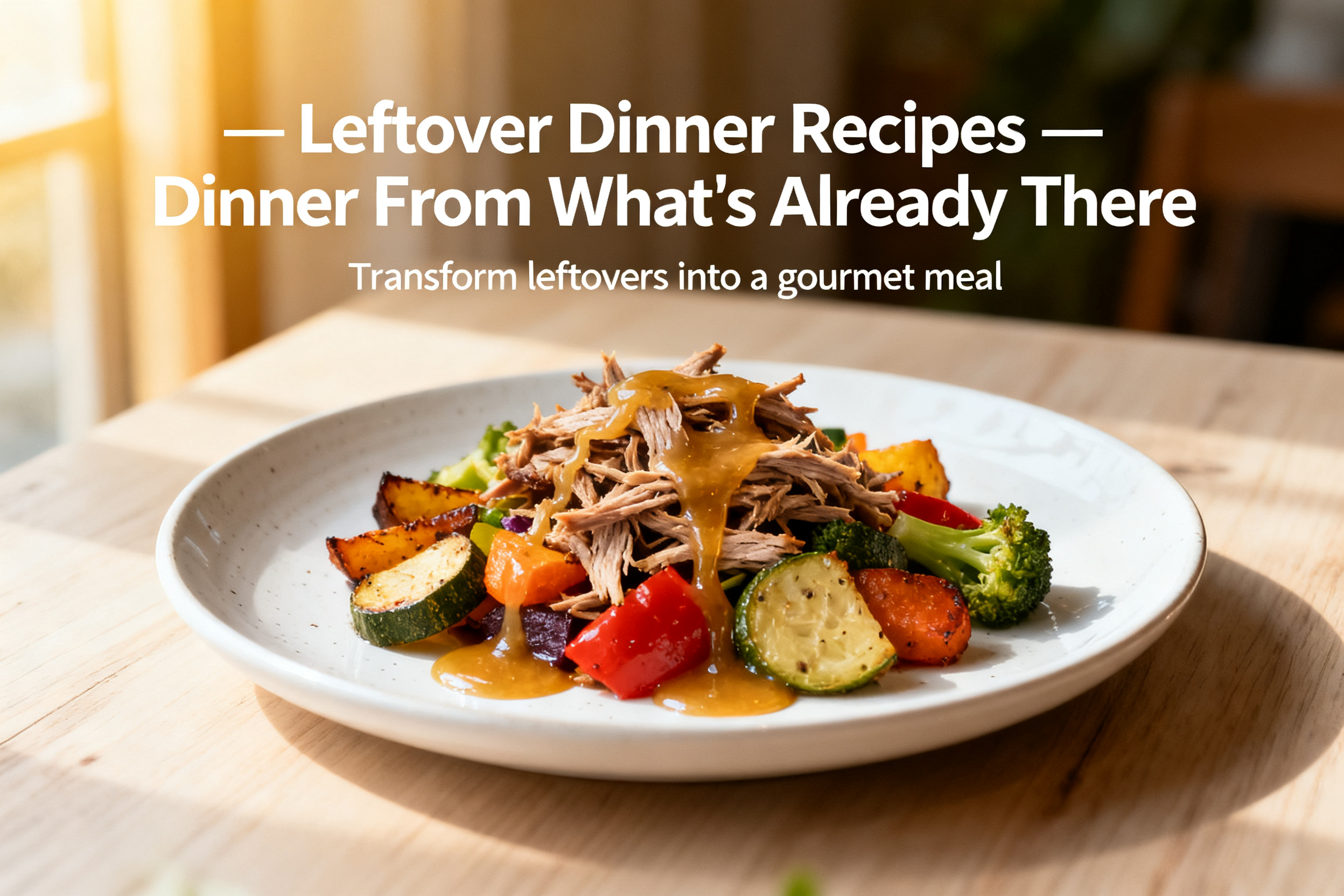
Leftover Dinner Recipes — Dinner From What's Already There - Simple Ways to Turn Extras Into a New Meal
Ingredients
Method
- Pick Your Path: Choose a style: Stir-Fry Bowl (base + protein + veg + soy/ginger sauce)
- Pasta Skillet (pasta + protein + veg + pesto or tomato sauce)
- Loaded Salad (greens + protein + veg + tangy dressing)
- Quesadillas/Wraps (tortillas + protein + veg + cheese/salsa)
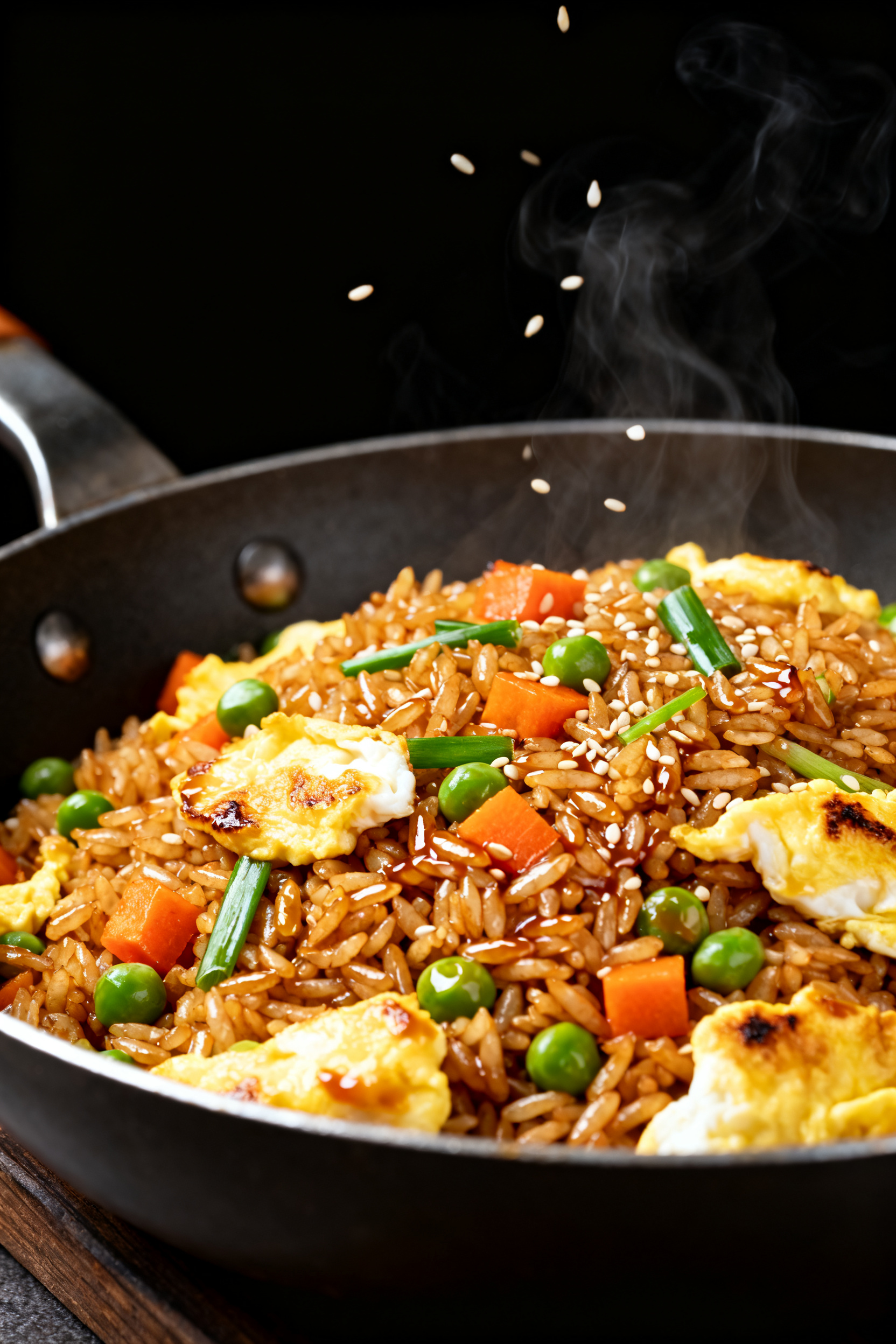
- Fried Rice (rice + egg/protein + veg + soy/sesame)
- Sheet-Pan Reheat (roast everything together and finish with a sauce)
- Check Your Leftovers: Smell and look. If anything seems off, toss it. Trim dry edges from meats or veg if needed.
- Cut for Even Heating: Slice proteins and vegetables into bite-size pieces. Smaller pieces heat faster and mix better with sauces.
- Build a Quick Sauce: Whisk 2–3 tablespoons of something salty or savory (soy, pesto, marinara) with 1–2 tablespoons of fat (olive oil, butter, sesame oil) and a splash of acid (lemon, lime, or vinegar). Add spice or herbs to taste.
- Heat the Base First: Rice/grains: warm in a pan with a little oil and a splash of water.
- Pasta: toss in a skillet with a bit of water or broth until loosened.
- Tortillas/bread: warm in a dry pan or toaster until pliable/crisp.
- Greens: keep cold for salads.
- Reheat Protein Gently: Add protein to a medium-hot pan with a teaspoon of oil. Warm just until heated through. Avoid overcooking or it will dry out.
- Add Vegetables: Toss in leftover veg. If raw and firm (like carrots), slice thin so they soften quickly. If using salad veg, add at the end to keep them crisp.
- Combine and Sauce: Mix base, protein, and veg. Pour in the sauce and stir until glossy and evenly coated. Adjust with salt, pepper, or a squeeze of citrus.
- Finish With Texture: Add a crunchy or creamy topper—nuts, seeds, cheese, avocado, or crispy onions. This makes it feel like a new meal.
- Serve Immediately: Taste, tweak seasoning, and plate. If it needs a boost, add heat (chili flakes), acid (lemon), or richness (butter or tahini).
What Makes This Special
This is not one rigid recipe. It’s a simple framework you can use any night of the week.
The goal is to combine a base (like rice, pasta, bread, or greens) with a protein, some veg, and a quick sauce or seasoning to tie it all together.
Think of it as a blueprint: choose one option from each category and you’ll have dinner in 15 minutes. It reduces waste, saves money, and helps you turn random leftovers into something that tastes brand new.
Ingredients
Use what you have. Pick one or more from each group.
- Bases: Cooked rice, quinoa, couscous, pasta, noodles, tortillas, bread, pita, naan, mixed greens, leftover roasted potatoes, polenta.
- Proteins: Rotisserie chicken, cooked ground beef or turkey, steak slices, tofu, tempeh, beans (black, chickpeas, white beans), lentils, shrimp, sausage, eggs.
- Vegetables: Roasted veggies, sautéed greens, steamed broccoli, bell peppers, onions, carrots, corn, peas, tomatoes, cucumbers, cabbage, leftover salad without dressing.
- Quick Sauces and Flavor Boosters:
- Soy sauce, teriyaki, gochujang, miso
- Olive oil, butter, sesame oil
- Lemon or lime juice, vinegar (balsamic, rice, apple cider)
- Garlic, ginger, scallions
- Jarred pesto, salsa, marinara, curry paste, barbecue sauce
- Yogurt, mayo, mustard, tahini, peanut butter
- Spices: cumin, paprika, chili flakes, curry powder, Italian seasoning
- Fresh herbs: cilantro, parsley, basil, dill
- Toppers: Nuts, seeds, croutons, crispy onions, grated cheese, feta, Parmesan, avocado, pickles, kimchi, olives.
Step-by-Step Instructions
- Pick Your Path: Choose a style:
- Stir-Fry Bowl (base + protein + veg + soy/ginger sauce)
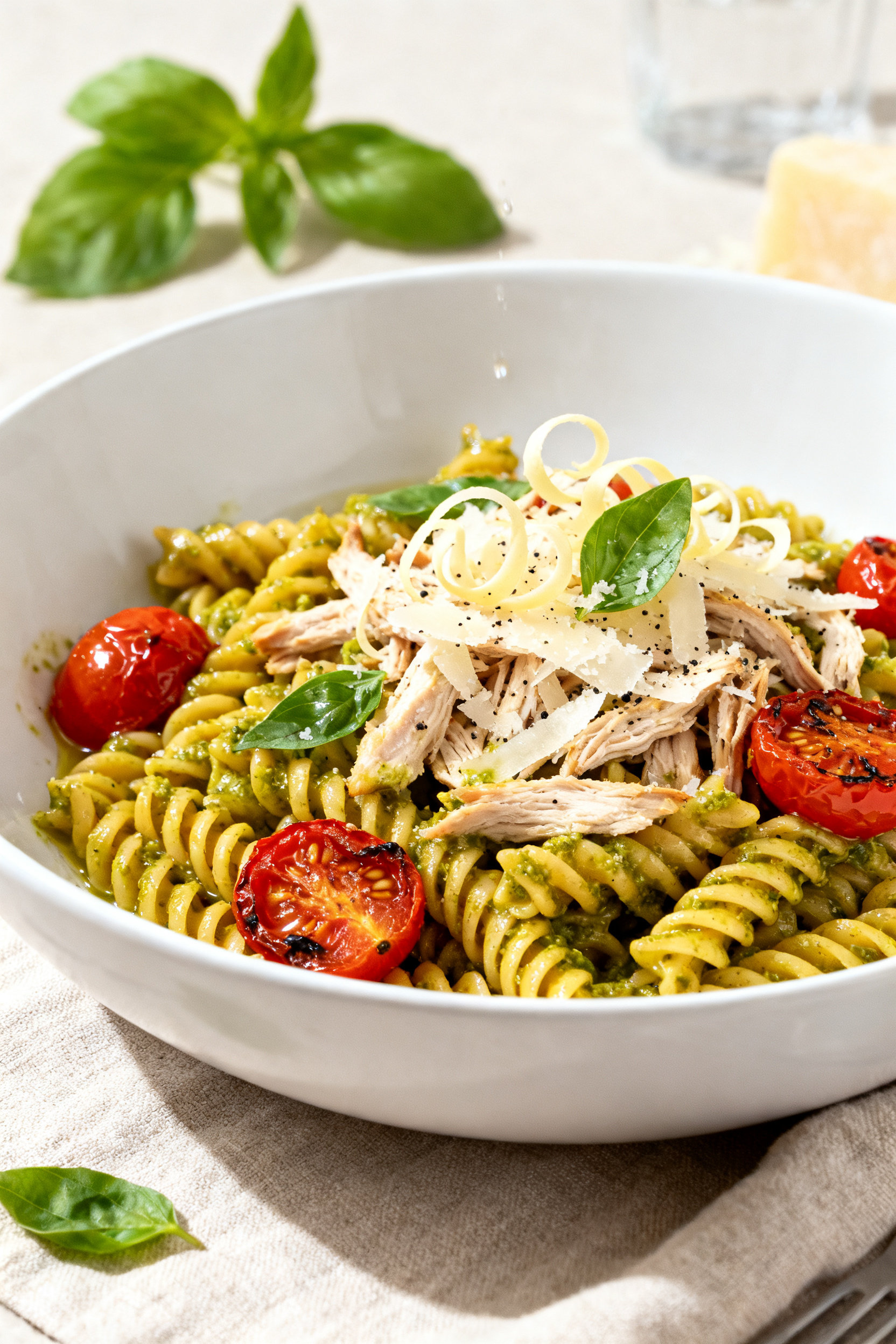
- Pasta Skillet (pasta + protein + veg + pesto or tomato sauce)
- Loaded Salad (greens + protein + veg + tangy dressing)
- Quesadillas/Wraps (tortillas + protein + veg + cheese/salsa)
- Fried Rice (rice + egg/protein + veg + soy/sesame)
- Sheet-Pan Reheat (roast everything together and finish with a sauce)
- Check Your Leftovers: Smell and look.
If anything seems off, toss it. Trim dry edges from meats or veg if needed.
- Cut for Even Heating: Slice proteins and vegetables into bite-size pieces. Smaller pieces heat faster and mix better with sauces.
- Build a Quick Sauce: Whisk 2–3 tablespoons of something salty or savory (soy, pesto, marinara) with 1–2 tablespoons of fat (olive oil, butter, sesame oil) and a splash of acid (lemon, lime, or vinegar).
Add spice or herbs to taste.
- Heat the Base First:
- Rice/grains: warm in a pan with a little oil and a splash of water.
- Pasta: toss in a skillet with a bit of water or broth until loosened.
- Tortillas/bread: warm in a dry pan or toaster until pliable/crisp.
- Greens: keep cold for salads.
- Reheat Protein Gently: Add protein to a medium-hot pan with a teaspoon of oil. Warm just until heated through. Avoid overcooking or it will dry out.
- Add Vegetables: Toss in leftover veg.
If raw and firm (like carrots), slice thin so they soften quickly. If using salad veg, add at the end to keep them crisp.
- Combine and Sauce: Mix base, protein, and veg. Pour in the sauce and stir until glossy and evenly coated.
Adjust with salt, pepper, or a squeeze of citrus.
- Finish With Texture: Add a crunchy or creamy topper—nuts, seeds, cheese, avocado, or crispy onions. This makes it feel like a new meal.
- Serve Immediately: Taste, tweak seasoning, and plate. If it needs a boost, add heat (chili flakes), acid (lemon), or richness (butter or tahini).
Storage Instructions
- Timing: Most cooked leftovers are best within 3–4 days when kept in the fridge.
- Containers: Store components separately if possible (base, protein, veg, sauce) to keep textures right.
Use airtight containers.
- Freezer Tips: Rice, cooked grains, beans, stews, and many meats freeze well for up to 2–3 months. Avoid freezing dressed salads or high-water veg like cucumbers.
- Reheating: Reheat gently with a splash of water or broth. For crispness, use a skillet or oven instead of the microwave.
Why This is Good for You
- Balanced: You’re mixing carbs, protein, and fiber-filled veggies.
That keeps you full and energized.
- Less Waste: Using what you have saves money and reduces food waste.
- Flexible Nutrition: You can tailor salt, fat, and spice levels for your needs.
- Fast: Most meals take 10–15 minutes, which helps you avoid takeout and extra sodium.
Common Mistakes to Avoid
- Overheating: Leftovers dry out fast. Use medium heat and stop when warmed through.
- Skipping Acid: A squeeze of lemon or splash of vinegar brightens tired flavors.
- Too Many Sauces: Stick to one main flavor profile. Mixing pesto, soy, and barbecue can get muddy.
- Ignoring Texture: Add crunch or creaminess at the end.
It changes everything.
- Not Seasoning at the End: Taste and adjust salt, pepper, and heat right before serving.
Recipe Variations
- 15-Minute Fried Rice: Warm oil in a pan, add minced garlic and any chopped veg. Push aside, scramble an egg, then add cold rice and soy sauce. Finish with sesame oil and scallions.
- Chicken Pesto Pasta: Toss warm pasta, shredded chicken, a spoon of pesto, and a splash of pasta water.
Add cherry tomatoes and Parmesan.
- BBQ Wraps: Combine leftover pork or chicken with barbecue sauce. Layer into warm tortillas with slaw and pickles.
- Mediterranean Grain Bowl: Quinoa, chickpeas, cucumbers, tomatoes, olives, and feta. Drizzle with lemon, olive oil, and oregano.
- Veggie Quesadillas: Sauté peppers and onions, add beans and cheese between tortillas.
Cook until crisp; serve with salsa and yogurt or sour cream.
- Curry Soup Stretch: Simmer leftover roasted veg with broth and a spoon of curry paste. Blend or leave chunky. Stir in coconut milk if you have it.
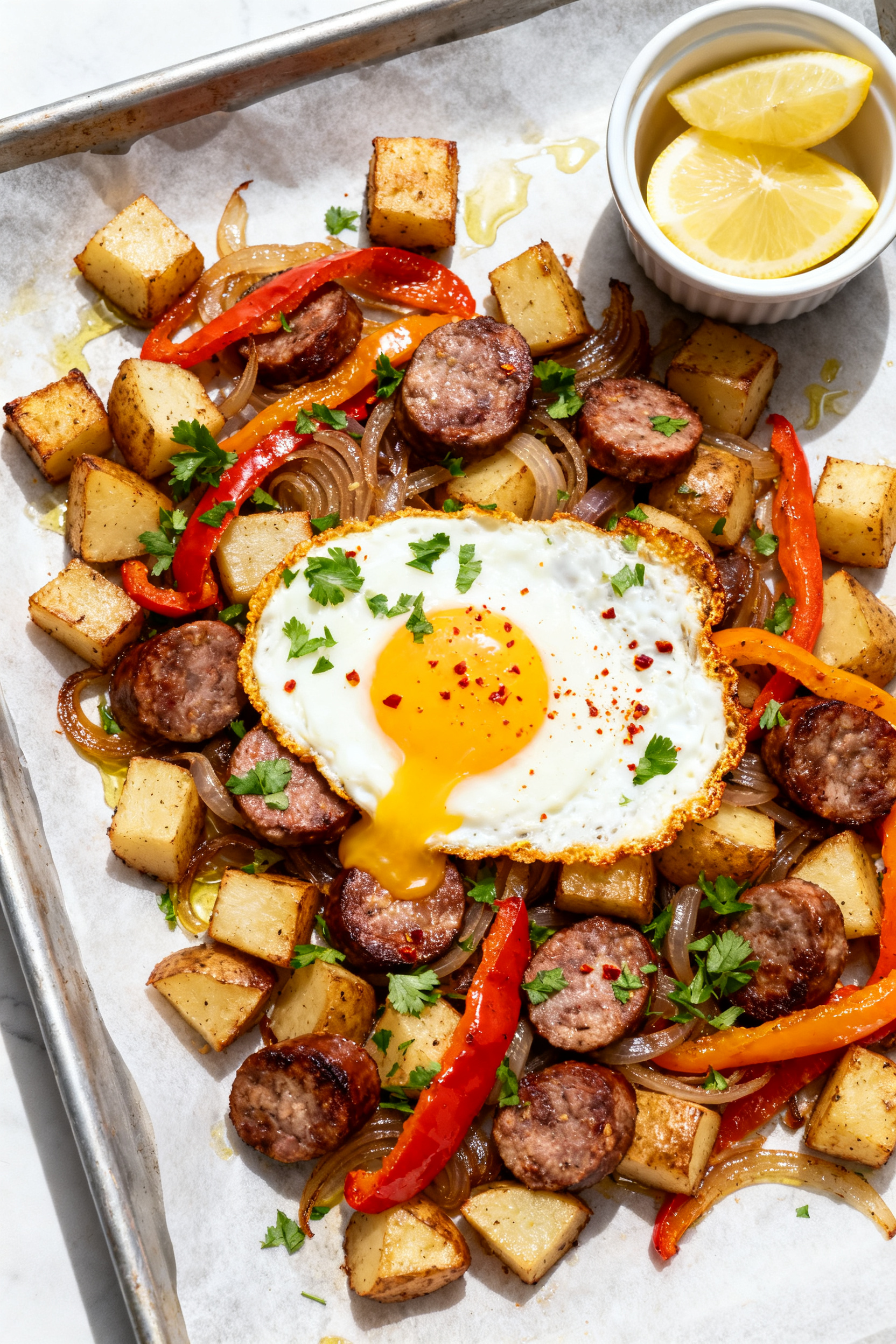
- Sheet-Pan Hash: Chop roasted potatoes, veg, and sausage.
Roast at 425°F (220°C) for 10–12 minutes to re-crisp. Top with a fried egg.
FAQ
How do I know if leftovers are still safe to eat?
Smell and look for changes. If it smells sour, looks slimy, or has mold, toss it.
When in doubt, throw it out. Most cooked foods last 3–4 days in the fridge when stored properly.
What if my leftovers are dry?
Add moisture while reheating: a splash of water, broth, or a knob of butter. Sauces like pesto, marinara, or a quick yogurt dressing also help bring life back.
Can I mix different cuisines?
Yes, but keep a clear flavor direction.
For example, soy-sesame-ginger works well together; pesto with lemon and Parmesan is another lane. Avoid combining strong sauces that compete.
How can I make it vegetarian or vegan?
Use beans, lentils, tofu, or tempeh for protein. Choose plant-based sauces like tahini-lemon, peanut-lime, or tomato-basil.
Finish with nuts, seeds, or avocado for richness.
What’s the best way to reheat pasta?
Skillet with a splash of water or broth works best. Stir until it loosens and heats through, then add sauce and a little olive oil or butter for gloss.
Can I meal-prep this approach?
Absolutely. Cook a grain, a protein, and roast a tray of vegetables.
Store separately. Mix and match with quick sauces during the week so meals don’t feel repetitive.
How do I prevent soggy stir-fries?
Use high heat, don’t overcrowd the pan, and keep ingredients dry. Add sauce at the end and cook just until it clings to the food.
What if my leftovers are already heavily seasoned?
Balance them out with neutral bases like rice, pasta, or greens.
Add a simple sauce (olive oil and lemon) instead of extra salt to avoid over-seasoning.
In Conclusion
Leftovers aren’t a compromise—they’re a shortcut. With a base, a protein, some veg, and a simple sauce, you can turn a random mix into a real dinner fast. Keep the flavors focused, add a bright finish, and don’t forget texture.
You’ll save time, money, and stress, and you might even like the second act better than the original meal.
Printable Recipe Card
Want just the essential recipe details without scrolling through the article? Get our printable recipe card with just the ingredients and instructions.