
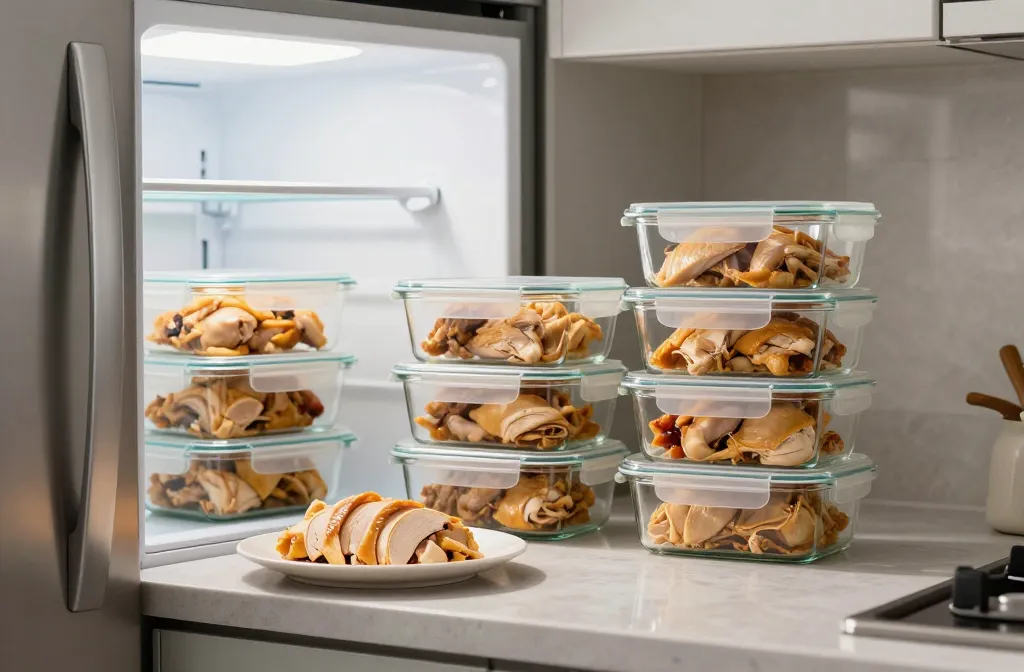
You cooked a gorgeous chicken dinner, crushed it, and now you’ve got leftovers staring at you like, “What’s the move?” Short answer: you’ve got a small window to enjoy them safely and deliciously. Let’s break down exactly how long leftover chicken lasts in the fridge, how to store it right, and when to toss it without second-guessing. Ready to keep your meals tasty and your stomach happy? Let’s go.
1. The Golden Window: Exactly How Long You’ve Got
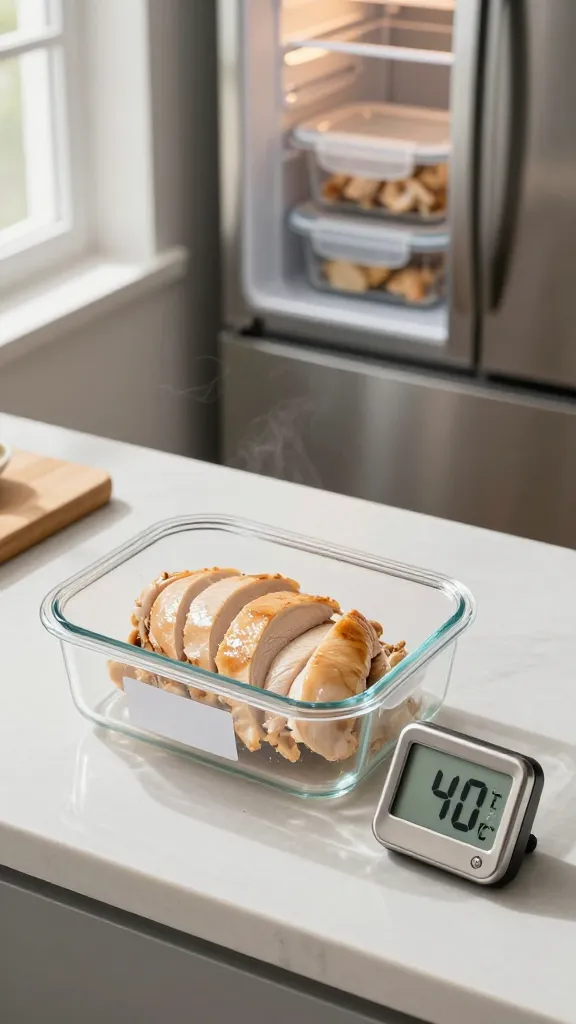
Here’s the headline: cooked chicken lasts 3 to 4 days in the fridge. That applies to roasted, grilled, baked, sautéed—basically any fully cooked chicken. If you hit day 5, it’s a gamble you don’t want to take.
Why this matters? Bacteria like Salmonella and Campylobacter don’t care that your lemon-pepper rub slapped. They thrive in the danger zone if storage goes sideways. Stick to the time window and you’re golden.
Key Points
- Fridge shelf life: 3–4 days at or below 40°F (4°C)
- Freezer option: Up to 3–4 months for best quality (wrap it tight)
- Clock starts: When the chicken cools and hits the fridge—within 2 hours of cooking
Use this rule when you meal-prep on Sundays or bring home rotisserie chicken midweek. You’ll actually finish it while it’s still prime.
2. Store It Like You Mean It: Containers, Cooling, And Placement
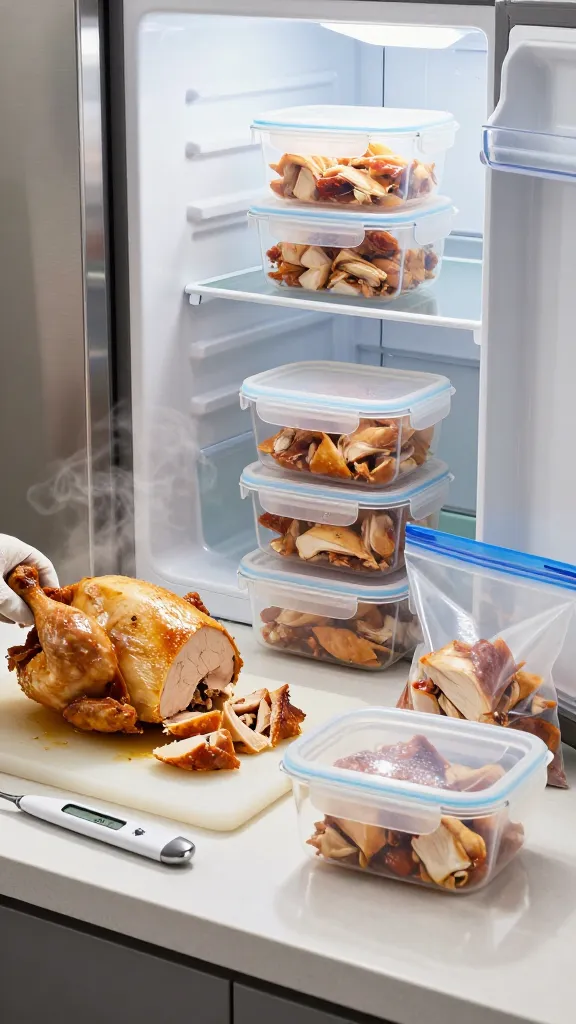
Storage makes or breaks your leftovers. Do it right and your chicken stays juicy and safe. Do it wrong and, well, let’s not.
Cool it fast, keep it airtight, and stash it where the fridge stays coldest. That’s the trifecta.
Tips For Max Freshness
- Cool quickly: Cut large pieces or whole birds into smaller chunks so they cool within 2 hours.
- Use shallow containers: 1–2 inches deep helps chill faster and prevents bacteria growth.
- Airtight all the way: Snap-lid containers or heavy-duty zip bags keep out air and odors.
- Label and date: Future you will forget. Slap on a date—no mental math later.
- Prime fridge spot: Back of the middle shelf, not the door where temps fluctuate.
What About Sauces And Salads?
- Sauced chicken: Often stays moist longer but still follows the 3–4 day rule.
- Chicken salads: Mayo or yogurt-based salads also last 3–4 days if kept cold and sealed.
Better storage equals better flavor. Plus, no mystery smells greeting you at 10 p.m. snack time—win-win.
3. Smell Test? Not Enough. How To Know When To Toss
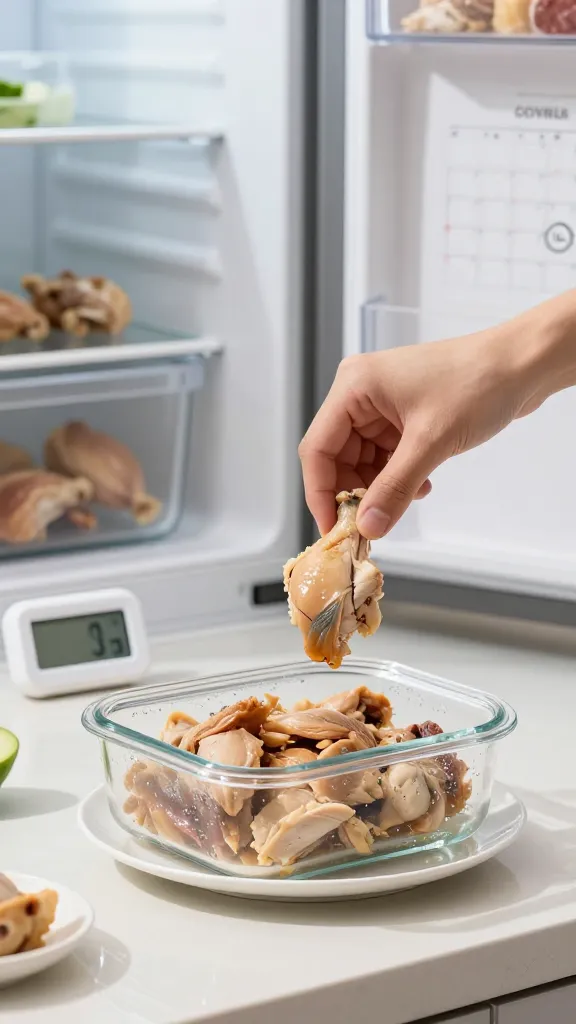
Some leftovers look fine and still betray you. Don’t rely on vibes alone—use your senses and the calendar. FYI, reheating won’t fix spoiled chicken. It just makes hot, spoiled chicken.
Red Flags To Watch
- Funky odor: Sour, eggy, or “something’s off” smell = bye.
- Weird texture: Slimy, sticky, or tacky surface means microbial party time (not the fun kind).
- Color changes: Gray or greenish tints are your cue to ditch it.
- Time’s up: Past 4 days? Don’t push your luck, seriously.
Cross-Contamination Traps
- Open containers: Fridge odors and bacteria love a casual lid.
- Dirty utensils: Dipping the same spoon from raw to cooked is a hard no.
- Warm counters: If chicken sat out over 2 hours (1 hour if it’s hot in the room), toss it.
When in doubt, throw it out. A wasted portion beats a ruined weekend, IMO.
4. Reheat Like A Pro: Keep It Juicy, Keep It Safe
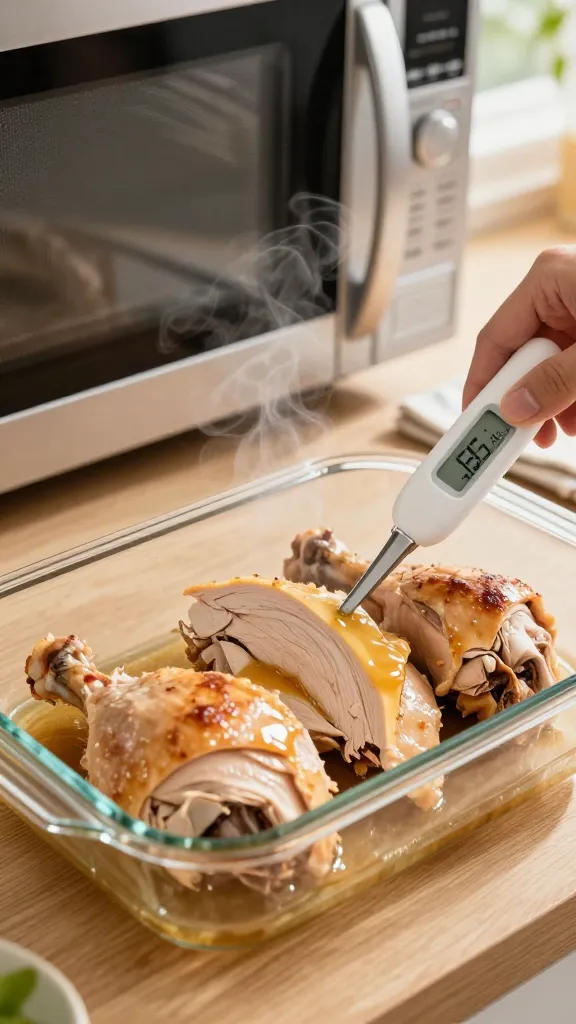
You want hot, safe, still-delicious chicken—not a dry, sad puck. The trick? Gentle heat and enough moisture. Also, hit the right internal temperature.
Safe Reheating Basics
- Target temp: Reheat to 165°F (74°C) throughout. Use a quick-read thermometer if you’ve got one.
- One reheat rule: Reheat only what you’ll eat once. Repeated cooling and reheating invites bacteria.
- Stir or flip: Hot spots in microwaves are sneaky; move pieces around.
Best Methods (Without Drying It Out)
- Microwave: Add a splash of broth or water, cover loosely, heat in 45–60 second bursts, rest 1 minute.
- Skillet: Medium heat with a little oil or broth, cover to steam, 3–5 minutes depending on size.
- Oven: 325–350°F, covered, with a few tablespoons of liquid; check after 10–15 minutes.
- Air fryer: Quick crisp for wings or breaded pieces—watch closely to avoid drying out.
Pro Moves
- Shred and warm in sauce for instant tacos or BBQ sliders.
- Steam over simmering broth for ultra-juicy results.
- Toss into soups or stir-fries so the liquid keeps it tender.
Heat smart and your leftovers taste like a fresh meal, not an obligation.
5. Freeze It Or Lose It: When You Need More Time
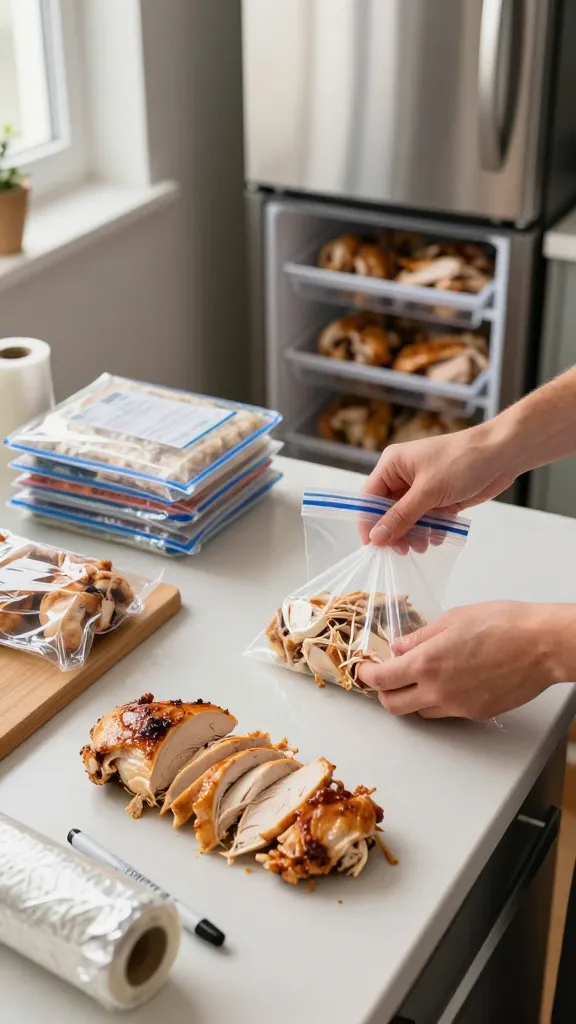
Not planning to eat it within 3–4 days? Freeze it and relax. Frozen cooked chicken keeps quality for 3–4 months, and it stays safe even longer if it stays frozen solid.
The trick is preventing freezer burn and future confusion. Nobody enjoys “mystery meat, circa who-knows-when.”
Freezing Tips
- Portion first: Freeze in single-meal packs for faster thawing.
- Wrap tight: Press out air from freezer bags or use a double-wrap with plastic + foil.
- Label like a boss: Write the date and cut/style (e.g., “Pulled Chicken 8/1”).
Thawing + Quick Uses
- Best thaw: In the fridge 12–24 hours.
- Faster option: Cold-water bath, sealed bag, change water every 30 minutes.
- Straight from frozen: Works in soups, stews, or saucy skillet dishes.
Frozen backups save money, reduce waste, and make weeknights way easier—trust me, you’ll thank yourself later.
Bottom line: leftover chicken lasts 3–4 days in the fridge, gets a second life with smart reheating, and freezes like a champ. Keep it sealed, date it, and listen to your nose. You’ve got this—now go turn that leftover into something you actually can’t wait to eat.