
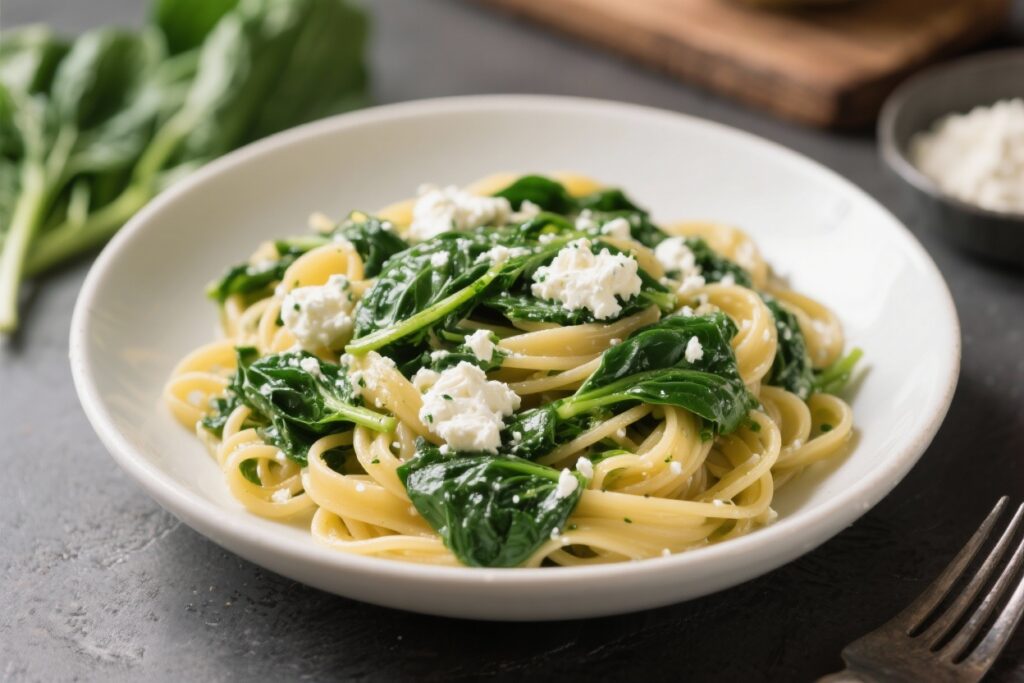
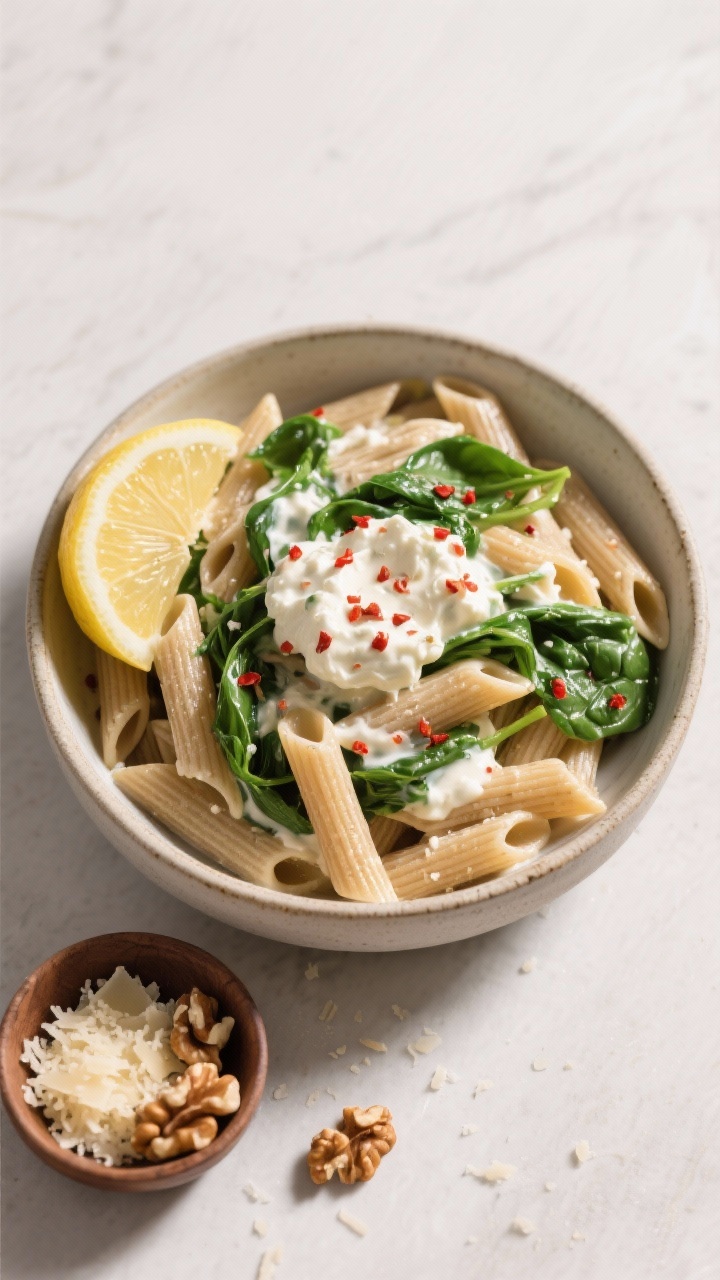
You know that moment when you want dinner fast, delicious, and not a carb crime scene? This pasta is your new cheat code. Creamy ricotta meets garlicky spinach and lemon brightness—big flavor, minimal effort, zero drama.
It feels like restaurant comfort, but it’s built with clean, wholesome ingredients you can pronounce. And yes, it’s a legit weeknight meal that still looks fancy on a plate.
What Makes This Recipe So Good
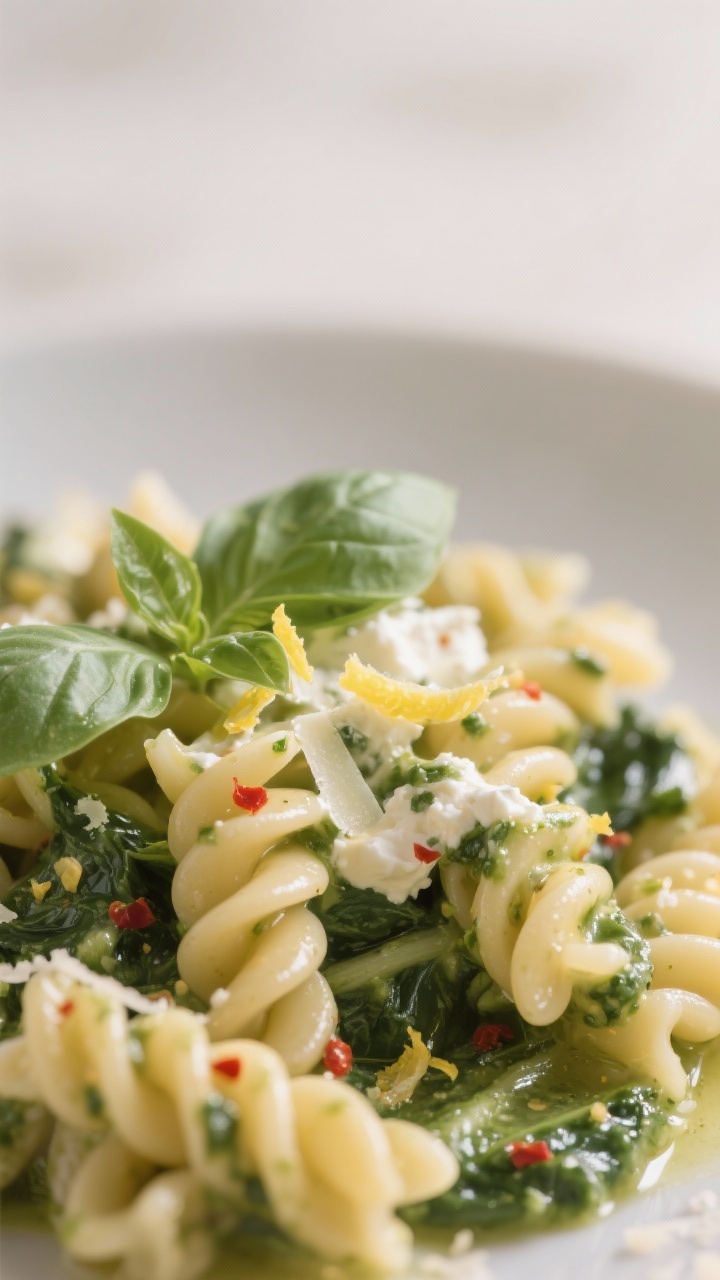
Creamy without cream. Ricotta and a splash of starchy pasta water create a silky sauce—no heavy cream, no food coma.
Protein-packed and green-loaded. Ricotta, Parmesan, and spinach deliver protein, calcium, iron, and fiber. Your body will send a thank-you email.
Bright and balanced. Lemon zest and a pinch of chili flakes cut through the richness for a clean, fresh finish.
Flexible by design. Swap in whole-wheat or chickpea pasta, add mushrooms or peas, or toss with fresh herbs.
It’s hard to mess up—unless you forget the salt. Don’t.
What You’ll Need (Ingredients)
- 10–12 oz short pasta (fusilli, penne, or rigatoni; whole-wheat or legume pasta works great)
- 2 tbsp extra-virgin olive oil
- 3–4 cloves garlic, thinly sliced or minced
- 1 small shallot, finely chopped (optional but excellent)
- 6–8 oz fresh spinach (baby spinach preferred; can use frozen, thawed and well-drained)
- 1 cup ricotta cheese (part-skim for lighter, whole-milk for extra creaminess)
- 1/2 cup grated Parmesan or Pecorino Romano, plus more for serving
- 1 lemon, zested and juiced (about 1–2 tbsp juice)
- 1/2–1 tsp red pepper flakes (to taste)
- Salt and freshly ground black pepper, to taste
- 1/4–1/2 cup reserved pasta cooking water
- Fresh basil or parsley, chopped, for garnish (optional but recommended)
- Toasted pine nuts or walnuts, for crunch (optional)
Step-by-Step Instructions
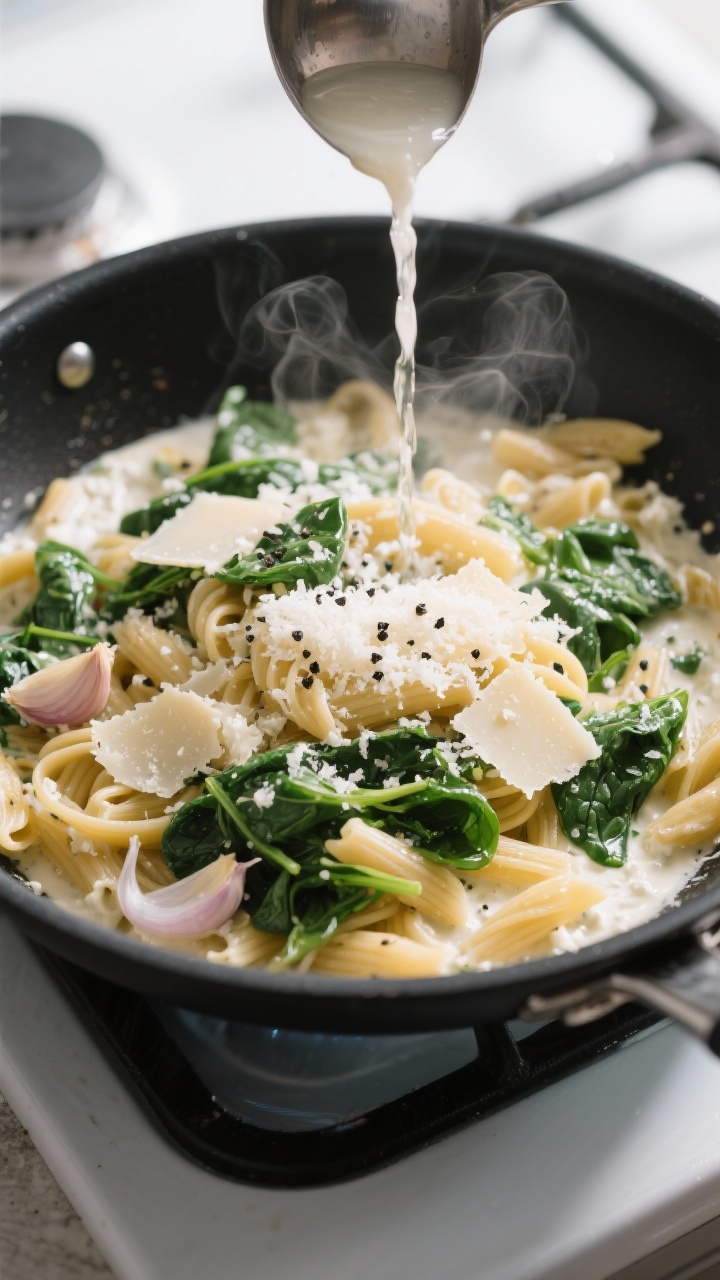
- Boil the pasta. Bring a large pot of salted water to a rolling boil. Cook the pasta until just shy of al dente (it will finish in the sauce). Reserve at least 1/2 cup of the starchy water before draining.
- Sauté aromatics. In a wide skillet, heat olive oil over medium.
Add shallot and cook 2 minutes until translucent. Add garlic and cook 30–60 seconds until fragrant—don’t brown it unless you enjoy bitterness.
- Wilt the spinach. Add spinach by the handful with a pinch of salt. Toss until wilted and glossy.
If using frozen spinach, add it wrung-dry and warm through.
- Build the creamy base. Lower heat. Stir in ricotta, half the Parmesan, lemon zest, and red pepper flakes. Add a splash of pasta water to loosen; you want a velvety, spoonable sauce.
- Season like you mean it. Add salt and black pepper, then a squeeze of lemon juice.
Taste. Adjust acid, heat, and salt. This is where flavor wakes up.
- Marry the pasta to the sauce. Add drained pasta to the skillet.
Toss vigorously over low heat, adding more pasta water as needed to coat every curve and ridge. Finish with remaining Parmesan.
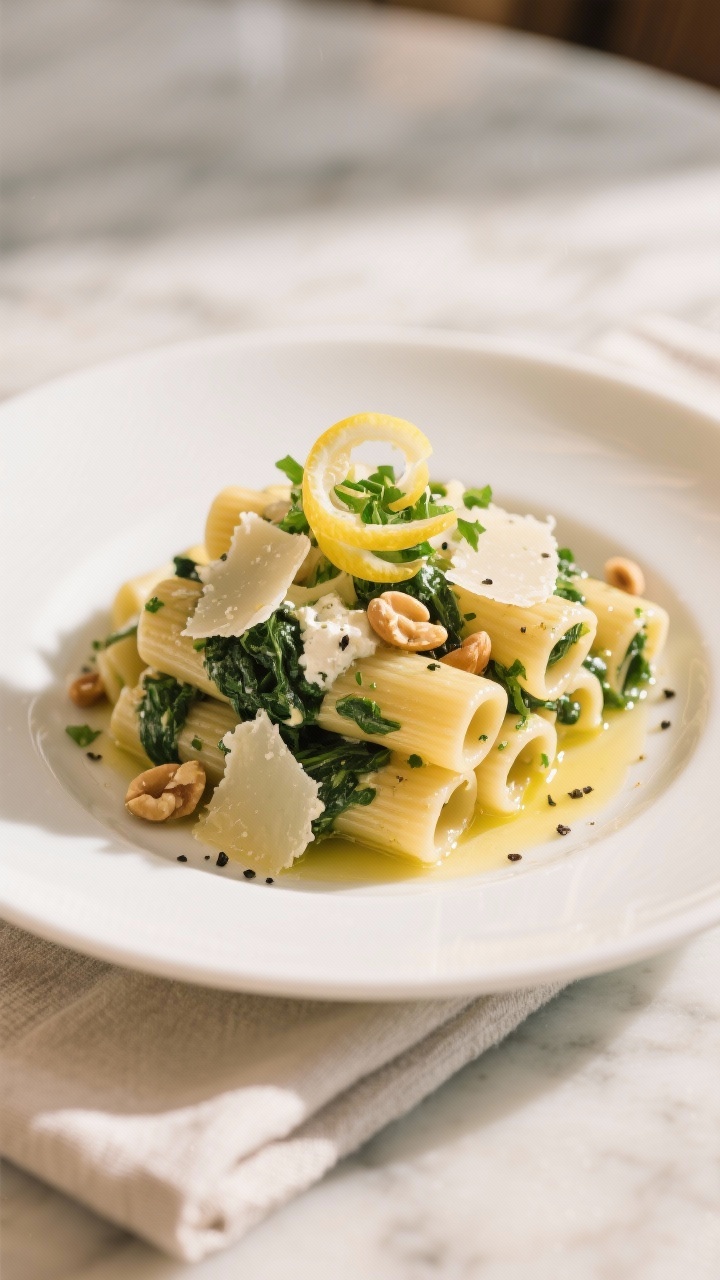
- Garnish and serve. Top with herbs, extra cheese, and nuts if using. Twirl onto warm plates and serve immediately while the sauce is ultra-silky.
Keeping It Fresh
Storage: Refrigerate leftovers in an airtight container for up to 3 days.
The sauce will thicken; it’s normal.
Reheat: Warm gently over low heat with a splash of water, milk, or broth to loosen. Microwave works, but stir halfway for even creaminess.
Make-ahead tips: Mix the ricotta, lemon zest, Parmesan, and pepper flakes in advance; refrigerate up to 2 days. Cook pasta and spinach fresh for best texture.
Not ideal for freezing. Ricotta can become grainy after thawing.
If you must freeze, undercook the pasta and expect a more rustic texture, IMO.
What’s Great About This
- Balanced macros without the math headache. Carbs for energy, protein from ricotta and Parmesan, and greens for micronutrients.
- Weeknight-fast. On the table in 20 minutes with minimal cleanup. One pot, one skillet, heroic results.
- Kid-friendly but adult-approved. Creamy, not spicy (unless you want it), and the spinach hides like a pro among the pasta spirals.
- Budget-smart. Simple pantry staples that feel premium with the lemon-zest glow-up.
Pitfalls to Watch Out For
- Under-salting the water. Your pasta water should taste like the ocean. Bland water = bland pasta.
Don’t be shy.
- Ricotta scorch. Keep heat low once ricotta is in the pan. High heat can make it grainy. Smooth is the goal.
- Skipping the pasta water. That starchy liquid is your best friend for emulsion.
Plain water won’t cut it.
- Overcooking the pasta. You’re finishing it in the sauce. If it’s perfect in the pot, it’ll be soft on the plate. Pull it early.
- Too much lemon juice too early. Add gradually and taste.
Acid brightens; too much can curdle vibes (and sauce).
Different Ways to Make This
- High-protein twist: Use chickpea or lentil pasta and whole-milk ricotta. Add peas for extra protein and sweetness.
- Mushroom umami version: Sauté sliced cremini or shiitake with the shallot. Deglaze with a splash of white wine.
- Sun-dried tomato pop: Add chopped oil-packed sun-drieds and a little of their oil.
Instant Mediterranean vacation.
- Herb garden style: Fold in chopped basil, parsley, and chives. Finish with a drizzle of good olive oil.
- Green machine: Swap half the spinach for arugula or kale (finely chopped). Bitter greens + creamy ricotta = chef’s kiss.
- Heat lovers: Use Calabrian chili paste instead of flakes for a deeper, fruity spice.
- Gluten-free: Use quality GF pasta and watch the cook time like a hawk; it can go from al dente to mush quickly.
FAQ
Can I use cottage cheese instead of ricotta?
Yes.
Blend cottage cheese until smooth to mimic ricotta’s texture. Whole-milk versions give a creamier sauce; adjust salt since cottage cheese can be saltier.
What pasta shape works best?
Short, ridged shapes like fusilli, radiatori, or rigatoni hold the sauce beautifully. Long noodles work, but the ricotta sauce clings better to nooks and crannies.
Is it still healthy with whole-milk ricotta?
Absolutely.
Whole-milk ricotta offers better mouthfeel and satiety. Portion control and balance matter more than chasing zero-fat everything, FYI.
Can I add protein without meat?
Yes—peas, white beans, or edamame fold in seamlessly. Toasted nuts also add protein and satisfying crunch.
How do I prevent the sauce from getting gritty?
Keep the heat low after adding ricotta, add pasta water gradually, and toss constantly.
Overheating is the usual culprit.
What if I only have frozen spinach?
Use it. Thaw, squeeze out excess water, and add after the aromatics. Season a bit more since frozen spinach can taste muted.
Can I make this without Parmesan?
Yes.
Use Pecorino Romano for a sharper edge, or try nutritional yeast for a dairy-light option. Add a pinch more salt and lemon to balance.
Final Thoughts
This Healthy Vegetarian Pasta with Spinach & Ricotta is the reliable weeknight hero you’ll actually look forward to cooking. It’s rich without being heavy, fast without tasting rushed, and flexible enough to match whatever’s in your fridge.
Master the seasoning, respect the pasta water, and you’ll hit restaurant-level comfort in under 20 minutes. Now go be that person who “just throws something together” and somehow it’s incredible. Your secret’s safe with me.
Printable Recipe Card
Want just the essential recipe details without scrolling through the article? Get our printable recipe card with just the ingredients and instructions.