
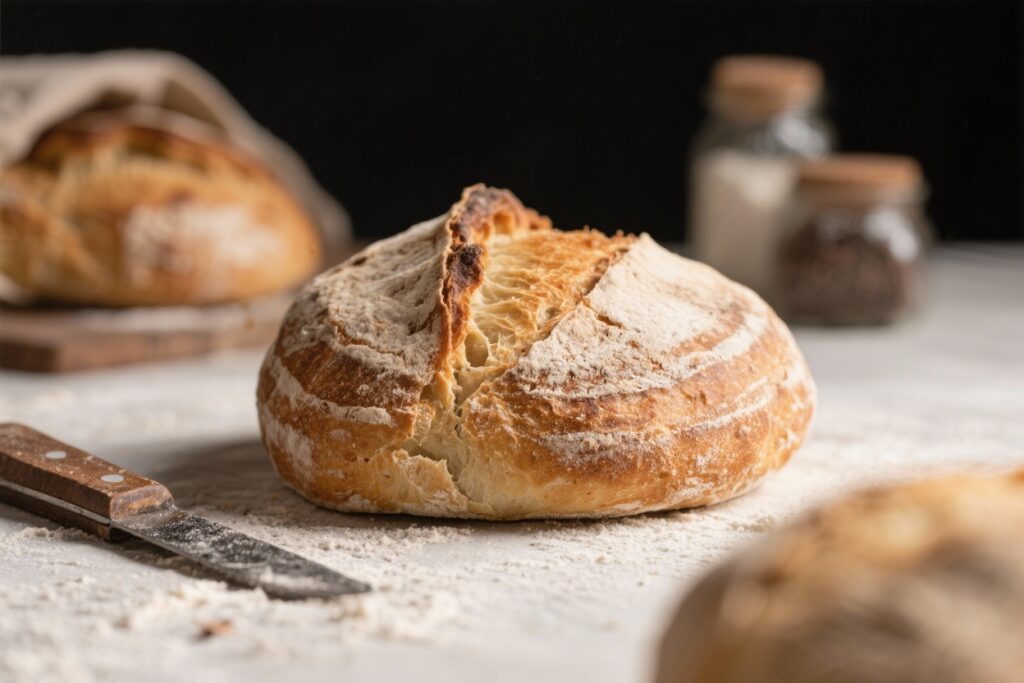
You know that bakery smell that stops you mid-scroll? This is that—minus the 4 a.m. wake-up call. We’re talking crackly crust, chewy interior, and big, gorgeous air pockets that make butter feel underdressed.
No stand mixer, no kneading, no drama—just a bowl, time, and some heat. If you can stir, you can bake this loaf. And if you can wait overnight, you’ll swear a nonna blessed your kitchen.
The Secret Behind This Recipe

Traditional kneading develops gluten through elbow grease.
We skip that. Instead, this recipe uses high hydration and time to let gluten form naturally. The long, slow fermentation builds flavor and structure while you sleep.
A preheated Dutch oven traps steam like a mini bakery oven. That steam is your crust insurance policy—shiny, blistered, and crisp without any fancy equipment. Finally, a few folds before shaping give the dough strength, so it stands tall and bakes like a champ.
Ingredients
- 3 1/4 cups (410 g) bread flour (or 50/50 bread + all-purpose for a softer crumb)
- 1 1/2 cups (360 g) room-temp water (slightly warm in winter)
- 1 1/4 teaspoons fine sea salt
- 1/2 teaspoon instant yeast (or 3/4 tsp active dry)
- 1 tablespoon olive oil (optional, for a touch of Italian richness)
- Semolina or flour for dusting
Cooking Instructions
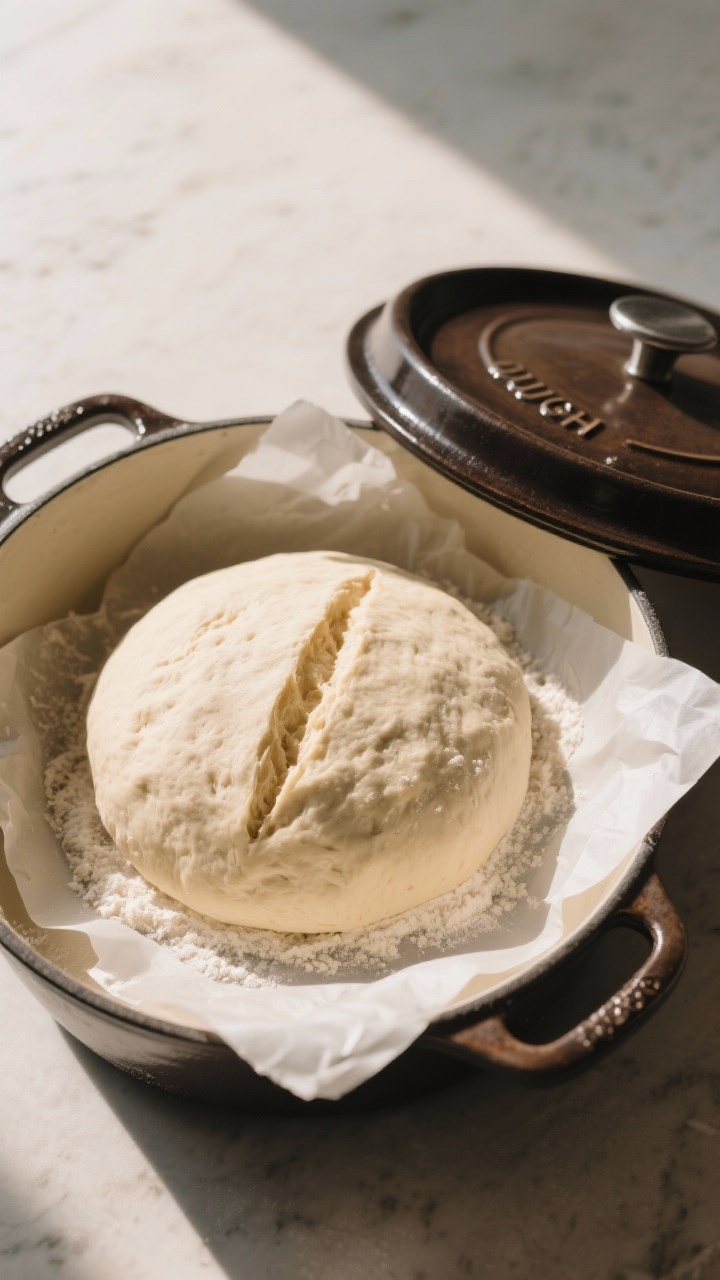
- Mix the dough (5 minutes): In a large bowl, whisk flour, salt, and yeast.
Add water (and olive oil if using). Stir with a spoon until no dry spots remain. The dough will be shaggy and sticky—perfect.
- First rise (12–18 hours): Cover the bowl tightly and let it rest at room temp (68–75°F).
It should triple in size, smell slightly sweet and yeasty, and look bubbly on top.
- Quick folds (2 minutes): Flour your hands. Gently lift one side of the dough and fold it over itself. Rotate the bowl and repeat 3–4 times.
This adds strength without kneading.
- Shape: Turn the dough onto a lightly floured surface. Tuck edges underneath to form a tight round or oval. Use a bench scraper to create surface tension by dragging the loaf gently toward you.
- Second rise (45–60 minutes): Place the dough seam-side down on a piece of parchment dusted with flour or semolina.
Cover with a towel. It should puff slightly but not spread flat.
- Preheat the oven: Put a Dutch oven (or heavy lidded pot, 4–6 qt) in your oven and preheat to 450°F (230°C) for at least 30 minutes. Hot pot = fierce oven spring.
- Score the loaf: Using a sharp knife or lame, slash a 1/2-inch deep line (or a cross) on top.
This directs expansion and gives those bakery vibes.
- Bake with steam (30 minutes): Carefully place the parchment with dough into the hot pot. Cover and bake 30 minutes. It’ll sound like a campfire when you open the lid—music to your ears.
- Finish uncovered (12–18 minutes): Remove the lid and bake until deep golden brown with blistered spots.
Internal temp should hit 208–212°F. If you like extra crackle, go darker.
- Rest (crucial!): Cool on a rack at least 45 minutes before slicing. The crumb sets as it cools.
Cutting early = gummy sadness. Resist the siren song.
Storage Tips
- Same day: Store cut-side down on a cutting board, uncovered. Keeps the crust crisp.
- 1–2 days: Wrap in a clean towel or paper bag.
Avoid plastic unless you like soft crust (some do).
- Freezing: Slice, then wrap tightly and freeze up to 2 months. To reheat, toast straight from frozen or warm in a 350°F oven for 10 minutes.
- Revive the crust: If it softens, spritz with water and bake at 375°F for 8–10 minutes. Boom—fresh again.
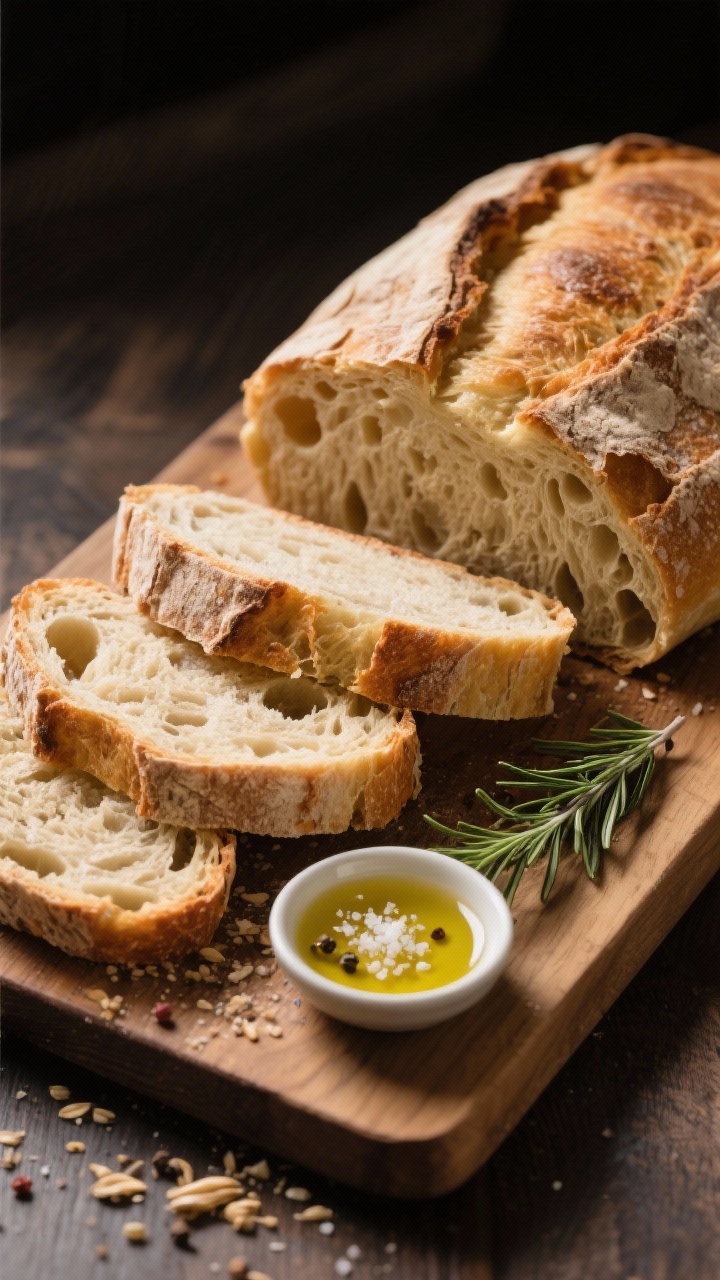
What’s Great About This
- Zero kneading: Your arms can stay on vacation.
- Bakery crust at home: The Dutch oven mimics pro steam ovens.
- Flavor-rich: Long fermentation = mild tang, nutty wheat notes, and a complex aroma.
- Foolproof timeline: Mix at night, bake in the morning.
Or mix in the morning, bake for dinner. Flexible, like your favorite yoga instructor.
- Budget-friendly: Flour, water, salt, yeast—elite results for pocket change.
Pitfalls to Watch Out For
- Too much flour during shaping: It’ll tighten the dough and mute those Instagram-worthy holes.
- Underproofing: Dense loaf, minimal rise, sad face. Look for a puffy, slightly jiggly dough before baking.
- Overproofing: If the dough collapses when scored, it rested too long.
Next time, shorten the second rise.
- Cold kitchens: Slow fermentation. Use slightly warmer water or extend rise time. FYI, flavor usually improves with patience.
- Lid off too early: No lid = no steam = meh crust.
Keep it covered for the first 30 minutes.
Variations You Can Try
- Semolina twist: Replace 20–30% of the flour with fine semolina for a sunny color and sweet, nutty bite.
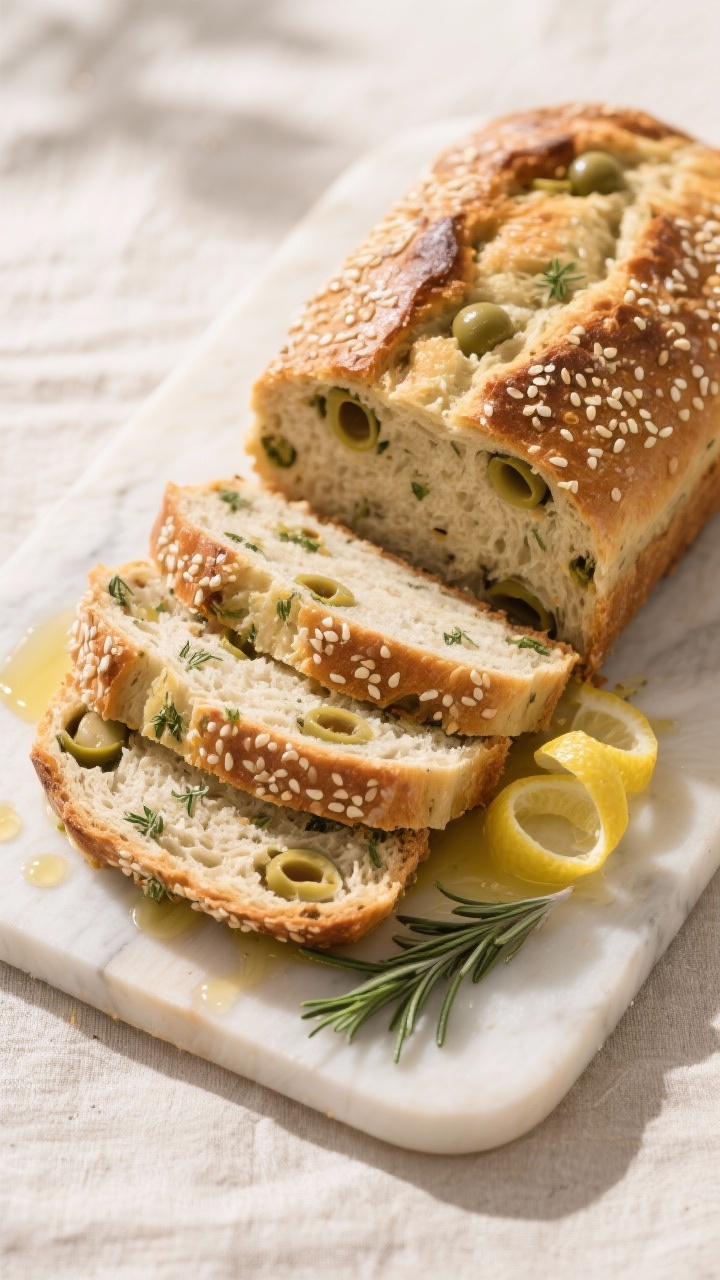
- Olive & herb: Fold in chopped olives, rosemary, and lemon zest during the quick folds. Salty, fragrant, very Italian.
- Garlic confit swirl: Add smashed garlic confit and a spoon of its oil during mixing. The crumb gets glossy and outrageous.
- Whole grain: Swap 25% of the flour with whole wheat.
Add 1–2 tablespoons extra water to compensate.
- Sesame crust: Brush the surface with water and roll in sesame seeds before the second rise for nutty crunch.
- Ciabatta-ish: Keep dough extra wet (up to 78% hydration), skip tight shaping, and bake as two flatter loaves for big open crumb.
FAQ
Can I make this without a Dutch oven?
Yes. Preheat a baking stone or heavy sheet pan at 475°F. Add a metal pan to the bottom rack.
Slide the loaf onto the stone and pour 1 cup hot water into the pan to create steam. Reduce to 450°F and bake. Not quite the same, but still excellent.
What if I only have active dry yeast?
Use 3/4 teaspoon.
Bloom it in a bit of the water for 5–10 minutes before mixing. If it foams, you’re good. If it doesn’t, your yeast ghosted you—get new yeast.
How do I know the dough is ready after the first rise?
It should be bubbly, airy, and at least doubled (often tripled).
A wet, webby surface is a green light. If it looks sleepy, give it another hour. Patience pays dividends, IMO.
Why is my crust soft after cooling?
Humidity.
Re-crisp by placing the loaf in a 375°F oven for 5–8 minutes. Let it cool on a rack for airflow—no steamy countertops.
Can I add sourdough starter?
Totally. Replace 1/2 cup (120 g) water and 1/2 cup (65 g) flour with 180 g active starter.
Reduce yeast to a pinch or skip it. Expect longer rises and deeper flavor.
How do I get bigger holes in the crumb?
Keep the dough wetter, avoid excess flour during shaping, and handle gently. Strong flour, proper fermentation, and a hot oven are your holy trinity.
What size Dutch oven should I use?
A 4–6 quart round or oval is ideal.
Too big and the loaf spreads; too small and it sticks to the lid like an overeager soufflé.
Wrapping Up
This Rustic Italian Bread Recipe (No Knead, Bakery Style) is proof that less effort can mean more flavor. You give it time; it gives you a bakery-tier loaf with crackle, chew, and swagger. Pair it with olive oil and flaky salt, or use it to upgrade your next panini.
Bake once, and your kitchen becomes the neighborhood carb HQ—no apology letters required.
Printable Recipe Card
Want just the essential recipe details without scrolling through the article? Get our printable recipe card with just the ingredients and instructions.