
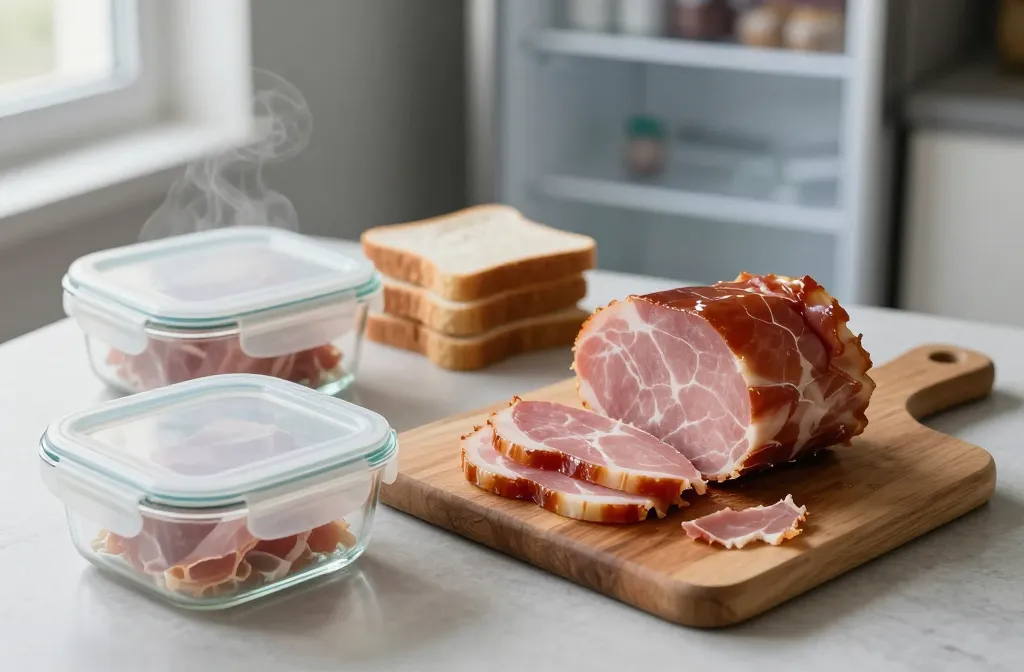
Leftover ham can be the gift that keeps on giving—until it suddenly isn’t. Want to enjoy every juicy slice without playing food roulette? Let’s lock down exactly how long ham stays safe and tasty, plus the smartest ways to store it. Spoiler: a little strategy means zero waste and maximum sandwich joy.
1. Know Your Timelines Like a Food-Safety Pro
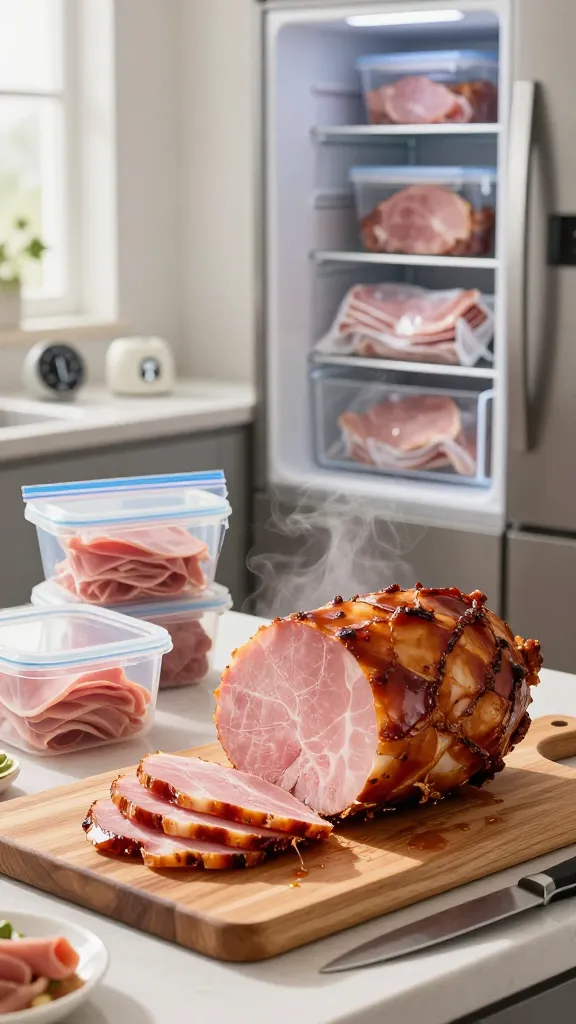
Clock’s ticking the minute your holiday feast ends. Different types of ham last different amounts of time, and your fridge or freezer makes a big difference. Learn the ranges once and you’ll never sniff-test in fear again.
Quick Reference (FYI):
- Cooked leftover ham (sliced or whole) in the fridge: 3–4 days
- Cooked leftover ham in the freezer: Best quality 2–3 months (safe longer)
- Vacuum-sealed store-bought ham (unopened): Use by “use-by” date; once opened, 3–5 days
- Spiral-cut ham: Slightly drier, so aim for 3–4 days in the fridge
- Deli-sliced ham: 3–5 days after opening
These timelines assume you handled it right from the start—refrigerated within two hours of cooking or serving. Missed that window? IMO, don’t risk it. When in doubt, toss it out.
Use these numbers to plan meals fast. You’ll save money, avoid food waste, and keep everyone happy (and, you know, healthy).
2. Cool It Fast, Store It Smart

Leftover ham stays safe when you chill it quickly and keep air out. That prevents bacteria growth and keeps moisture locked in. If you’ve ever eaten ham that tasted like pocket lint, this is why.
Best Practices:
- Slice or cube before storing: Smaller pieces cool faster and reheat evenly.
- Spread it out to cool: Don’t shove a steaming hunk into the fridge. Let it stop steaming, then chill within two hours.
- Use shallow containers: 1–2 inches deep so the cold air hits everything fast.
- Remove as much air as possible: Vacuum-seal or press air out of zip-top bags.
- Label with date and portion info: Future you will thank you during the 11 p.m. snack hunt.
Fridge vs. Freezer
- Fridge (34–38°F / 1–3°C): Ideal for the next 3–4 days. Keep ham in the coldest zone, not the door.
- Freezer (0°F / -18°C): Use heavy-duty freezer bags, double-wrap to prevent freezer burn, and lay flat to save space.
Do this right and your ham stays juicy, flavorful, and totally weeknight-ready. Less risk, more deliciousness—easy win.
3. Reheat Without Ruining The Magic
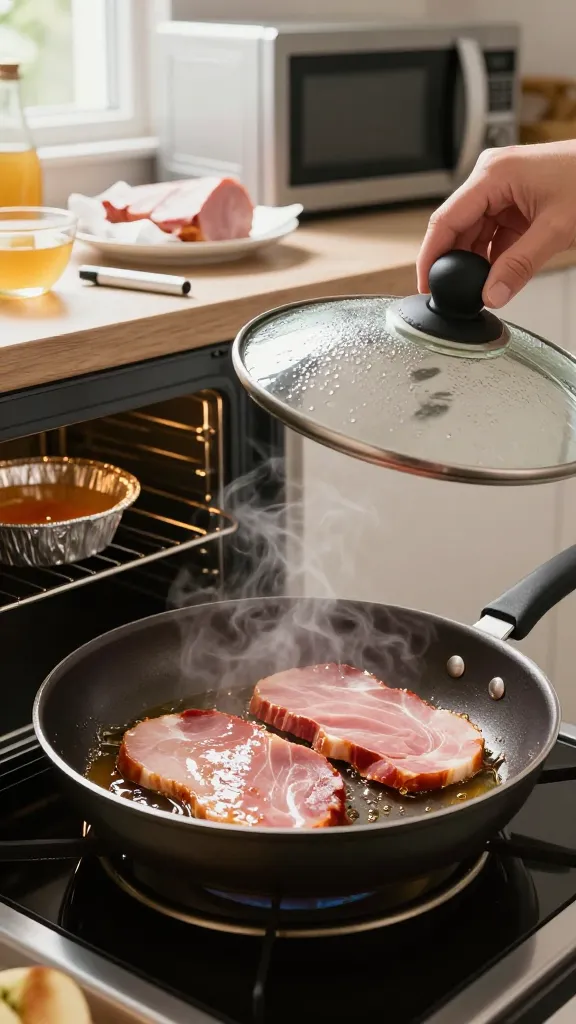
Ham dries out fast if you blast it. Gentle heat with a little moisture keeps it tender and savory. You want bouncy, juicy slices—not jerky, right?
Low-and-Slow Methods That Work:
- Skillet: Medium-low heat with a splash of water, broth, or apple juice; cover to steam. 2–4 minutes.
- Oven: Cover tightly with foil at 300°F (150°C). Add a few tablespoons of liquid to the pan. Heat 10–15 minutes for small portions.
- Microwave: Add a damp paper towel on top; 50–70% power in short bursts. Stir or flip halfway.
- Air fryer: Works for edges if you like a little crisp, but brush with a tiny bit of oil and watch closely.
Food-Safety Notes
- Target temp: Reheat leftovers to 165°F (74°C). A quick probe thermometer saves guesses.
- One reheat only: Reheat what you’ll eat. Constant reheating kills quality and, seriously, it’s not worth it.
Handled like this, leftover ham keeps its shine—great for sandwiches, fried rice, omelets, or that late-night fork-straight-from-the-fridge move. No judgment.
4. Spot The “Nope” Signs Before You Take A Bite
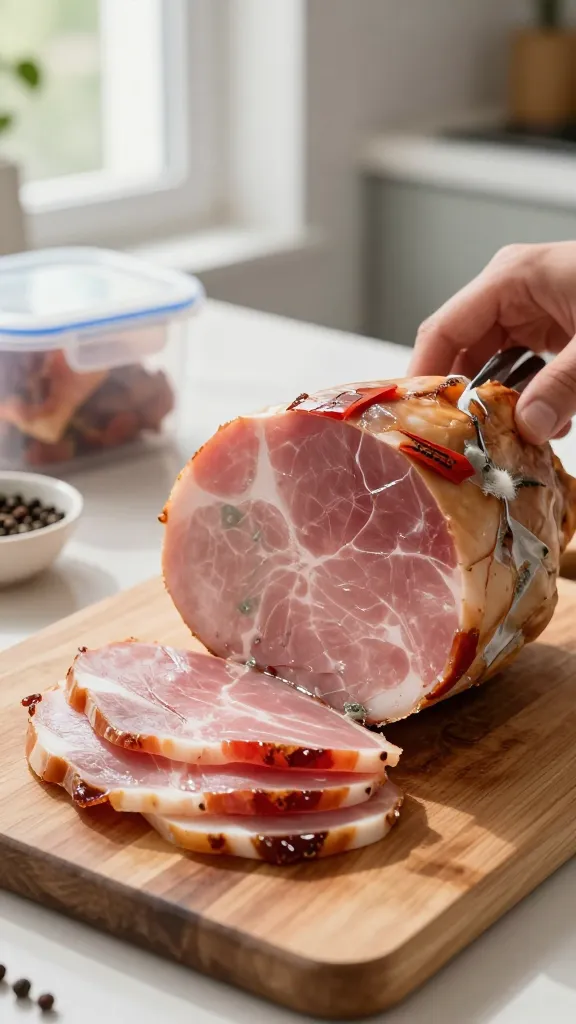
Trust your senses and a little common sense. Ham that’s turned usually advertises it loudly. Don’t try to talk yourself into “maybe it’s fine.”
Red Flags:
- Funky smell: Sour, sulfuric, or “is that the trash?” vibes mean it’s done.
- Slime or stickiness: A slick film on the surface? Hard pass.
- Discoloration: Gray, green, or iridescent sheen equals throw-away time. Oxidation can cause slight color shifts, but trust your gut.
- Mold: Obvious, but worth saying—any mold means the whole batch goes.
- Past the timeline: Even if it looks okay, 3–4 days in the fridge is your max for cooked leftovers.
Don’t Do These
- Don’t taste-test to check safety: If it’s questionable, it’s questionable.
- Don’t leave at room temp for hours: The “danger zone” (40–140°F) is a bacteria playground.
- Don’t refreeze ham that sat out: Freezing won’t fix a food safety oops.
Spot issues early and you’ll avoid stomach drama. Your future self will be very, very grateful—trust me.
5. Plan-Ahead Tricks To Use Every Last Slice

Want zero waste and max flavor? A little planning turns leftover ham into multiple easy meals. Your fridge becomes a menu, not a graveyard.
Portion And Freeze Like A Boss
- Divide by use: 1–2 cup bags of cubes for soups; neat stacks of slices for sandwiches; tiny bags for omelets.
- Vacuum-seal or double-bag: Keeps texture and fights freezer burn for 2–3 months of best quality.
- Freeze bone separately: That ham bone makes legendary broth or beans. Label it clearly.
Turn It Into “Ready Meals”
- Breakfast: Ham-and-cheddar egg bites, freezer burritos, or mini frittatas.
- Lunch: Ham, Swiss, and pickle sliders; grain bowls with ham, roasted veggies, and honey-mustard drizzle.
- Dinner: Split-pea soup, creamy potato-ham chowder, ham fried rice, or mac ’n’ cheese + ham cubes.
- Snacks: Ham roll-ups with herbed cream cheese and arugula. Fancy? A little.
Smart Add-Ins That Sing With Ham
- Sweet: Pineapple, maple, or apple balances the salty richness.
- Tangy: Dijon, pickles, grainy mustard, or vinegar cuts through fat.
- Herby: Thyme, chives, parsley, and dill freshen everything up.
With these tricks, you’ll actually look forward to leftovers. Efficient, tasty, and budget-friendly—seriously, what’s not to love?
Leftover ham doesn’t need to be a gamble. Chill it fast, track the days, and reheat it gently for meals that still taste like a celebration. Now go raid that fridge and make something epic before the clock runs out.