

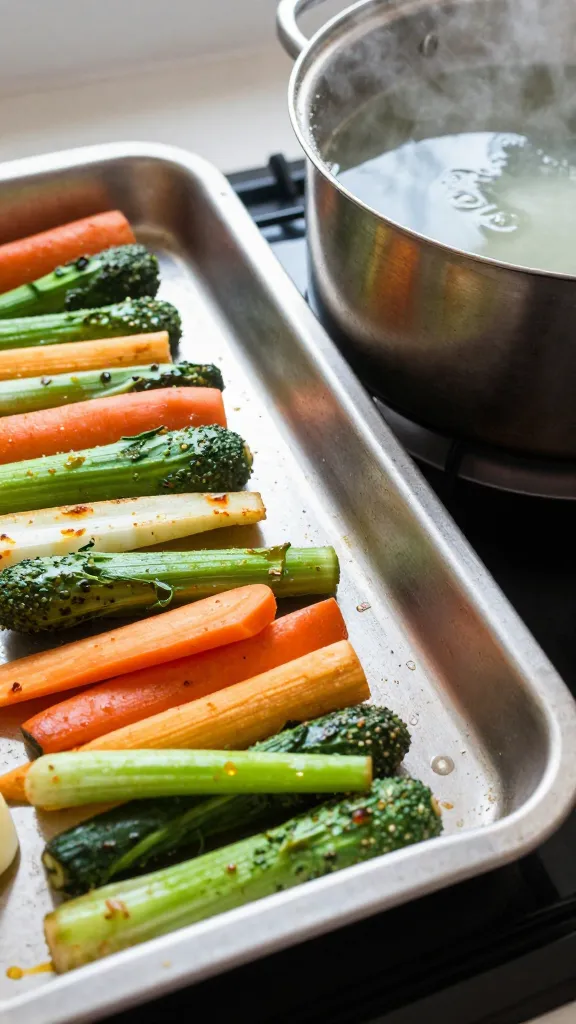
Cold breeze sneaking under the door? Perfect. That means it’s soup season, and we’re not wasting a single roasted carrot. Leftover veggies from last night’s sheet pan dinner can transform into a cozy, silky bowl of comfort faster than you can say “pass the ladle.” No complicated shopping lists. No fussy techniques. Just a pot, a blender, and your already-roasted MVPs.
Why Leftover Roasted Veg is Soup Gold
Roasting already did the heavy lifting. It concentrated flavors, caramelized edges, and added that deep, toasty sweetness soups usually work an hour for. So you start ahead of the game.
Also, roasted veggies play nice together. Sweet potatoes, carrots, parsnips, cauliflower, Brussels sprouts—mix and match, and the soup still slaps. You’ll get a velvety, restaurant-level texture with barely any effort. FYI, your fridge now qualifies as a soup starter kit.
The Basic Formula (No Recipe Anxiety Required)

You don’t need strict measurements here. Think of this as a forgiving template you can riff on based on what you’ve got.
Base Ingredients:
- 3–4 cups leftover roasted vegetables (any combo: carrots, squash, onions, parsnips, cauliflower, sweet potatoes)
- 1 small onion or 2 shallots, chopped (optional but recommended)
- 2 cloves garlic, sliced
- 4–5 cups broth (vegetable or chicken)
- 1–2 tablespoons fat (olive oil, butter, or ghee)
- Splash of acid (lemon juice, sherry vinegar, or apple cider vinegar)
- Salt and pepper
Optional Flavor Boosters:
- Spices: cumin, smoked paprika, curry powder, or chili flakes
- Fresh herbs: thyme, sage, parsley
- Creaminess: coconut milk, cream, or Greek yogurt
- Umami: miso, soy sauce, or a Parm rind while simmering
Quick Method (20 Minutes, Tops)
- Warm the pot: Heat oil or butter in a large pot over medium. Sauté onion until soft, then add garlic for 30 seconds.
- Add the roasted veg: Toss them in and stir to wake up the flavors.
- Pour in broth: Cover the veggies by an inch. Add spices or a Parm rind if you like.
- Simmer: 10–15 minutes. Enough to let everything mingle.
- Blend: Use an immersion blender for silky soup or a stand blender for ultra-smooth. Add more broth if it’s too thick.
- Finish: Stir in a splash of acid and any dairy or coconut milk. Taste, adjust salt and pepper, serve hot.
Pro tip: If your roasted veggies had lots of olive oil and seasoning already, start with less added fat and salt. You can always bump it up later.
Flavor Paths That Never Miss
You’ve got options, which IMO makes this the best kind of kitchen freestyle.
Smoky & Cozy
Use carrots, sweet potatoes, onions. Add smoked paprika, a pinch of cumin, and finish with Greek yogurt and chopped cilantro.
Curried Comfort
Use cauliflower, potatoes, or squash. Stir in curry powder and turmeric while sautéing the onion. Finish with coconut milk and lime juice.
Italian-ish
Use tomatoes, onion, fennel, and peppers if you’ve got them. Season with thyme, a Parm rind while simmering, and finish with olive oil and basil.
Maple-Roast Remix
Got maple-glazed carrots or squash? Blend with broth and a bit of chili flake. Finish with toasted pumpkin seeds for crunch.
FYI: Brussels sprouts can go in, but blend them with sweeter veg like carrots or squash to balance any bitterness.
Texture: Silky, Rustic, or Chunky?

Everyone has a soup texture personality. What’s yours?
- Silky: Blend all the way and strain if you want extra smooth. Add cream or coconut milk for that luxe finish.
- Rustic: Blend half the pot, then stir in the rest for body and bits. Great with barley or small pasta.
- Chunky: Mash with a potato masher. No blender, no problem, still delicious.
Garnishes That Make It Feel Fancy
Small touches make big magic:
- Drizzle: olive oil, chili oil, or herby yogurt
- Crunch: croutons, toasted nuts/seeds, crispy shallots, crushed pita chips
- Freshness: lemon zest, chives, parsley, or a handful of arugula on top
- Protein: shredded rotisserie chicken, crispy chickpeas, or a jammy egg
Salvage Missions: Fixing Common Soup Problems
We’ve all bullied a soup into mediocrity. Here’s how to rescue it.
- Too thick? Add warm broth or water. Taste for salt again afterward.
- Too thin? Simmer uncovered to reduce, or blend in a small potato or a spoon of tahini.
- Flat flavor? Add acid (lemon, vinegar), a pinch of sugar or maple, or umami (miso, soy, Worcestershire).
- Too salty? Add more unsalted liquid, a splash of cream, or some cooked rice, then blend.
- Bitter edge? Balance with sweetness (carrot, squash, a bit of honey) and a creamy element. A butter swirl also smooths things out.
Make-Ahead, Freeze, Reheat: The Cozy Trifecta
This soup loves your calendar. It tastes even better the next day because flavors settle down and get friendly.
Storing
- Fridge: 4 days in an airtight container.
- Freezer: Up to 3 months. Freeze flat in zip bags or use containers with headspace.
Reheating
- Stovetop: Low and slow until hot. Add a splash of water or broth if it thickened.
- Microwave: Short bursts, stir often. Don’t let it volcano all over your microwave walls.
Note: If using dairy or yogurt, add it after reheating so it doesn’t split. Coconut milk handles reheating better.
Serving Ideas That Turn Soup Into Dinner
Soup can be the main event, not just a side character. Load it up or pair it right.
- Grilled cheese upgrade: Add sharp cheddar, caramelized onions, and a swipe of Dijon.
- Toast toppers: Ricotta, honey, and chili flakes on sourdough alongside your bowl.
- Salad duo: Arugula with lemon, olive oil, shaved Parm. Simple and perfect.
- Carb boost: Add orzo, farro, or small gnocchi to the pot after blending.
- Protein pals: Rotisserie chicken, crispy bacon, or seared tofu cubes right on top.
FAQ
Can I mix random roasted veggies, or will that taste chaotic?
Mix away. Aim for a balance of sweet (carrots, squash, onions, sweet potatoes) and neutral (cauliflower, potatoes). If you toss in something strong like Brussels sprouts or beets, pair them with a sweeter base and a bright finish like lemon or yogurt.
Do I need broth, or can I use water?
Broth adds depth, but water works if you season well. Add aromatics (onion, garlic), a bay leaf, and a splash of soy or miso for umami. Taste as you go and finish with acid. Boom—flavor.
What if my veggies weren’t roasted with fancy herbs?
No problem. Build flavor in the pot: sauté onion and garlic, toast your spices for 30 seconds, and finish with fresh herbs. You’ll still get that roasty backbone from the vegetables.
Can I make it dairy-free and still creamy?
Absolutely. Coconut milk, cashew cream, or even a spoon of tahini creates lush texture. Blend thoroughly for that silky-smooth vibe, then finish with olive oil and lemon zest.
How do I avoid bland orange mush?
Layer flavors. Use aromatics, toast your spices, add umami (miso or soy), and finish with acid and a garnish. Also, don’t drown it—add broth gradually until the texture sings.
Is an immersion blender worth it?
IMO, yes. It’s less mess, fewer burns, and easier cleanup. A regular blender makes a super-smooth finish, but cool the soup a bit and vent the lid or you’ll redecorate your kitchen with butternut confetti.
Conclusion
Leftover roasted vegetables don’t need a second act—they deserve the spotlight. With a little broth, a quick simmer, and a blend, you’ve got a bowl that tastes slow-cooked and weekend-level cozy on a Tuesday. Keep it simple, finish with something bright, and flex those garnishes. Dinner: handled.