
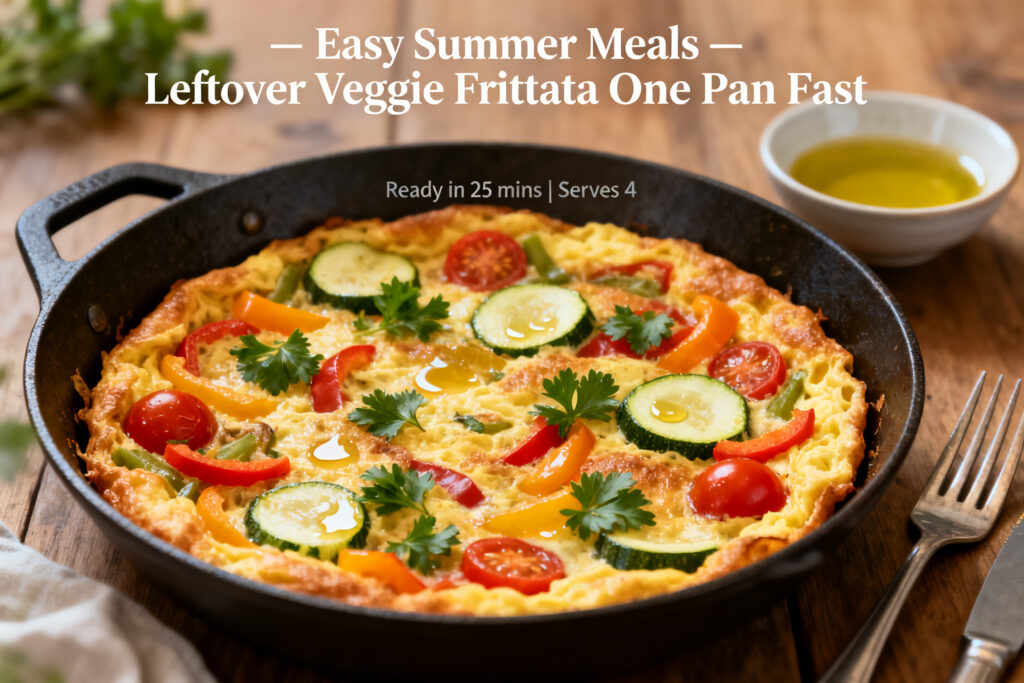
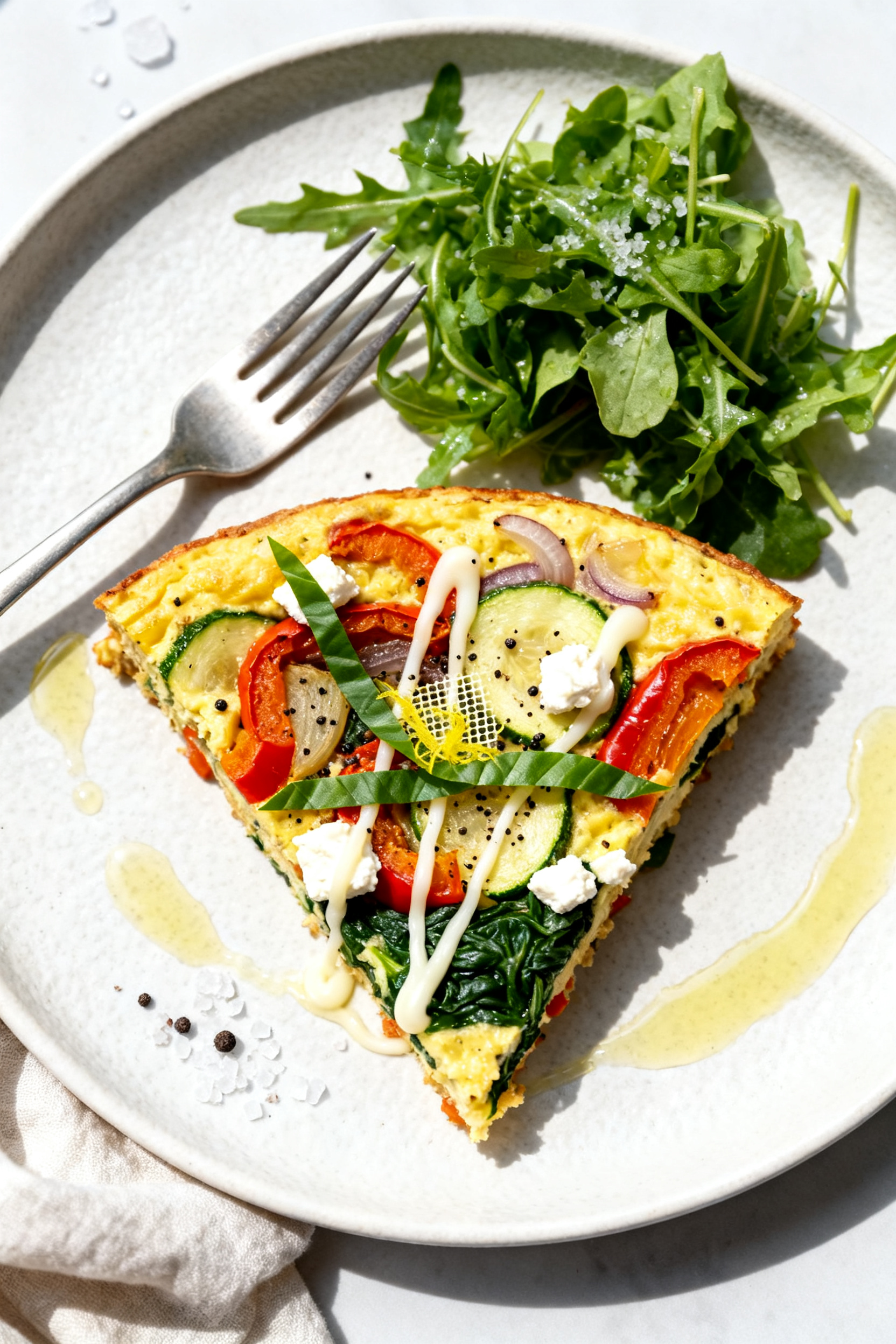
If your fridge is holding half an onion, a lonely zucchini, and a handful of spinach, you’re halfway to dinner. This leftover veggie frittata turns odds and ends into a colorful, satisfying meal in one pan. It’s quick, flexible, and perfect for hot summer days when you want something wholesome without heating up the whole kitchen.
Serve it warm, room temp, or even cold for a no-stress meal that still feels fresh. Breakfast, lunch, or dinner—this one fits them all.
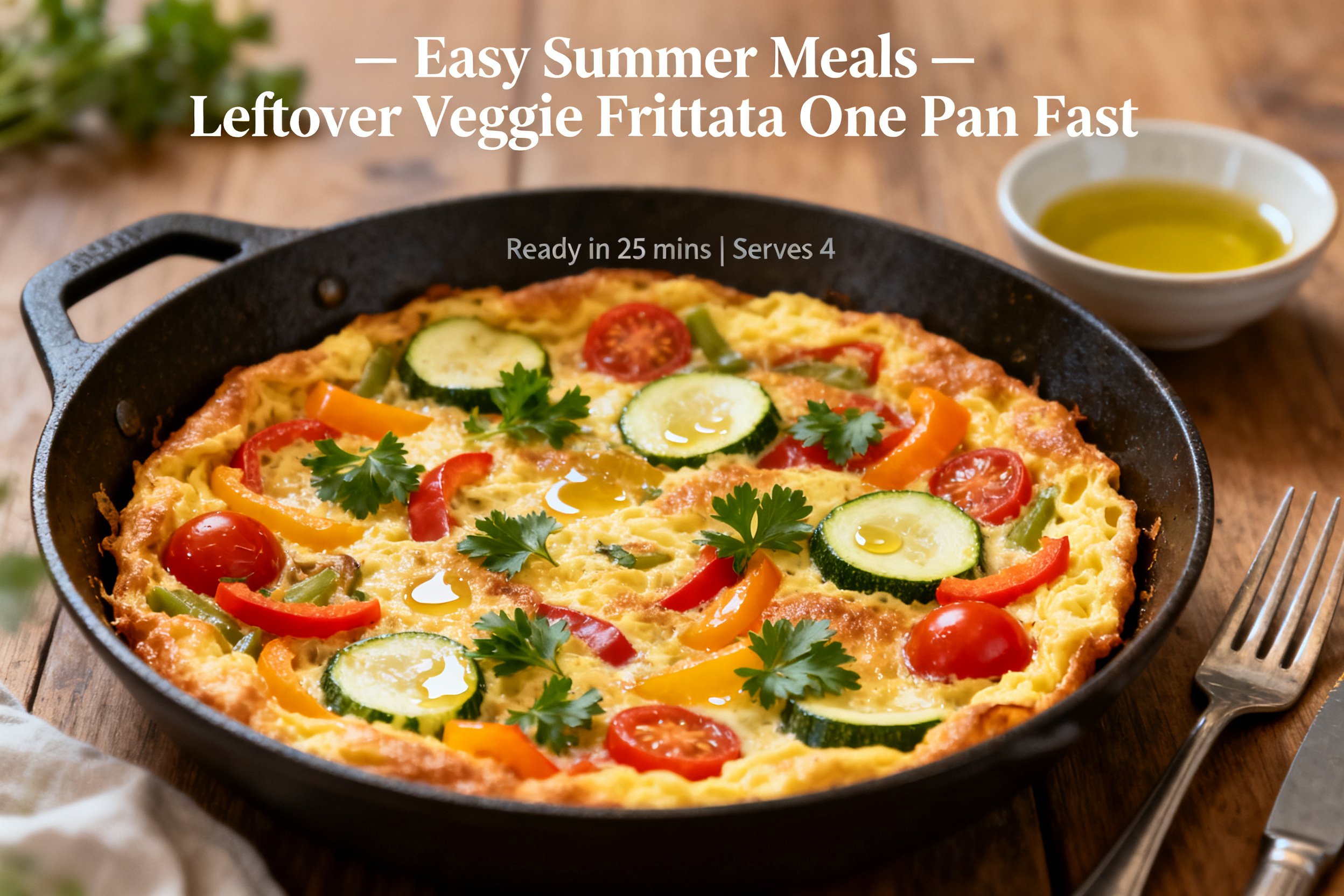
Easy Summer Meals — Leftover Veggie Frittata One Pan Fast - A Simple, Satisfying Skillet Recipe
Ingredients
Method
- Preheat and prep: Set your oven to broil (or 425°F if no broiler). Crack eggs into a bowl, add milk or cream, salt, pepper, and dried herbs. Whisk until well combined and slightly frothy.
- Heat the pan: Place your oven-safe skillet over medium heat. Add olive oil or butter and let it coat the surface.
- Sauté aromatics: If using, add sliced onion and cook 3–4 minutes until softened. Stir in garlic and cook 30 seconds until fragrant.
- Add vegetables: If using raw veggies (like zucchini, mushrooms, peppers), sauté 3–5 minutes until slightly tender. If using leftover cooked or roasted veggies, warm them through for 1–2 minutes. Season lightly with a pinch of salt.
- Distribute evenly: Spread the vegetables in an even layer so you get a bit of everything in each bite. Sprinkle half the cheese over the veggies.
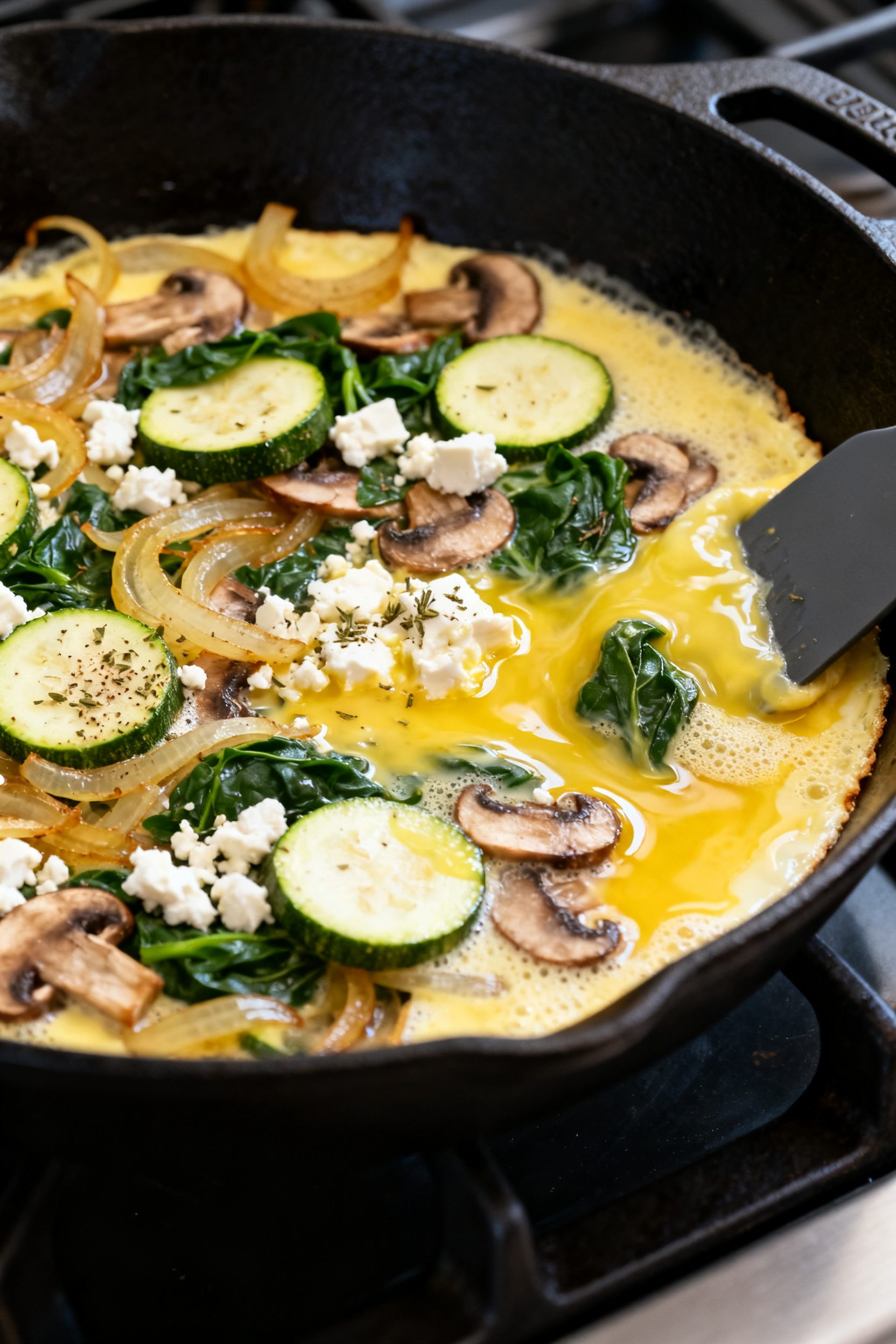
- Pour the eggs: Reduce heat to medium-low. Pour the egg mixture evenly over the vegetables. Tilt the pan to help it spread. Let it cook undisturbed 2–3 minutes until the edges start to set.
- Loosen the edges: Use a spatula to gently pull the set edges toward the center, allowing uncooked egg to flow to the sides. Do this once or twice for even cooking.
- Add remaining cheese: Sprinkle the rest over the top. If you like heat, add a pinch of red pepper flakes now.
- Finish under the broiler: Transfer the skillet to the oven and broil 1–3 minutes until the top is puffed and just golden. Watch closely—broilers vary, and it can go from perfect to too dark fast.
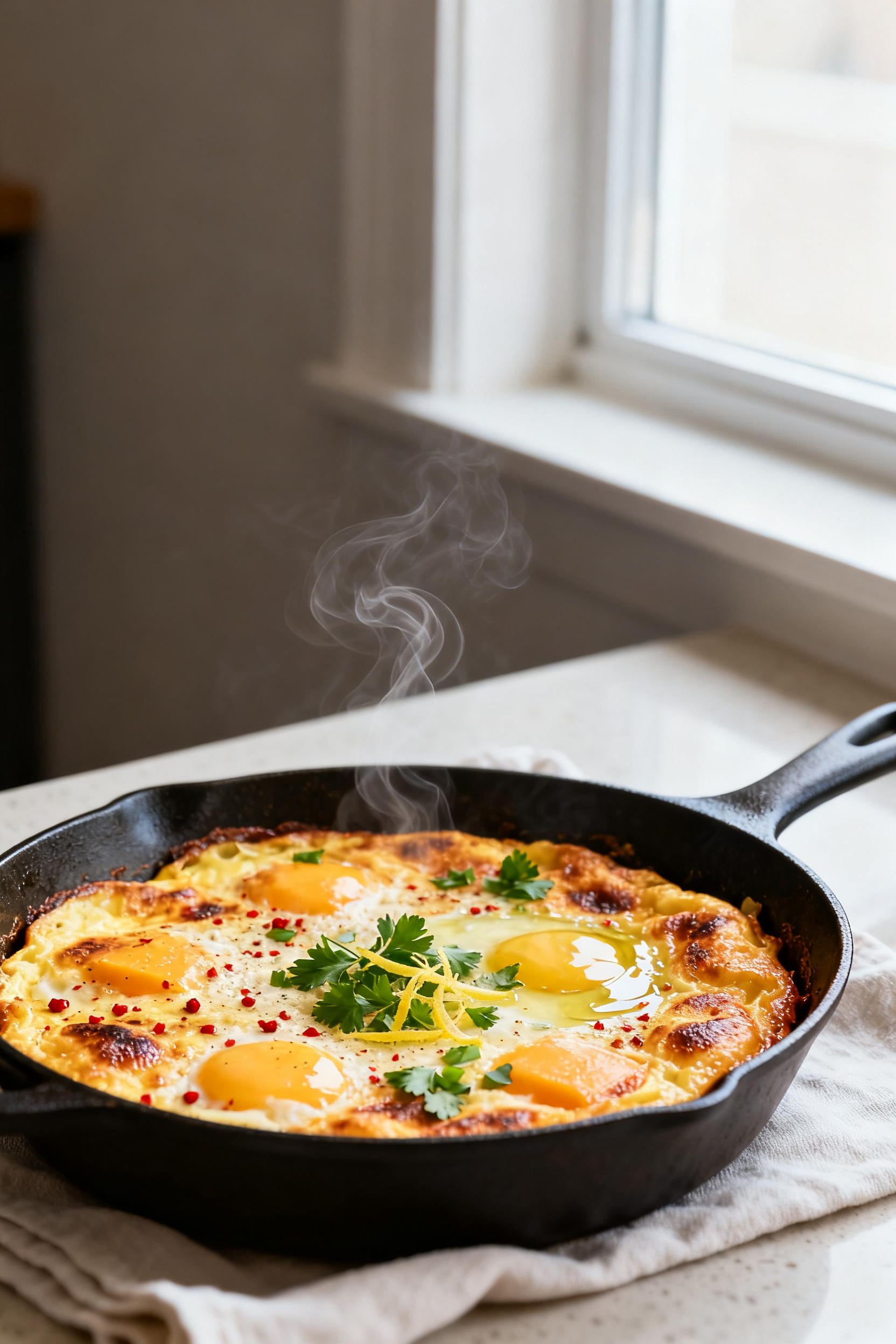
- Rest and garnish: Remove from the oven and let it sit 3–5 minutes to set. Top with fresh herbs and a little lemon zest if you like.
- Serve: Slice into wedges. Enjoy with a simple green salad, toast, or chilled tomatoes with olive oil and salt.
Why This Recipe Works
This frittata leans on a few simple techniques to deliver big results with minimal effort.
- One pan, fast cook: Sauté veggies, add eggs, finish under the broiler. Minimal cleanup, maximum flavor.
- Flexible and forgiving: Any mix of cooked or raw vegetables works.
Leftover roasted veggies shine.
- Great texture: Gentle stovetop cooking sets the sides, while a quick broil gives a golden, tender top.
- Protein-packed and filling: Eggs plus veggies keep you satisfied without feeling heavy.
- Delicious hot or cold: This frittata keeps well and tastes great at any temperature.
What You’ll Need
- 8 large eggs
- 1/4 cup milk or cream (dairy or unsweetened non-dairy)
- 2 cups mixed leftover vegetables (roasted peppers, zucchini, onions, mushrooms, broccoli, spinach, tomatoes, potatoes—use what you have)
- 1 small onion or 2 shallots, thinly sliced (optional but adds flavor)
- 1–2 cloves garlic, minced (optional)
- 1/2 cup cheese (feta, cheddar, goat cheese, mozzarella, or Parmesan—your choice)
- 2 tablespoons olive oil or butter
- 1/2 teaspoon kosher salt, plus more to taste
- 1/4 teaspoon black pepper
- 1/2 teaspoon dried herbs (oregano, Italian seasoning, or herbes de Provence) or a handful of fresh herbs (basil, parsley, dill)
- Red pepper flakes (optional, for heat)
- Fresh lemon zest (optional, for brightness)
Equipment: 10- to 12-inch oven-safe skillet (cast iron or stainless steel), mixing bowl, whisk, spatula. Broiler or hot oven.
How to Make It
- Preheat and prep: Set your oven to broil (or 425°F if no broiler). Crack eggs into a bowl, add milk or cream, salt, pepper, and dried herbs.
Whisk until well combined and slightly frothy.
- Heat the pan: Place your oven-safe skillet over medium heat. Add olive oil or butter and let it coat the surface.
- Sauté aromatics: If using, add sliced onion and cook 3–4 minutes until softened. Stir in garlic and cook 30 seconds until fragrant.
- Add vegetables: If using raw veggies (like zucchini, mushrooms, peppers), sauté 3–5 minutes until slightly tender.
If using leftover cooked or roasted veggies, warm them through for 1–2 minutes. Season lightly with a pinch of salt.
- Distribute evenly: Spread the vegetables in an even layer so you get a bit of everything in each bite. Sprinkle half the cheese over the veggies.
- Pour the eggs: Reduce heat to medium-low.
Pour the egg mixture evenly over the vegetables. Tilt the pan to help it spread. Let it cook undisturbed 2–3 minutes until the edges start to set.
- Loosen the edges: Use a spatula to gently pull the set edges toward the center, allowing uncooked egg to flow to the sides.
Do this once or twice for even cooking.
- Add remaining cheese: Sprinkle the rest over the top. If you like heat, add a pinch of red pepper flakes now.
- Finish under the broiler: Transfer the skillet to the oven and broil 1–3 minutes until the top is puffed and just golden. Watch closely—broilers vary, and it can go from perfect to too dark fast.
- Rest and garnish: Remove from the oven and let it sit 3–5 minutes to set.
Top with fresh herbs and a little lemon zest if you like.
- Serve: Slice into wedges. Enjoy with a simple green salad, toast, or chilled tomatoes with olive oil and salt.
Storage Instructions
- Cool completely before storing to avoid condensation and sogginess.
- Refrigerate in an airtight container for up to 4 days.
- Reheat gently in a skillet over low heat or in the microwave at 50% power in short intervals. It also tastes great cold.
- Freeze slices tightly wrapped for up to 2 months.
Thaw overnight in the fridge, then reheat.
Health Benefits
- Protein-rich: Eggs provide high-quality protein to keep you full and support muscle repair.
- Vegetable-forward: A great way to pack in fiber, vitamins, and minerals from mixed veggies without extra fuss.
- Healthy fats: Olive oil and eggs offer beneficial fats that help you absorb fat-soluble vitamins from vegetables.
- Lower waste, smarter eating: Using leftovers reduces food waste and encourages a balanced, budget-friendly meal pattern.
What Not to Do
- Don’t overload with watery veggies like tomatoes or zucchini without pre-cooking. Extra moisture can make the frittata soggy.
- Don’t blast the heat on the stovetop. High heat can scorch the bottom before the center sets.
- Don’t skip seasoning the vegetable layer.
Seasoning as you go builds flavor.
- Don’t walk away from the broiler. It works fast—watch closely to avoid burning.
- Don’t use a non-oven-safe pan. Handles can melt or warp. If unsure, finish at 350–375°F until set.
Alternatives
- Dairy-free: Use unsweetened almond, oat, or soy milk and skip cheese or use a dairy-free cheese. Add extra herbs for flavor.
- High-protein twist: Add cooked chicken, turkey sausage, or beans.
Keep pieces small for even distribution.
- No broiler? Cover the skillet with a lid on low heat for 6–10 minutes, or transfer to a 350–375°F oven until set.
- Herb swap: Try dill with potatoes and salmon leftovers, basil with tomatoes and mozzarella, or cilantro with peppers and corn.
- Spice it up: Add smoked paprika, cumin, or za’atar to the egg mixture for a flavor boost.
- Mini frittatas: Use a greased muffin tin. Bake at 350°F for 12–18 minutes until just set.
FAQ
How do I know when the frittata is done?
The edges should be set, the center just barely jiggles, and the top should look puffed and lightly golden. If you insert a knife near the center, it should come out mostly clean with a bit of moisture, not raw egg.
Can I use only egg whites?
Yes.
Use about 12 egg whites to replace 8 whole eggs. Add a splash more milk and don’t overcook, since whites can dry out faster. A bit of olive oil or non-dairy creamer can help with texture.
What cheeses work best?
Feta and goat cheese add tang and stay creamy.
Cheddar and mozzarella melt well for a classic feel. Parmesan brings sharpness—use it mixed in and on top for a savory crust.
How do I prevent a soggy frittata?
Pre-cook watery vegetables, drain any excess liquid from leftovers, and avoid adding too much milk. Let the frittata rest after cooking so steam escapes and the texture sets.
Can I make it ahead?
Absolutely.
Cook, cool, and refrigerate. Reheat slices on low heat or serve at room temperature. It’s great for packed lunches and picnics.
What size pan should I use?
A 10- to 12-inch oven-safe skillet works best for 8 eggs.
Smaller pans make a thicker frittata and take longer to set; larger pans cook faster and thinner.
Can I add greens like spinach or kale?
Yes. Wilt spinach briefly or sauté chopped kale until tender before adding eggs. Squeeze out extra moisture if the greens are very wet.
Is this gluten-free?
Yes, as written it’s naturally gluten-free.
Just double-check labels on any add-ins like deli meats or seasonings.
What if I don’t have a broiler?
Finish in a 350–375°F oven until the center is set, or cover the skillet with a lid on low heat to steam the top. It won’t brown as much but will still be tender.
Can I double the recipe?
Use a larger skillet or a greased 9×13-inch baking dish. Bake at 350°F for 20–30 minutes, checking for set center and golden edges.
In Conclusion
This Leftover Veggie Frittata is the kind of summer meal that makes sense: fast, flexible, and full of flavor.
It rescues scraps from the fridge, packs in protein and veggies, and lands on the table with almost no effort. Keep the method, swap the mix-ins, and make it your own. One pan, minimal heat, and a meal you’ll make again and again.
Printable Recipe Card
Want just the essential recipe details without scrolling through the article? Get our printable recipe card with just the ingredients and instructions.