
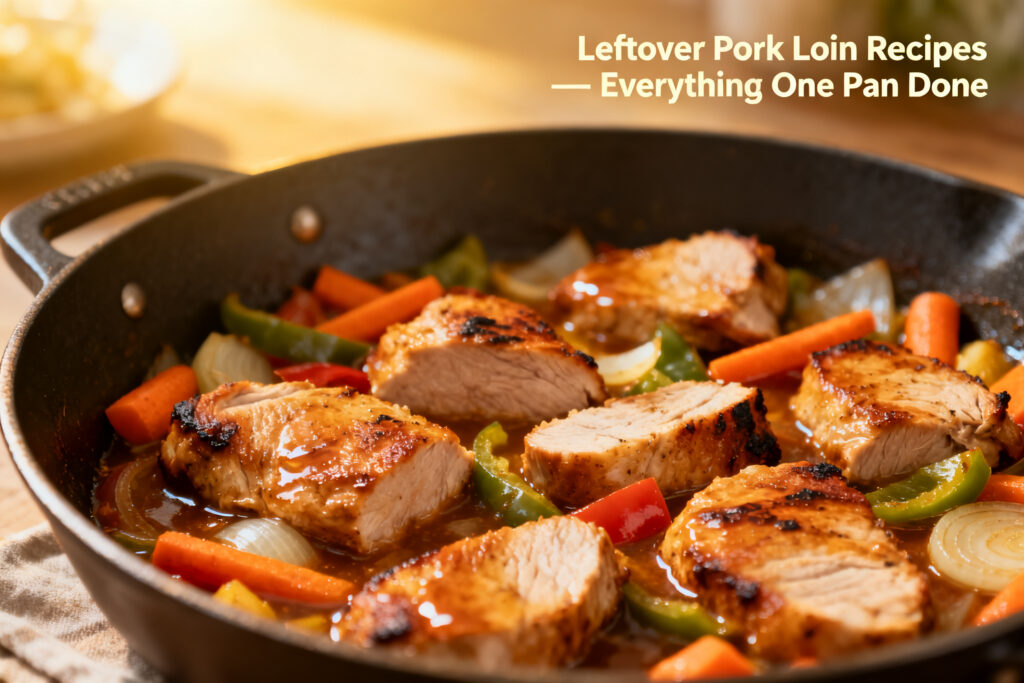
Leftover pork loin doesn’t have to be dry or boring. With one pan and whatever you’ve got in the fridge, you can build a hearty, colorful meal in under 30 minutes. This recipe is flexible, flavorful, and designed for those nights when you need dinner to just work.
No fancy techniques, no special shopping trip—just smart layering and a sizzling skillet. You’ll end up with juicy pork, crisp-tender veggies, and a saucy finish that brings it all together.
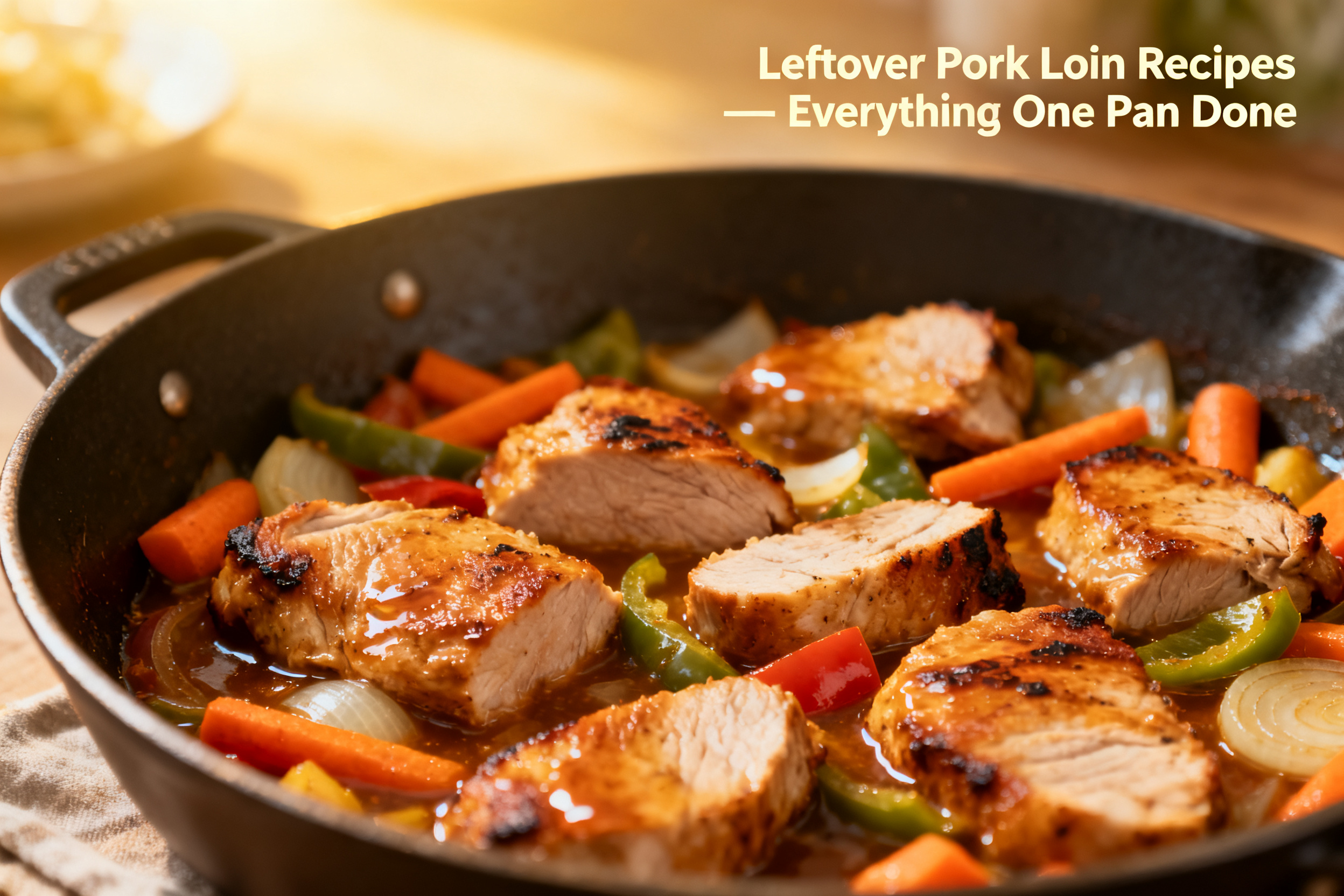
Everything In The Fridge — One Pan → "Leftover Pork Loin Recipes — Everything One Pan Done" - A Fast, Flavor-Packed Skillet Meal
Ingredients
Method
- Prep the pork. Slice leftover pork loin into thin strips or small cubes. Aim for bite-sized pieces so they warm quickly without drying out.
- Chop the veggies by cook time. Keep hard veggies (carrots, broccoli, cabbage) in one pile, medium veggies (bell peppers, onions, mushrooms) in another, and quick-cooking items (zucchini, spinach, peas) in a third. This helps you add them in smart stages.
- Make the sauce. In a small bowl, mix soy sauce, vinegar, sweetener, sesame oil, and chili if using. Taste and adjust: more vinegar for brightness, more sweetener for balance, more soy for salt. Stir in the cornstarch slurry if you want a thicker glaze.
- Heat the pan. Set a large skillet or wok over medium-high heat. Add oil and let it shimmer. You want a hot pan so the veggies sear, not steam.
- Sauté aromatics. Add garlic and ginger. Stir for 20–30 seconds until fragrant. Don’t brown them—just wake them up.
- Cook hard veggies first. Toss in carrots, broccoli, or cabbage. Season with a pinch of salt and pepper. Stir for 2–3 minutes until they start to soften with a little char.
- Add medium veggies. Add peppers, onions, mushrooms, and similar. Cook 2–3 minutes more. Keep things moving so they get color without getting soggy.
- Add quick-cooking veggies. Add zucchini, peas, or spinach. Stir 1–2 minutes. You want crisp-tender, not limp.
- Warm the pork. Push veggies to the edges, add a small splash of oil if needed, then add pork to the center in a single layer. Let it sit for 30 seconds to get a little sear, then stir it into the veggies. Cook just until heated through.
- Sauce and glaze. Pour in the sauce. Toss to coat. If you used cornstarch, simmer 30–60 seconds until glossy and slightly thick.
- Finish and taste. Squeeze in a little lemon or lime. Add chopped herbs or scallions. Taste and adjust salt, pepper, heat, and acidity as needed.
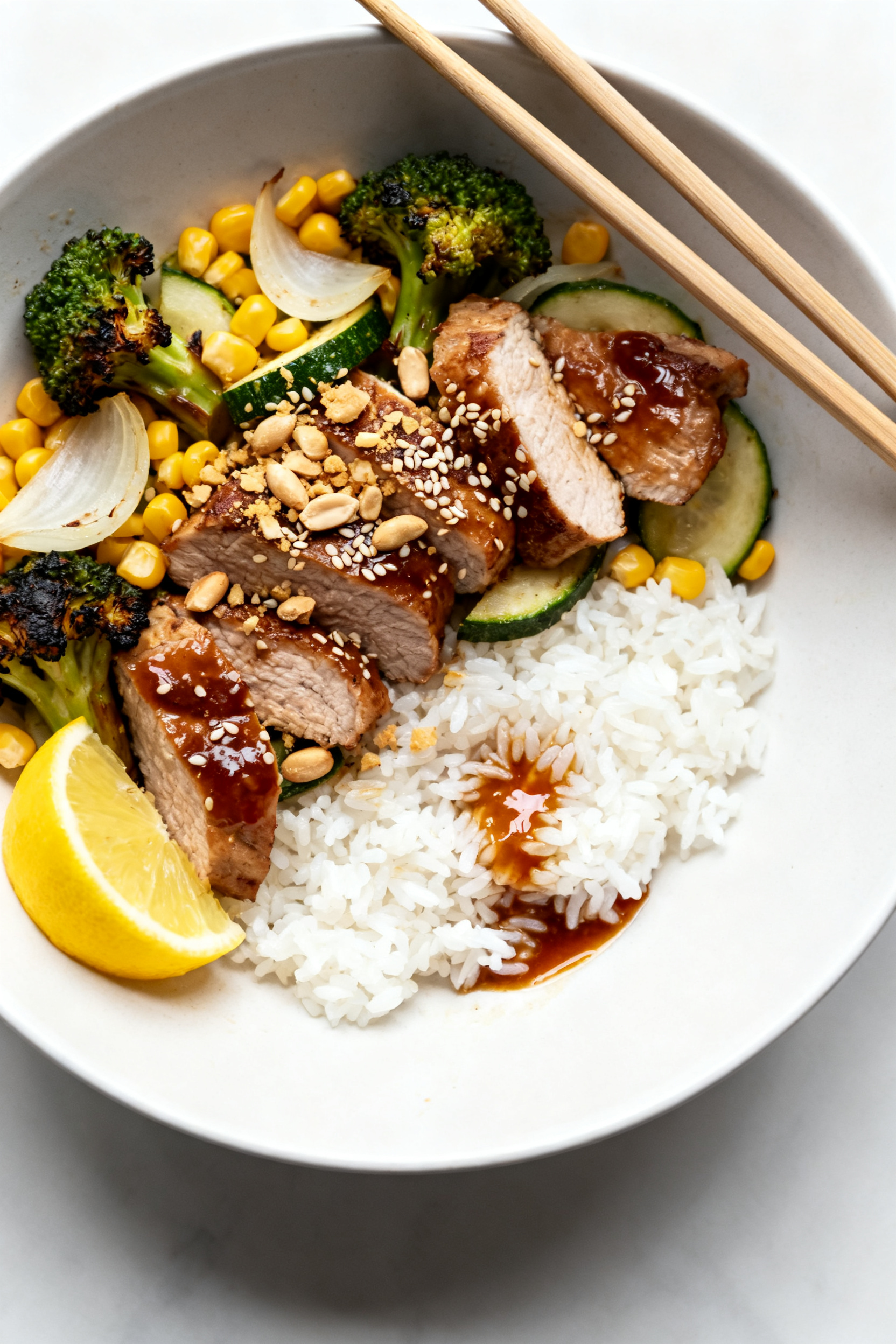
- Serve. Spoon over warm rice or noodles, or serve as-is. Sprinkle with sesame seeds or nuts for crunch if you like.
Why This Recipe Works
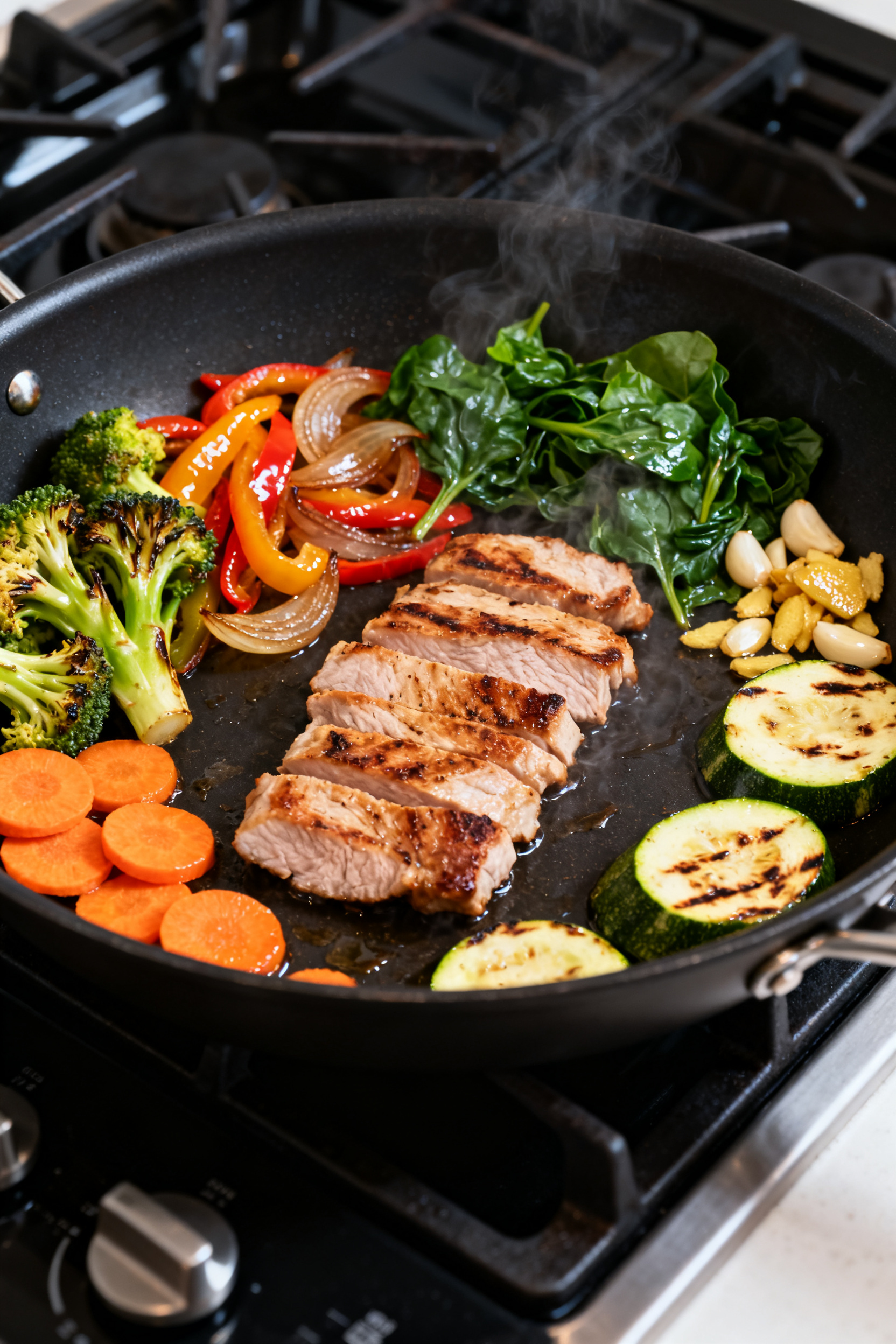
This one-pan method uses quick heat and smart timing to keep pork tender and veggies bright. Leftover pork loin is already cooked, so you only need to warm it through—no risk of overcooking if you add it at the end.
The sauce is simple but punchy: savory, slightly sweet, and a little tangy.
It coats everything without turning the skillet watery. And because it’s “everything in the fridge,” you can swap ingredients based on what you have.
Best of all, it’s truly one pan. Less cleanup, fewer steps, and a dinner that still feels like you put in the effort.
Shopping List
- Leftover pork loin (about 2–3 cups, sliced or cubed)
- Mixed vegetables (4–6 cups total; choose at least 3): bell peppers, onions, broccoli, snap peas, carrots, zucchini, mushrooms, spinach, cabbage, or corn
- Aromatics: 3 cloves garlic, 1–2 inches fresh ginger (or 1 tsp ground), 2 scallions (optional)
- Cooking fat: 2–3 tbsp olive oil, avocado oil, or butter (or a mix)
- Sauce base:
- 3 tbsp soy sauce or tamari
- 1–2 tbsp rice vinegar or apple cider vinegar
- 1–2 tbsp honey, maple syrup, or brown sugar
- 1–2 tsp sesame oil (optional but great)
- 1 tsp chili flakes or hot sauce (optional)
- Thickener (optional): 1 tsp cornstarch mixed with 2 tbsp water
- Starches (optional, for serving): cooked rice, noodles, quinoa, or crusty bread
- Finishers: lemon or lime, fresh herbs (cilantro, parsley, basil), toasted sesame seeds, or crushed peanuts
- Salt and black pepper
Step-by-Step Instructions
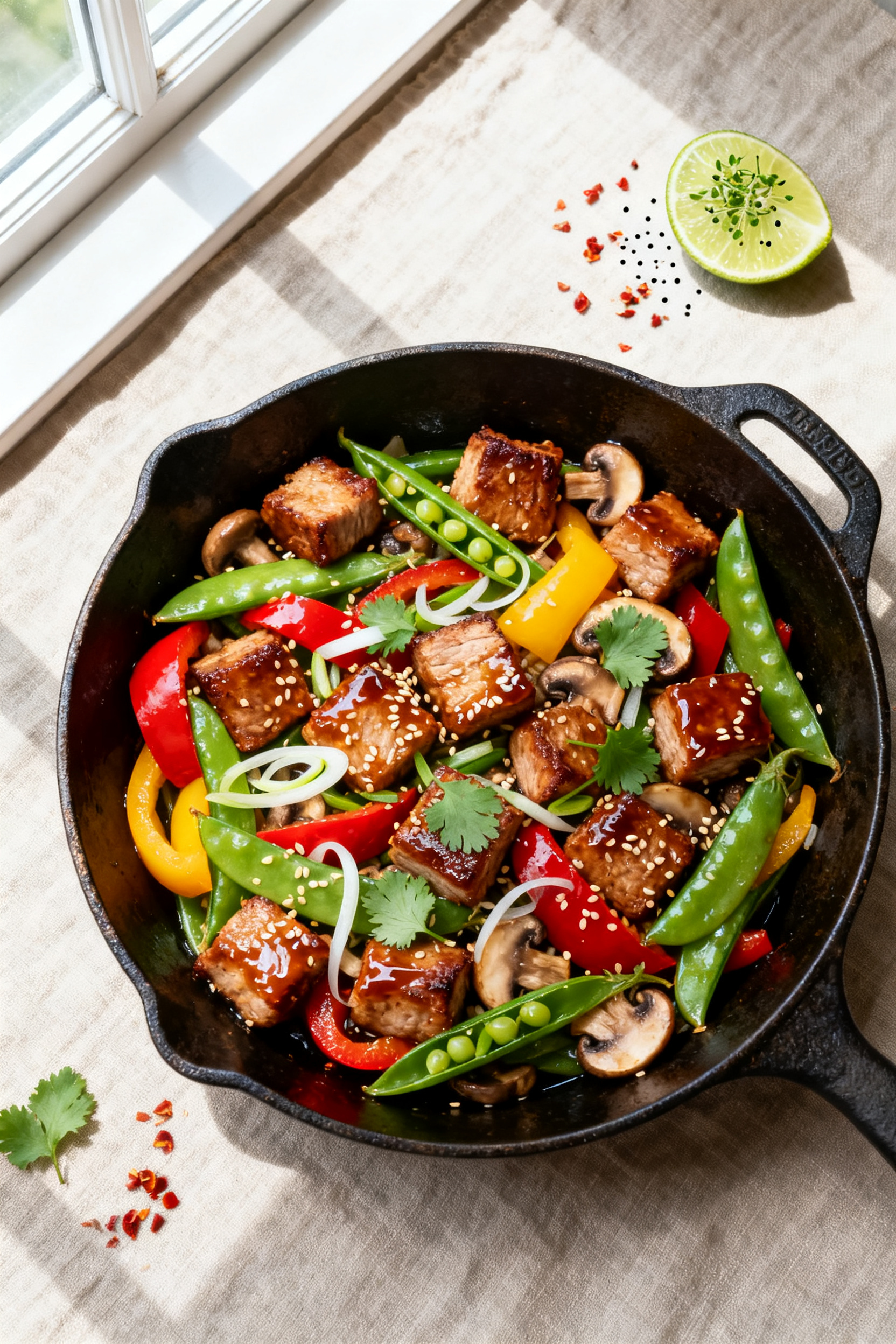
- Prep the pork. Slice leftover pork loin into thin strips or small cubes.
Aim for bite-sized pieces so they warm quickly without drying out.
- Chop the veggies by cook time. Keep hard veggies (carrots, broccoli, cabbage) in one pile, medium veggies (bell peppers, onions, mushrooms) in another, and quick-cooking items (zucchini, spinach, peas) in a third. This helps you add them in smart stages.
- Make the sauce. In a small bowl, mix soy sauce, vinegar, sweetener, sesame oil, and chili if using. Taste and adjust: more vinegar for brightness, more sweetener for balance, more soy for salt.
Stir in the cornstarch slurry if you want a thicker glaze.
- Heat the pan. Set a large skillet or wok over medium-high heat. Add oil and let it shimmer. You want a hot pan so the veggies sear, not steam.
- Sauté aromatics. Add garlic and ginger.
Stir for 20–30 seconds until fragrant. Don’t brown them—just wake them up.
- Cook hard veggies first. Toss in carrots, broccoli, or cabbage. Season with a pinch of salt and pepper.
Stir for 2–3 minutes until they start to soften with a little char.
- Add medium veggies. Add peppers, onions, mushrooms, and similar. Cook 2–3 minutes more. Keep things moving so they get color without getting soggy.
- Add quick-cooking veggies. Add zucchini, peas, or spinach.
Stir 1–2 minutes. You want crisp-tender, not limp.
- Warm the pork. Push veggies to the edges, add a small splash of oil if needed, then add pork to the center in a single layer. Let it sit for 30 seconds to get a little sear, then stir it into the veggies.
Cook just until heated through.
- Sauce and glaze. Pour in the sauce. Toss to coat. If you used cornstarch, simmer 30–60 seconds until glossy and slightly thick.
- Finish and taste. Squeeze in a little lemon or lime.
Add chopped herbs or scallions. Taste and adjust salt, pepper, heat, and acidity as needed.
- Serve. Spoon over warm rice or noodles, or serve as-is. Sprinkle with sesame seeds or nuts for crunch if you like.
Storage Instructions
Cool leftovers to room temperature within 1 hour.
Store in an airtight container in the fridge for up to 3–4 days. Reheat in a skillet over medium heat with a splash of water or broth to loosen the sauce, or microwave in 45-second bursts, stirring in between.
For longer storage, freeze portions in freezer-safe containers for up to 2 months. Thaw overnight in the fridge and reheat gently to avoid overcooking the pork.
Health Benefits
- Protein-rich: Pork loin is a lean cut, offering high-quality protein with less fat than many other pork options.
- Veggie-forward: A big mix of vegetables adds fiber, vitamins A and C, folate, and antioxidants.
- Balanced plate: Pairing protein, vegetables, and a small portion of whole grains helps keep energy steady.
- Lower sodium control: Making your own sauce lets you manage salt and sugar.
Use low-sodium soy sauce if needed.
- Healthy fats: Olive or avocado oil and a touch of sesame oil add flavor and heart-healthy fats without heaviness.
Common Mistakes to Avoid
- Overcooking the pork: It’s already cooked. Add it near the end and just warm it through.
- Crowding the pan: Too many veggies at once will steam, not sear. Use a big skillet or cook in two quick batches.
- Skipping seasoning layers: Lightly salt each veg stage.
This builds flavor without drowning the dish in sauce.
- Watery sauce: Wet vegetables can dilute the glaze. Pat mushrooms or zucchini dry and use cornstarch slurry if you want a thicker finish.
- Flat flavors: Don’t forget acid at the end. A squeeze of citrus or splash of vinegar wakes up the whole pan.
Alternatives
- Flavor profiles:
- Teriyaki-style: Soy, mirin or honey, ginger, garlic, sesame.
- Garlic-herb Mediterranean: Olive oil, lemon, oregano, garlic, cherry tomatoes, olives.
- Smoky chipotle: Chili powder, cumin, lime, a little chipotle in adobo, corn, peppers.
- Creamy mustard: Dijon, splash of cream or Greek yogurt, thyme, peas, mushrooms.
- Vegetable swaps: Use frozen stir-fry blends, leftover roasted veggies, or even a bag of coleslaw mix for speed.
- Gluten-free: Use tamari or coconut aminos.
Check that any thickeners and broths are gluten-free.
- Low-carb: Serve over cauliflower rice or skip the starch. Add extra greens and mushrooms for volume.
- No cornstarch: Reduce the sauce a bit longer, or use arrowroot or potato starch.
FAQ
Can I use other leftover meats?
Yes. This method works with cooked chicken, steak, turkey, sausage, or tofu.
Just add them at the end to warm through, the same way you treat the pork.
How do I keep the pork from drying out?
Cut it small, add it late, and don’t cook it longer than needed. A saucy finish and a quick toss in the pan will keep it juicy.
Do I need a wok?
No. A large skillet works well.
If your pan is smaller, cook the veggies in two batches to avoid crowding, then combine before adding the pork.
What if I don’t have fresh ginger?
Use 1 teaspoon ground ginger or skip it. You can also use a squeeze of lime and extra garlic to keep the flavor bright.
Can I make it spicy?
Definitely. Add chili flakes, sriracha, or a sliced fresh chili with the aromatics.
Adjust heat at the end with a little more hot sauce if needed.
What should I serve it with?
Steamed rice, fried rice, noodles, quinoa, or even a buttered slice of crusty bread. If you want low-carb, serve over greens or cauliflower rice.
How do I thicken the sauce without cornstarch?
Let it bubble for a minute to reduce, or use arrowroot, tapioca, or potato starch whisked with cold water. Add slowly and stir to avoid clumps.
Can I make it dairy-free?
Yes.
Use oil instead of butter and check that your sweeteners and sauces are dairy-free. Most versions of this recipe are naturally dairy-free already.
How far in advance can I prep?
Chop veggies and mix the sauce up to 2 days ahead. Store separately.
When ready to cook, everything comes together in 10–12 minutes.
What pan temperature is best?
Medium-high heat is ideal. You want a lively sizzle when the veggies hit the pan so they sear and keep a good bite.
Wrapping Up
This one-pan leftover pork loin skillet turns random fridge finds into a satisfying, balanced meal in minutes. With smart timing, a bright sauce, and a final squeeze of citrus, you get tender pork, crisp veggies, and barely any cleanup.
Keep the formula, swap the flavors, and use what you have. It’s the easiest way to turn leftovers into a dinner you’ll look forward to.
Printable Recipe Card
Want just the essential recipe details without scrolling through the article? Get our printable recipe card with just the ingredients and instructions.