
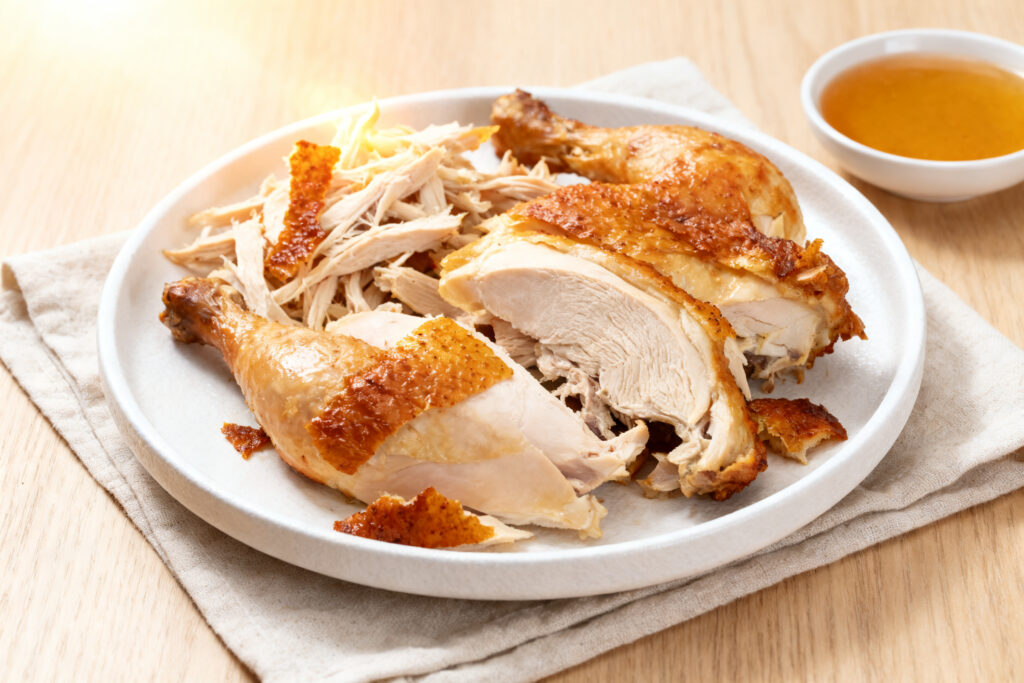
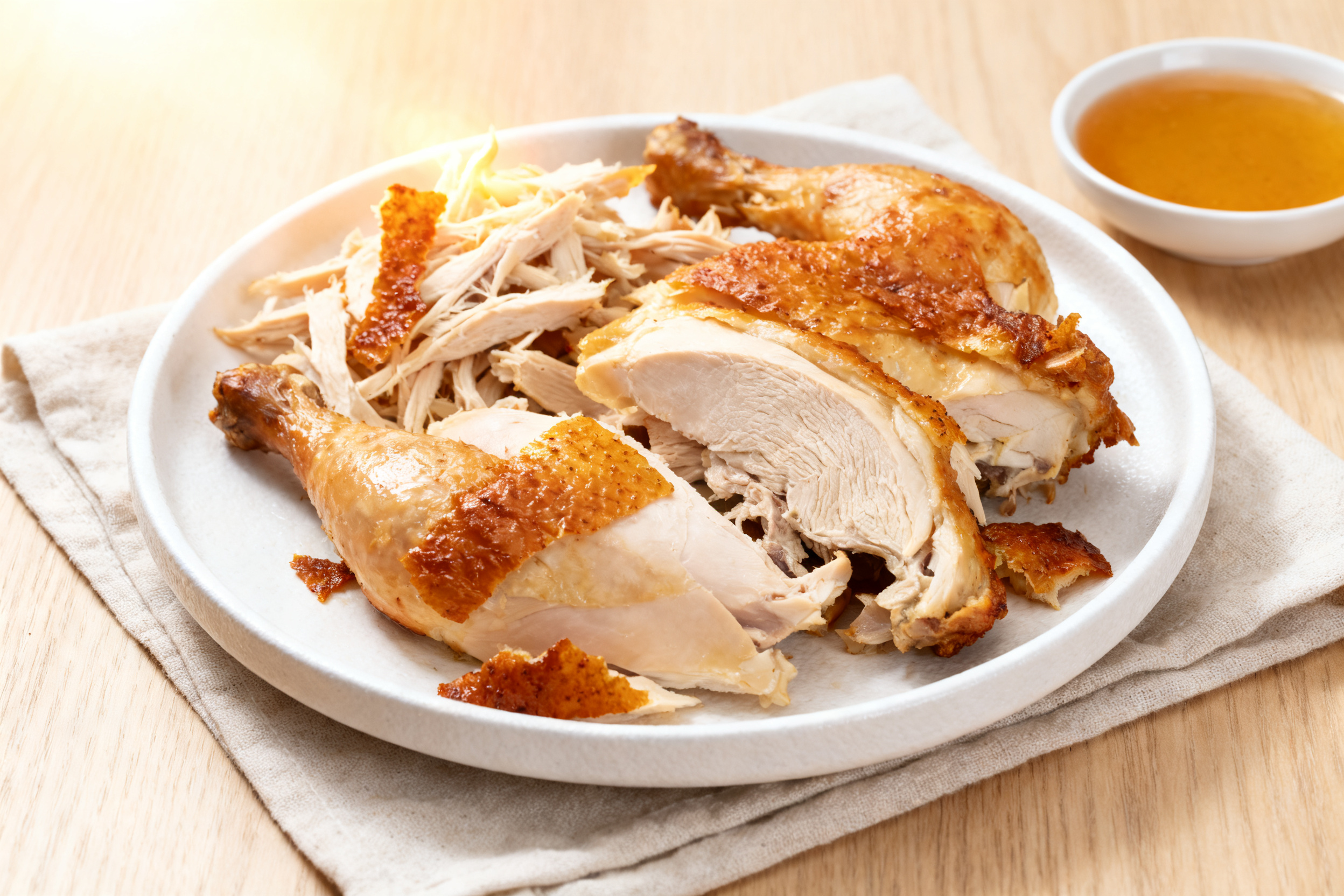
Leftover rotisserie chicken is a weeknight lifesaver. It’s already cooked, full of flavor, and ready to jump into a new meal with almost no effort. If you’ve got a container of shredded chicken in the fridge and no plan, this recipe guide has you covered.
We’ll turn those leftovers into a warm, comforting, one-pan dinner with minimal prep and maximum flavor. Think creamy, herby, and cozy—without spending an hour in the kitchen.
Ingredients
Method
- Warm the pan: Set a large skillet over medium heat. Add olive oil or butter and let it melt and shimmer.
- Sauté the aromatics: Add onion, carrots, and celery. Cook, stirring, until the onions turn translucent and the carrots start to soften, about 5–7 minutes. Add mushrooms, if using, and cook 3 minutes more.
- Add garlic and spices: Stir in garlic, thyme, smoked paprika, salt, and pepper. Cook 30 seconds until fragrant.
- Make a quick roux: Sprinkle flour over the vegetables. Stir well to coat. Cook 1 minute to remove the raw flour taste.
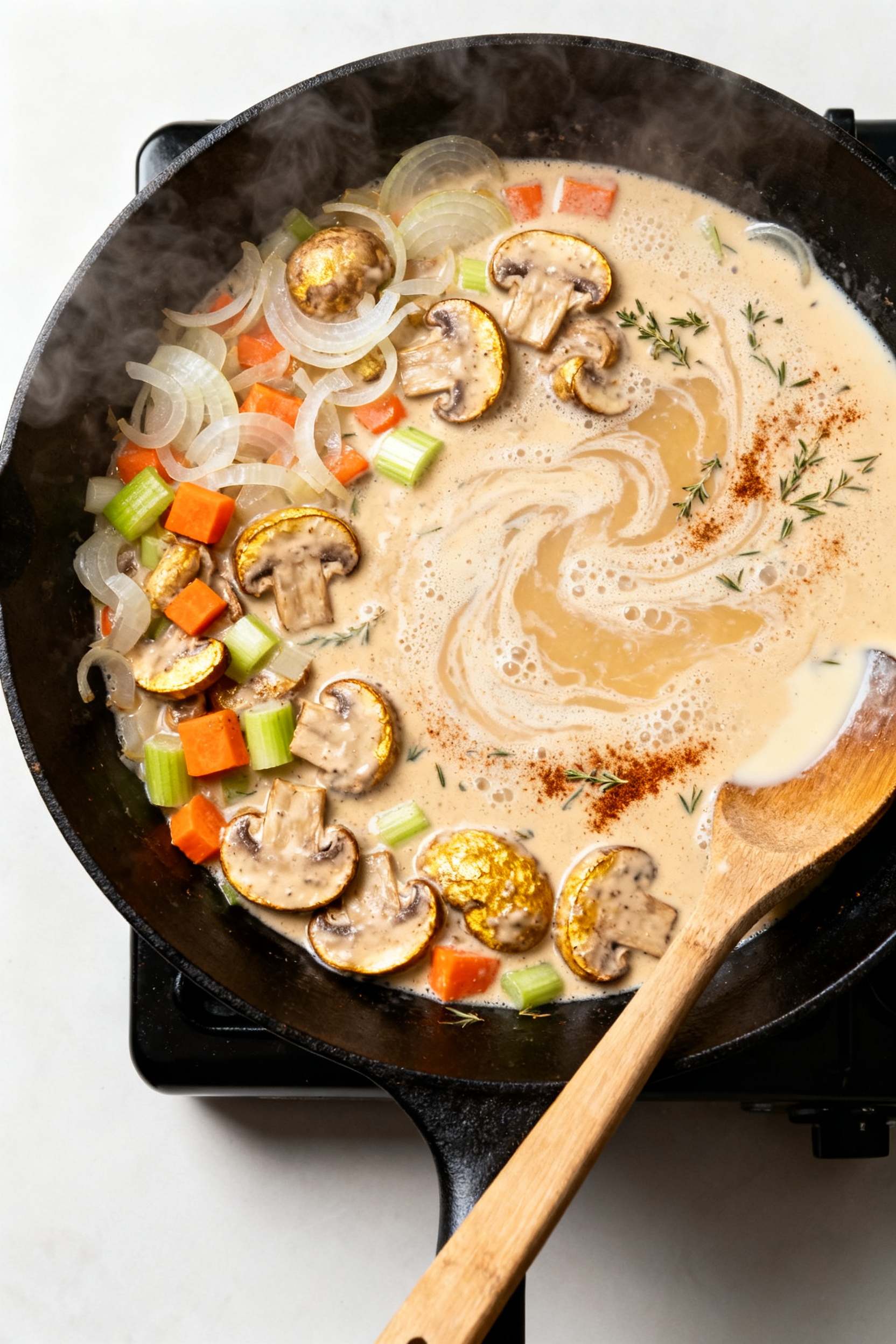
- Build the sauce: Slowly pour in chicken broth while stirring to prevent lumps. Bring to a gentle simmer; the mixture will thicken. Stir in milk or half-and-half and the Dijon mustard. Adjust heat to keep it at a light bubble.
- Add chicken and peas: Fold in shredded rotisserie chicken and frozen peas. Simmer 3–5 minutes, until the chicken is heated through and the sauce is creamy. If it’s too thick, splash in more broth or milk.
- Taste and finish: Taste and season with more salt and pepper if needed. Stir in fresh parsley or chives. Squeeze a little lemon over the top for brightness, if you like.
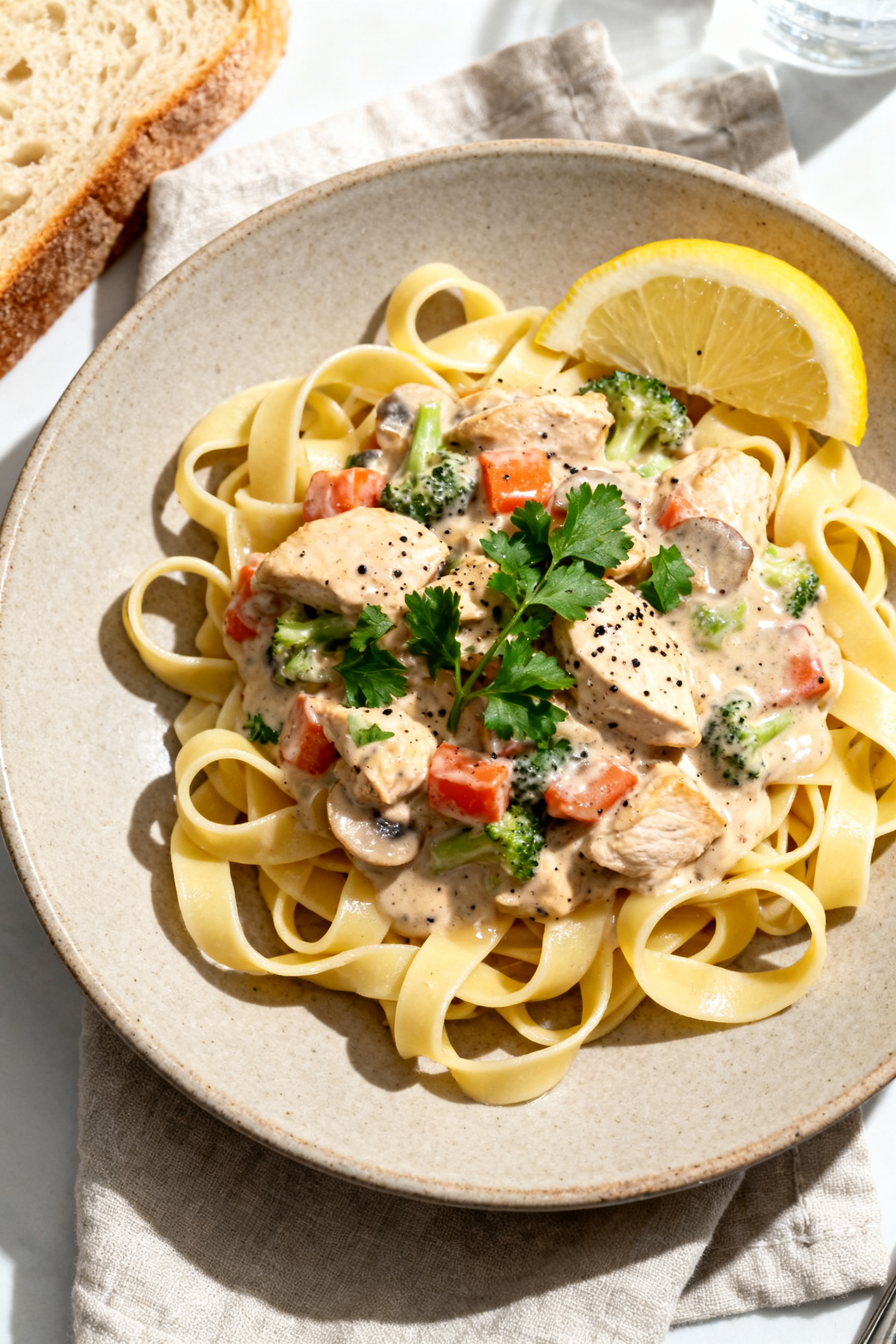
- Serve: Spoon the creamy chicken and vegetables over rice, buttered noodles, or mashed potatoes, or serve with crusty bread to soak up the sauce.
What Makes This Recipe So Good
- Fast and fuss-free: You’re starting with cooked chicken, so the entire dish comes together in about 25 minutes.
- One pan, easy cleanup: Everything cooks in a single skillet. Less mess, more dinner.
- Balanced and hearty: Protein-packed chicken, tender vegetables, and a creamy sauce served over rice, pasta, or toasted bread.
- Flexible ingredients: Use what you have—frozen peas, leftover veggies, or different herbs all work.
- Family-friendly: Mild flavors with room to add a little kick if you like spice.
Ingredients
- 2–3 cups leftover rotisserie chicken, shredded
- 2 tablespoons olive oil or unsalted butter
- 1 small yellow onion, finely chopped
- 2 cloves garlic, minced
- 1 cup carrots, diced small
- 1 cup celery, diced
- 1 cup frozen peas (no need to thaw)
- 1 cup mushrooms, sliced (optional)
- 1 teaspoon dried thyme or Italian seasoning
- 1/2 teaspoon smoked paprika (optional for depth)
- 1/2 teaspoon kosher salt, plus more to taste
- 1/4 teaspoon black pepper
- 2 tablespoons all-purpose flour
- 1 1/2 cups low-sodium chicken broth
- 1/2 cup milk or half-and-half (for extra creaminess)
- 1 tablespoon Dijon mustard (optional, for brightness)
- 2 tablespoons chopped fresh parsley or chives
- Lemon wedges, for serving (optional)
- Cooked rice, buttered noodles, mashed potatoes, or crusty bread for serving
How to Make It
- Warm the pan: Set a large skillet over medium heat.
Add olive oil or butter and let it melt and shimmer.
- Sauté the aromatics: Add onion, carrots, and celery. Cook, stirring, until the onions turn translucent and the carrots start to soften, about 5–7 minutes. Add mushrooms, if using, and cook 3 minutes more.
- Add garlic and spices: Stir in garlic, thyme, smoked paprika, salt, and pepper.
Cook 30 seconds until fragrant.
- Make a quick roux: Sprinkle flour over the vegetables. Stir well to coat. Cook 1 minute to remove the raw flour taste.
- Build the sauce: Slowly pour in chicken broth while stirring to prevent lumps.
Bring to a gentle simmer; the mixture will thicken. Stir in milk or half-and-half and the Dijon mustard. Adjust heat to keep it at a light bubble.
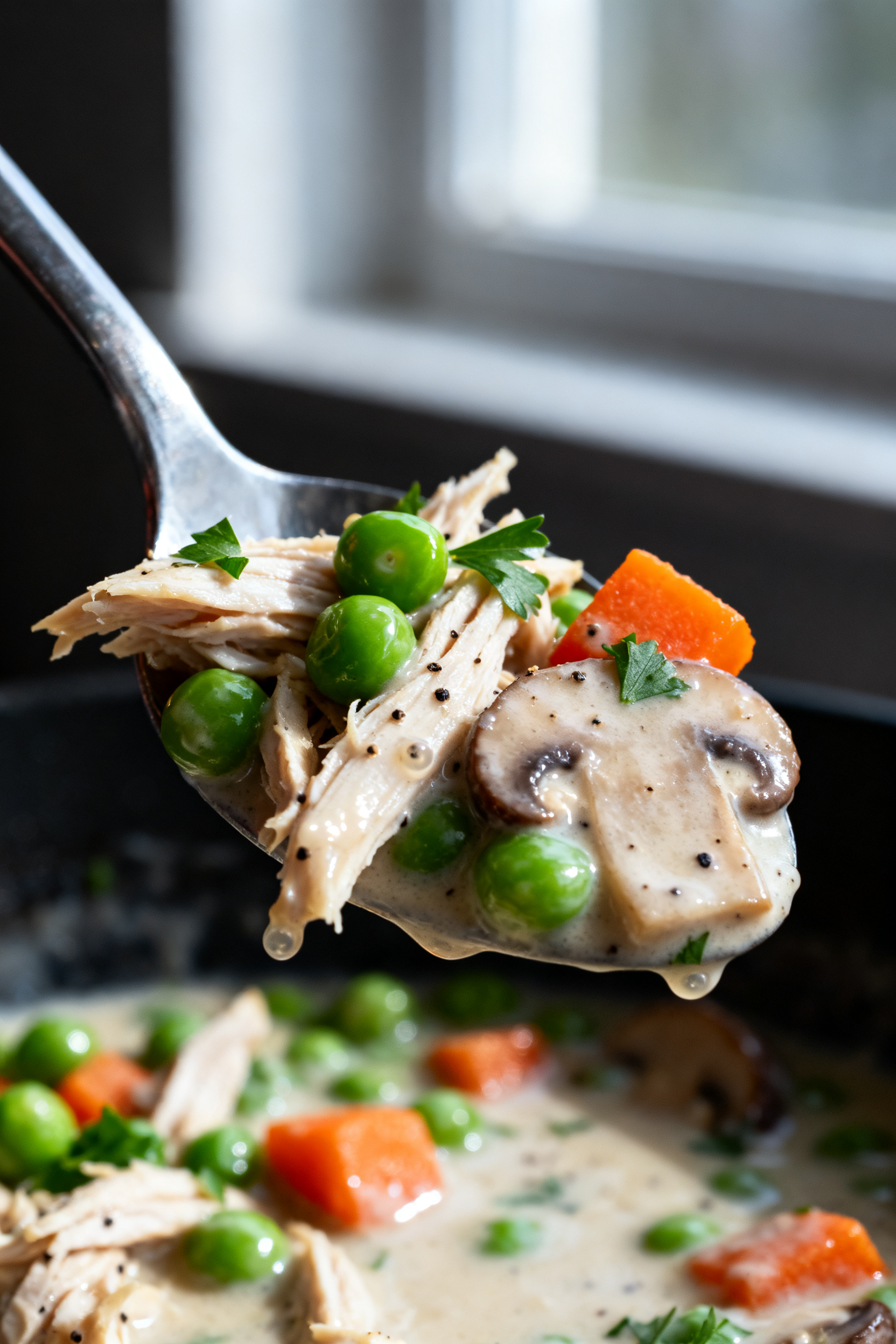
- Add chicken and peas: Fold in shredded rotisserie chicken and frozen peas.
Simmer 3–5 minutes, until the chicken is heated through and the sauce is creamy. If it’s too thick, splash in more broth or milk.
- Taste and finish: Taste and season with more salt and pepper if needed. Stir in fresh parsley or chives.
Squeeze a little lemon over the top for brightness, if you like.
- Serve: Spoon the creamy chicken and vegetables over rice, buttered noodles, or mashed potatoes, or serve with crusty bread to soak up the sauce.
Keeping It Fresh
- Storage: Cool leftovers, then transfer to an airtight container. Refrigerate for up to 3 days.
- Reheat gently: Warm on the stove over low heat with a splash of broth or milk to loosen the sauce. Avoid boiling, which can cause separation.
- Freezing: You can freeze it for up to 2 months.
The sauce may separate slightly after thawing; whisk in a bit of warm broth to bring it back together.
- Meal prep tip: Store the sauce and starch separately. Combine when serving to keep textures at their best.
Benefits of This Recipe
- Time-saving: Uses pre-cooked chicken to cut dinner time in half.
- Budget-friendly: Stretches one rotisserie bird into multiple meals.
- Nutrient-dense: Includes vegetables, lean protein, and a moderate, wholesome sauce.
- Customizable for diets: Easy swaps for gluten-free, dairy-free, or low-carb preferences.
- Comfort food factor: Classic flavors that feel cozy without being heavy.
Common Mistakes to Avoid
- Overcooking the chicken: It’s already cooked. Warm it through at the end to keep it tender.
- Skipping the roux step: Cooking the flour for a minute prevents a pasty taste and ensures a silky sauce.
- Adding all the liquid at once: Pour broth in slowly while stirring to avoid lumps.
- Not seasoning in layers: Lightly season the vegetables first, then adjust after adding the sauce and chicken.
- Too high heat: A rolling boil can split dairy.
Keep it to a gentle simmer.
Recipe Variations
- Chicken Pot Pie Skillet: Pour the mixture into a pie dish, top with puff pastry, and bake at 400°F until golden and bubbly, about 20 minutes.
- Taco Night: Swap thyme for chili powder and cumin. Use corn, black beans, and a squeeze of lime. Serve in warm tortillas with avocado.
- Lemon Herb Orzo: Stir in cooked orzo, extra lemon zest, and fresh dill.
Finish with grated Parmesan.
- Mushroom and Spinach: Add more mushrooms and fold in a few handfuls of baby spinach at the end until wilted.
- Dairy-Free: Use olive oil, skip the milk, and add a splash of coconut milk or more broth thickened with a cornstarch slurry.
- Gluten-Free: Replace flour with 1 tablespoon cornstarch mixed with 2 tablespoons cold water. Stir into the simmering broth until thickened.
- Spicy Cajun: Season with Cajun spice, add bell peppers, and finish with hot sauce.
- Vegetable Boost: Toss in leftover roasted veggies like broccoli, cauliflower, or butternut squash.
FAQ
Can I use dark meat and white meat together?
Yes. A mix of both gives the best texture and flavor.
Dark meat adds richness, while white meat keeps it light.
What if I don’t have milk or cream?
Use extra chicken broth and thicken slightly more with flour or a cornstarch slurry. For creaminess, a spoonful of cream cheese or plain Greek yogurt (off the heat) also works.
How do I prevent the sauce from turning grainy?
Cook the flour for a full minute, add liquid slowly while whisking, and keep the heat at a simmer—not a boil—once dairy is in.
Can I make this ahead?
Yes. Cook the sauce and vegetables, cool, and refrigerate.
Reheat gently and stir in the chicken and peas right before serving to keep the chicken tender and the peas bright.
What can I serve this with?
Rice, buttered egg noodles, mashed potatoes, polenta, or toasted sourdough are all great. For a lighter option, serve over steamed green beans or zucchini noodles.
How do I stretch this for a crowd?
Add a can of white beans or chickpeas, extra veggies, and a bit more broth. Serve over a hearty starch to make it go further.
Is rotisserie chicken skin useful here?
If it’s still crisp, chop it and sprinkle on top for texture.
If it’s soft, skip it in the sauce or crisp it in a skillet and use as a garnish.
Final Thoughts
Leftover rotisserie chicken doesn’t have to be an afterthought. With a handful of pantry staples and a single skillet, you can make a comforting, complete dinner in minutes. Keep the method the same, then tweak the seasonings and add-ins to match your mood.
It’s simple, flexible, and exactly what busy evenings call for—good food without the fuss.
Printable Recipe Card
Want just the essential recipe details without scrolling through the article? Get our printable recipe card with just the ingredients and instructions.