
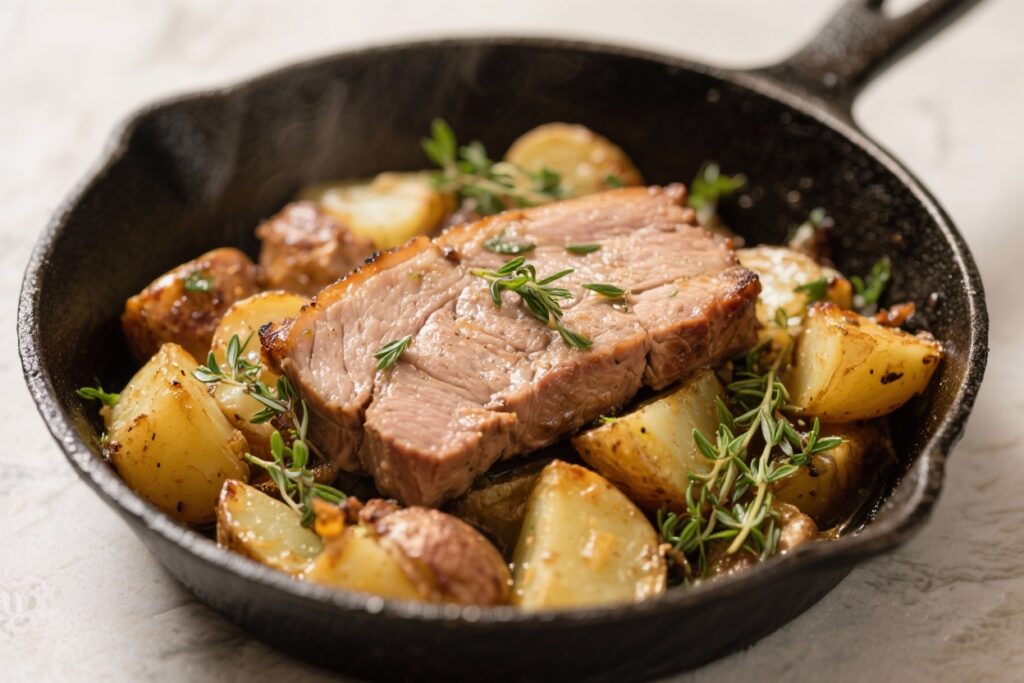
You know that pork tenderloin chilling in the fridge, waiting to become a sad sandwich? Not today. This skillet flips leftovers into a golden, herb-crusted, crispy-potato miracle in under 30 minutes.
It’s the weeknight power move: one pan, big flavor, zero drama. Your family thinks you planned it; you know it’s just smart ops. Let’s turn leftovers into leverage.
Why This Recipe Works
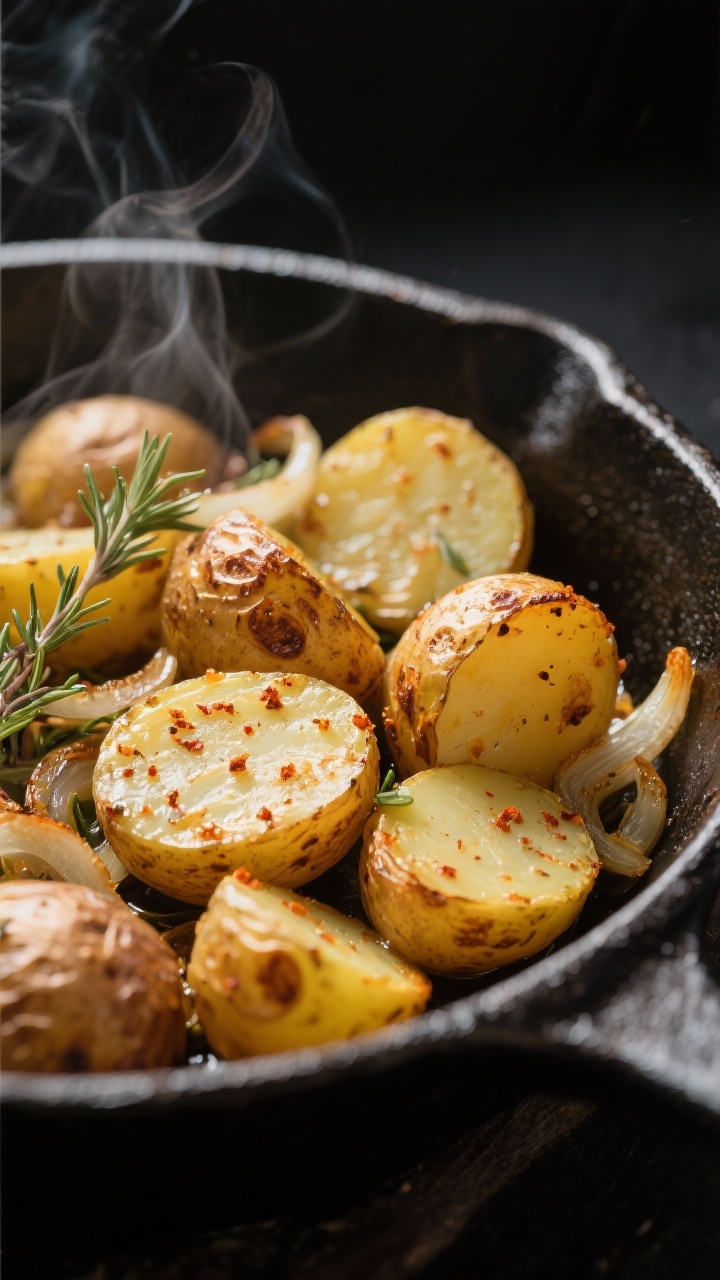
This skillet is all about building layers of flavor fast. Par-cooked potatoes crisp up beautifully and create the foundation for the pork to reheat gently without drying out. Fresh herbs and garlic punch up the richness of the meat and add brightness to every bite.
A quick lemon-butter finish brings everything together, balancing savory with a pop of acidity. It’s a one-pan solution that respects your time and your taste buds.
Ingredients
- 2 cups leftover pork tenderloin, sliced into 1/2-inch medallions or bite-size pieces
- 1.5 pounds baby potatoes (Yukon gold or red), halved
- 1 small yellow onion, thinly sliced
- 2 cloves garlic, minced
- 2 tablespoons olive oil
- 1 tablespoon unsalted butter
- 1/2 cup low-sodium chicken broth (or water)
- 1 teaspoon Dijon mustard
- 1 teaspoon fresh lemon zest
- 1 tablespoon fresh lemon juice
- 1 teaspoon smoked paprika
- 1/2 teaspoon dried thyme (or 1 teaspoon fresh, chopped)
- 1 tablespoon fresh rosemary, chopped
- 2 tablespoons fresh parsley, chopped
- Salt and freshly ground black pepper, to taste
- Optional: 1/4 teaspoon red pepper flakes for heat
- Optional garnish: grated Parmesan or crumbled feta
Instructions
- Par-cook the potatoes: Place the halved potatoes in a skillet with the chicken broth and a pinch of salt. Cover and simmer over medium heat for 6–8 minutes until just tender and the liquid is mostly evaporated.
- Crisp the edges: Add 1 tablespoon olive oil to the skillet.
Increase heat to medium-high and cook potatoes cut-side down for 3–4 minutes until golden and crisp. Transfer to a plate.
- Sauté aromatics: In the same skillet, add the remaining 1 tablespoon olive oil. Add onion and a pinch of salt; cook 3–4 minutes until softened and lightly caramelized.
Stir in garlic, smoked paprika, thyme, and red pepper flakes (if using); cook 30 seconds until fragrant.
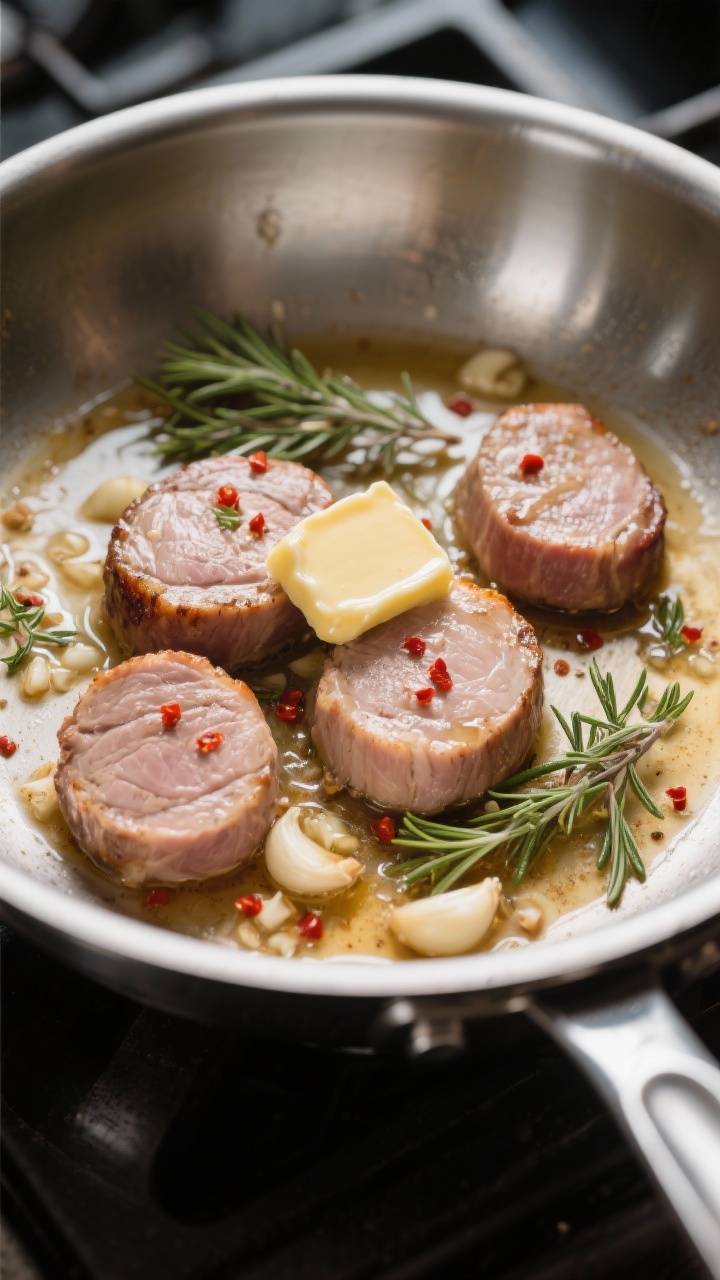
- Warm the pork, don’t ruin it: Add leftover pork to the skillet with the butter and 1–2 tablespoons water. Toss gently and warm over medium heat for 2–3 minutes. Do not overcook; you’re reheating, not searing into oblivion.
- Herb and lemon boost: Return potatoes to the pan. Stir in Dijon, lemon zest, and lemon juice.
Sprinkle in rosemary and half the parsley. Toss everything until coated and glossy. Season with salt and pepper to taste.
- Finish and serve: Kill the heat.
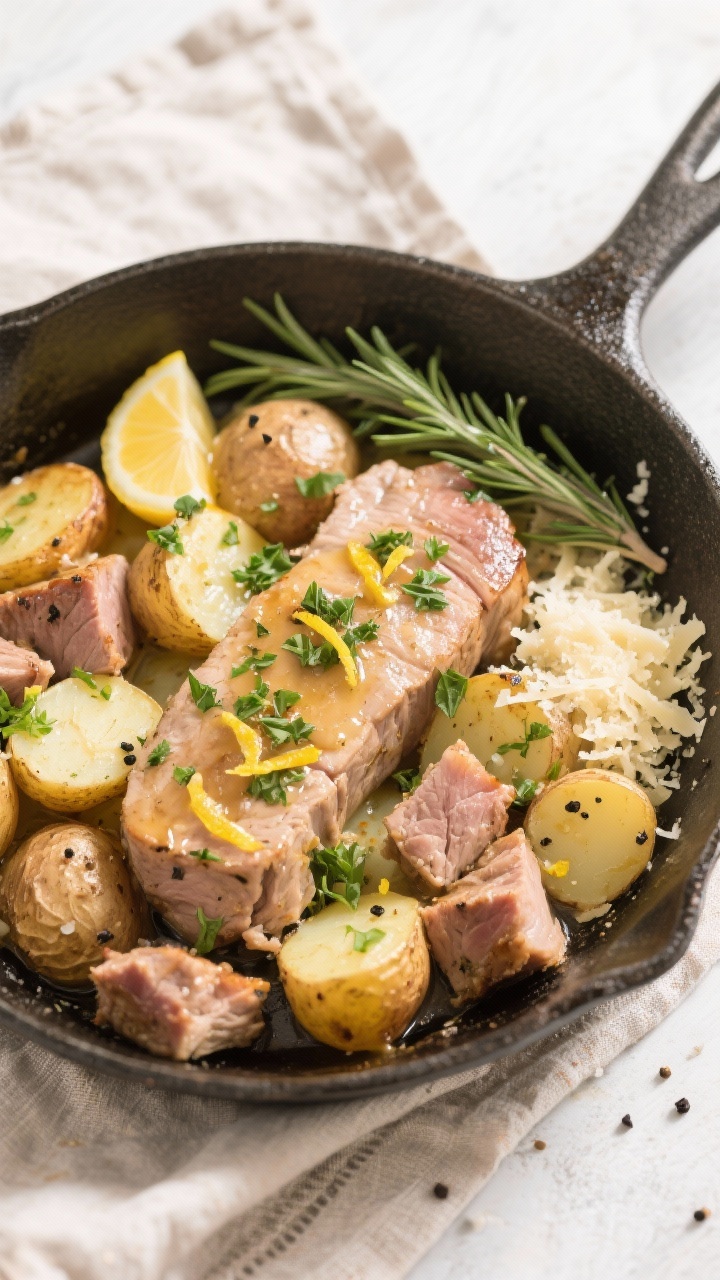
Top with remaining parsley and, if you like, a light shower of Parmesan or feta. Serve hot straight from the skillet like a champion.
Storage Instructions
- Refrigerator: Store leftovers in an airtight container for up to 3 days. Reheat gently in a skillet with a splash of water or broth to keep it moist.
- Freezer: You can freeze for up to 2 months, but potatoes may soften.
If freezing, cool completely and portion into freezer-safe bags.
- Reheating tips: Skillet over microwave. If using a microwave, cover and use 50% power to avoid drying the pork.
Health Benefits
This dish hits a smart macro split with lean protein from pork tenderloin and complex carbs from potatoes for sustained energy. The herbs—rosemary, thyme, and parsley—bring antioxidant benefits and anti-inflammatory compounds.
Olive oil provides heart-healthy monounsaturated fats, while lemon adds vitamin C to support iron absorption from the meat. Keep the butter modest, and you’ve got a balanced, satiating meal that doesn’t feel like “leftovers.”
Avoid These Mistakes
- Overcooking the pork: Warm it just until heated. More heat equals dry, sad meat.
Don’t do that to yourself.
- Skipping the par-cook step: Raw potatoes take forever. Par-cooking guarantees crisp outsides and tender centers.
- Drowning it in liquid: This is a skillet meal, not soup. Use minimal broth to steam and deglaze—then reduce.
- Too much lemon or mustard: Balance is key.
Start with the listed amounts; add more after tasting.
- Neglecting salt and pepper: Season in layers—potatoes, onions, finish. The difference is night and day, IMO.
Alternatives
- Veg swaps: Sub potatoes with sweet potatoes, cauliflower florets, or canned chickpeas (drained and dried).
- Herb variations: Try sage and chives, or a dash of Italian seasoning if your herb drawer is on vacation.
- Sauce twist: Swap lemon-Dijon for a splash of balsamic and a dab of honey for a sweet-savory glaze.
- Spice profile: Go cumin and coriander for a warm, earthy vibe, or add a spoon of harissa for heat.
- Add greens: Toss in baby spinach or kale in the last minute for extra color and nutrients.
- Make it dairy-free: Skip the butter and cheese; add a drizzle of extra olive oil at the end.
FAQ
Can I make this with leftover pork chops or roast?
Yes. Thinly slice and proceed as written.
Adjust warming time to avoid overcooking—chops and roast can dry out even faster than tenderloin.
Do I need to peel the potatoes?
Nope. Baby potatoes with skins on crisp better and add fiber. If using russets, peel them unless you like rustic vibes and a slightly different texture.
What if I don’t have fresh herbs?
Use dried: 1/2 teaspoon each dried rosemary and thyme, added with the onions and garlic.
Finish with a splash of lemon to brighten the dried herbs.
How do I scale this for a crowd?
Double the ingredients but cook the potatoes in batches so they crisp, not steam. Combine everything in a large skillet or Dutch oven at the end with the lemon-butter finish.
Can I make it spicy?
Yes—add red pepper flakes with the garlic or a teaspoon of hot sauce when you stir in the Dijon. You’re the boss of your heat.
What’s the best pan for this?
A large stainless steel or cast-iron skillet works best for browning.
Nonstick is okay, but you’ll get less color on the potatoes.
Is there a gluten-free version?
This recipe is naturally gluten-free. Just confirm your Dijon and broth are certified GF, and you’re good.
Final Thoughts
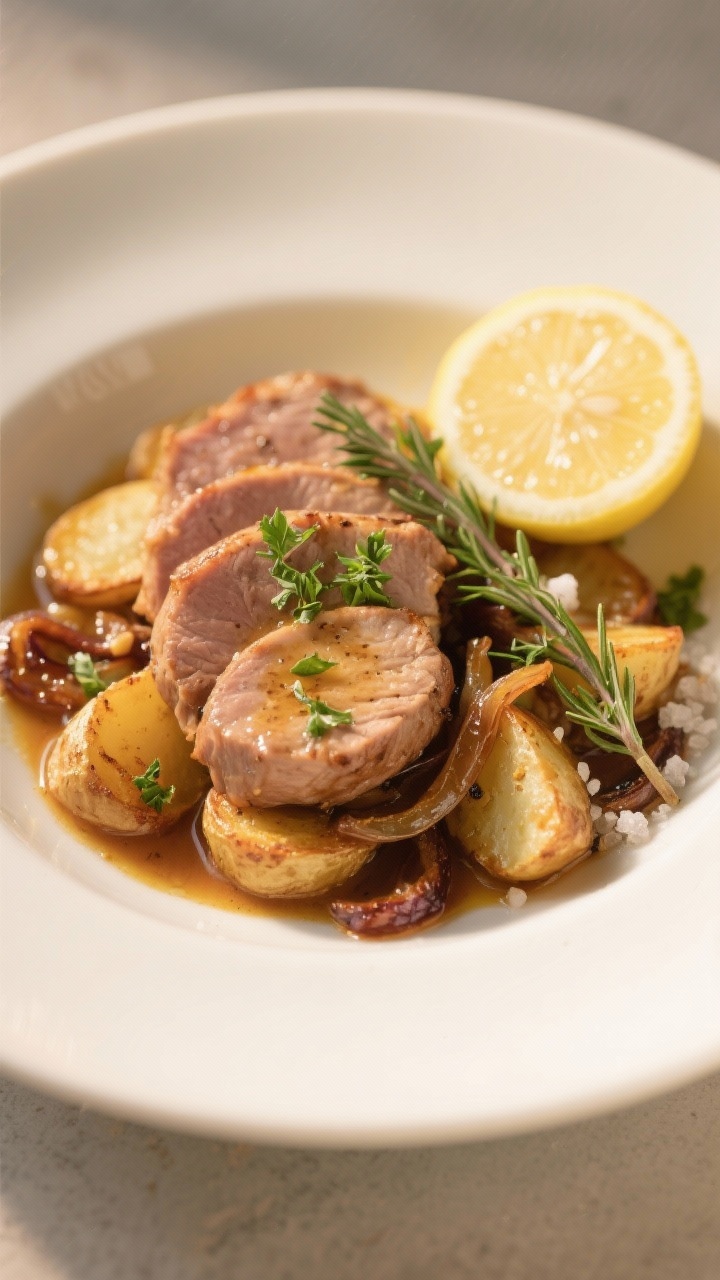
Leftovers aren’t a punishment—they’re a shortcut. This Leftover Pork Tenderloin Skillet with Potatoes and Herbs gives you crispy edges, herby brightness, and a glossy finish that tastes like you planned it all week.
It’s fast, flexible, and ridiculously satisfying. FYI: once you make it, you’ll start cooking extra pork on purpose—because tomorrow’s dinner deserves to be this easy.
Printable Recipe Card
Want just the essential recipe details without scrolling through the article? Get our printable recipe card with just the ingredients and instructions.