
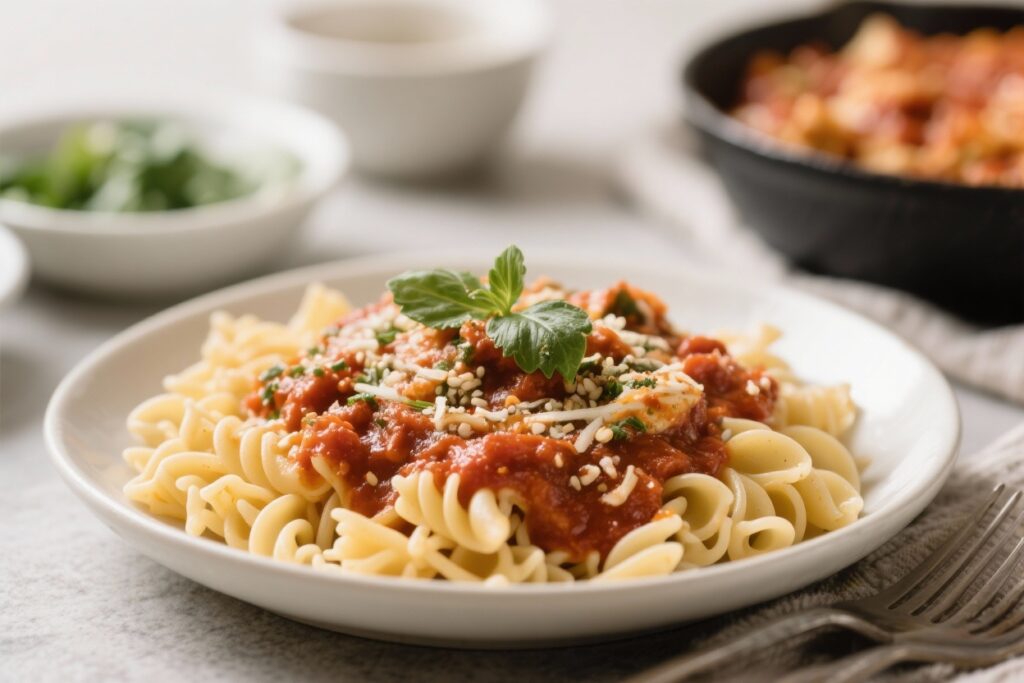
You don’t need a chef’s pantry to win dinner—you need speed, taste, and a zero-waste mindset. That half jar of marinara? Gold.
Those roasted veggies from two nights ago? VIPs. Tonight, we’re flipping leftovers into sauces so good you’ll swear you planned them.
Minimal effort, maximum flavor, and no shame in the “I just threw this together” game. If time’s tight and your fridge is a mystery box, this is your new playbook.
Why This Recipe Works

- Leftovers amplify flavor: Cooked ingredients like roasted veggies or grilled chicken already have caramelization and seasoning, making your sauce taste richer with less effort.
- One pan, low stress: You’re building sauces on a base of aromatics and fat—simple, scalable, and fast.
- Flexible and forgiving: Whether you’ve got tomato sauce, cream, or just olive oil and Parmesan, there’s a pathway to delicious.
- Budget- and time-friendly: You’ll use what you have, stretch portions, and get dinner on the table in 15–20 minutes. Win-win.
Ingredients Breakdown
Use what you’ve got—this is a choose-your-own-adventure.
Below are the common building blocks with options:
- Base fats: Olive oil, butter, leftover bacon fat, or ghee.
- Aromatics: Garlic, onion, shallots, scallions, or leeks.
- Leftover sauces: Marinara, pesto, Alfredo, vodka sauce, arrabbiata, or even salsa (yes, really).
- Protein (optional): Cooked chicken, sausage, meatballs, shrimp, tofu, or beans.
- Veggie add-ins: Roasted peppers, mushrooms, spinach, zucchini, tomatoes, peas, or mixed roasted veg.
- Liquids: Pasta water, broth, cream, milk, coconut milk, or a splash of wine.
- Cheese: Parmesan, Pecorino, ricotta, goat cheese, cream cheese, or mozzarella.
- Acid + heat: Lemon juice, balsamic, red wine vinegar, chili flakes, hot sauce.
- Herbs + extras: Basil, parsley, thyme, oregano, capers, olives, sun-dried tomatoes, anchovies.
- Cooked pasta: Any shape. FYI, short shapes hold chunky sauces better; long noodles love silky ones.
Let’s Get Cooking – Instructions
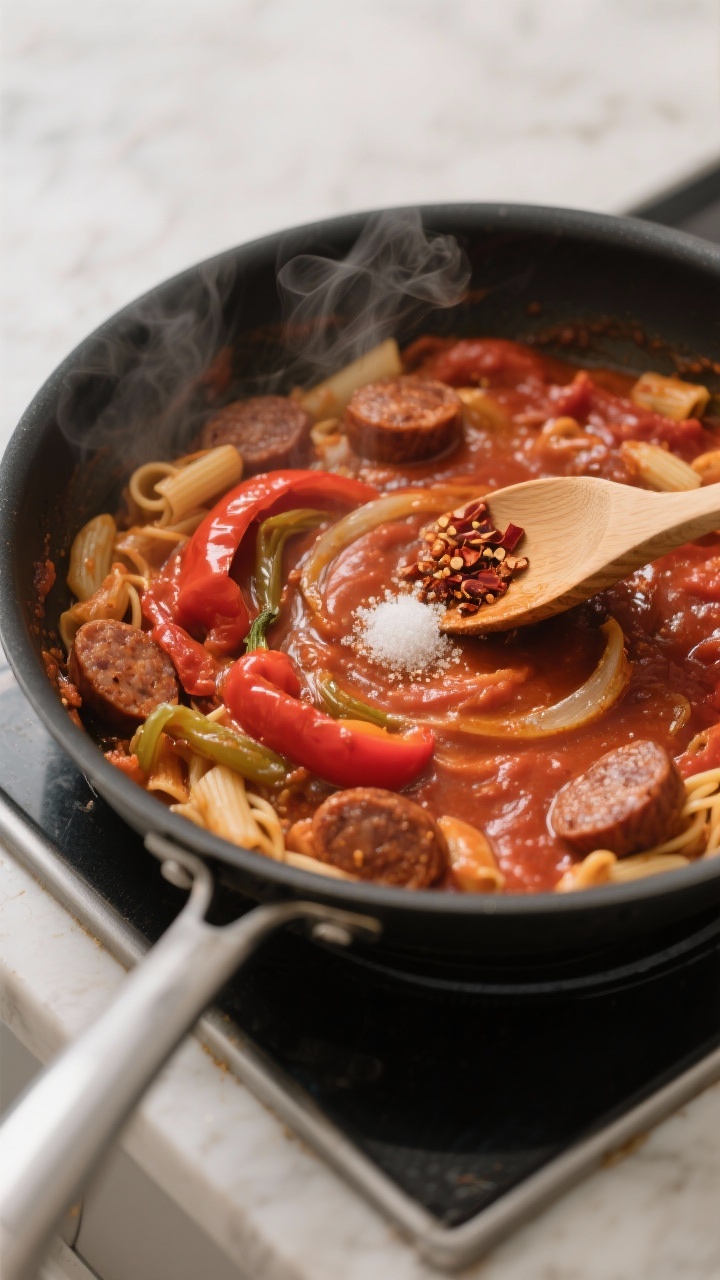
- Warm your base fat: Heat 1–2 tablespoons olive oil or butter in a large skillet over medium. If using bacon or sausage, render the fat first and use it.
Flavor = free.
- Sauté aromatics: Add minced garlic and chopped onion/shallot. Cook 1–3 minutes until fragrant. Don’t burn the garlic unless you enjoy bitterness (you don’t).
- Add leftovers: Toss in your cooked veggies and/or proteins.
Warm through and let the edges caramelize slightly for deeper flavor.
- Choose your sauce style:
- Tomato-based: Stir in leftover marinara. Thin with a splash of broth or pasta water. Add chili flakes and a pinch of sugar if too tangy.
- Creamy: Add cream or milk.
Melt in cream cheese or ricotta for body. Season generously with salt, pepper, and nutmeg (just a pinch).
- Oil + cheese (aglio e olio-style): Add more olive oil, chili flakes, and finish with lots of Parmesan and pasta water for emulsion.
- Pesto remix: Loosen leftover pesto with pasta water or olive oil; add a squeeze of lemon for brightness.
- Emulsify like a pro: Add 1/4–1/2 cup hot pasta water and stir vigorously. The starch helps the sauce cling and turn glossy.
Science, but tasty.
- Season and spike: Add salt, pepper, lemon juice, or vinegar to balance. Taste again. Then taste again.
Adjust heat with chili flakes or hot sauce.
- Toss in pasta: Add cooked pasta to the pan. Cook 1–2 minutes, tossing to coat and let the sauce thicken. If dry, add another splash of pasta water.
- Finish strong: Off heat, add grated Parmesan, a knob of butter, and fresh herbs.
The butter makes it silkier; the herbs make it feel fancy.
- Optional crunch: Top with toasted breadcrumbs or crushed nuts. Texture equals “wow, what restaurant is this?”
How to Store
- Fridge: Store sauce (or sauced pasta) in an airtight container for 3–4 days. Add a splash of water or milk when reheating to loosen.
- Freezer: Tomato and pesto-based sauces freeze well for up to 3 months.
Cream sauces freeze okay but can separate—blend or whisk when reheating.
- Reheat: Warm gently in a skillet over low heat, adding pasta water, broth, or milk as needed. Avoid microwaving cream sauces on high (curdling risk).
Health Benefits
- Less waste, more nutrients: Using leftover roasted veggies means you’re getting fiber, antioxidants, and flavor with zero extra effort.
- Protein packed: Adding chicken, beans, or tofu keeps you full longer and supports recovery after a long day (or workout, if you’re that person).
- Healthy fats: Olive oil and nuts contribute heart-healthy monounsaturated fats, which is always a flex.
- Portion control: Saucing pasta in the pan lets you manage ratios and avoid over-saucing (or under—no dry pasta on our watch).
Common Mistakes to Avoid
- Skipping pasta water: It’s liquid gold. Without it, your sauce won’t cling and may taste flat.
- Overheating cream: Boiling dairy can cause splitting.
Keep it gentle—think simmer, not volcano.
- Under-seasoning: Leftovers vary. Taste with salt, acid, and heat at the end. Bland is fixable; boring is not.
- Adding cheese too early: Cheese can seize or clump if the sauce’s too hot.
Stir it in off heat for silky results.
- Throwing everything in at once: Layer flavors: fat, aromatics, leftovers, sauce, pasta water, then finishers. Order matters.
Recipe Variations
- Spicy Rosé Rigatoni: Combine leftover marinara with a splash of cream and chili flakes. Add roasted peppers and sausage.
Finish with Parmesan and basil.
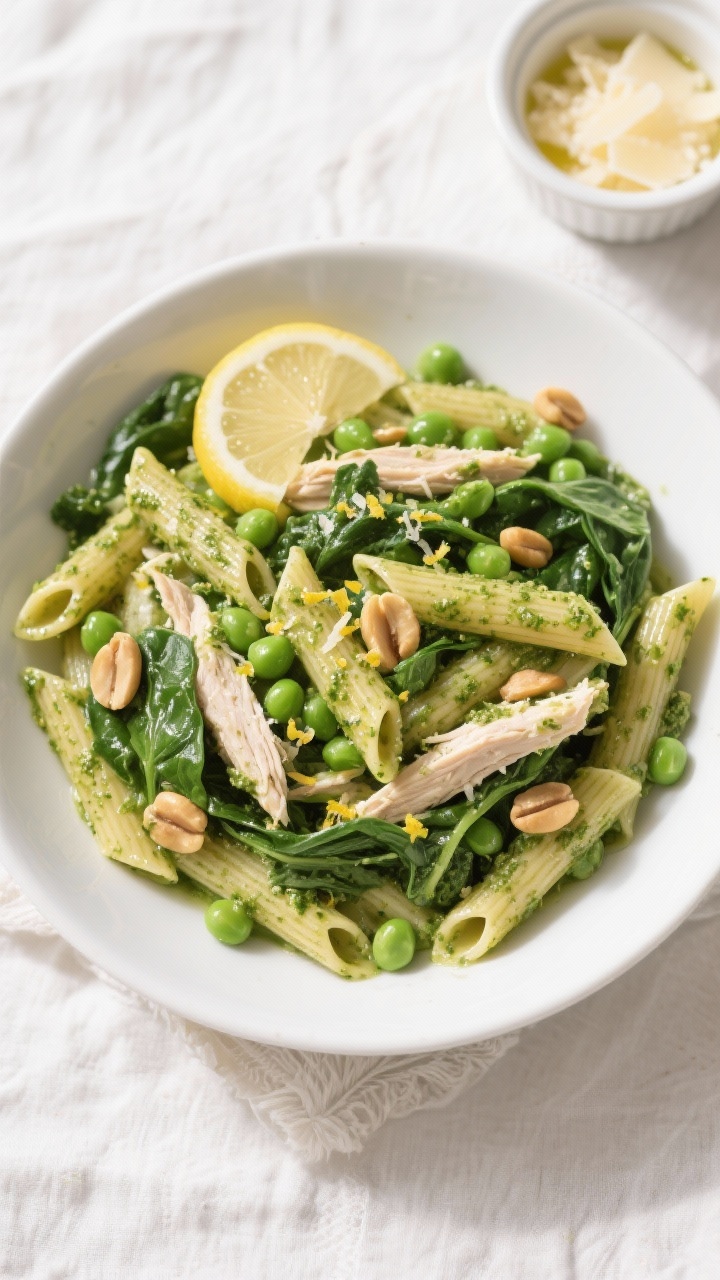
- Lemony Pesto Primavera: Loosen pesto with pasta water and olive oil. Fold in peas, spinach, and leftover chicken. Finish with lemon zest and toasted pine nuts.
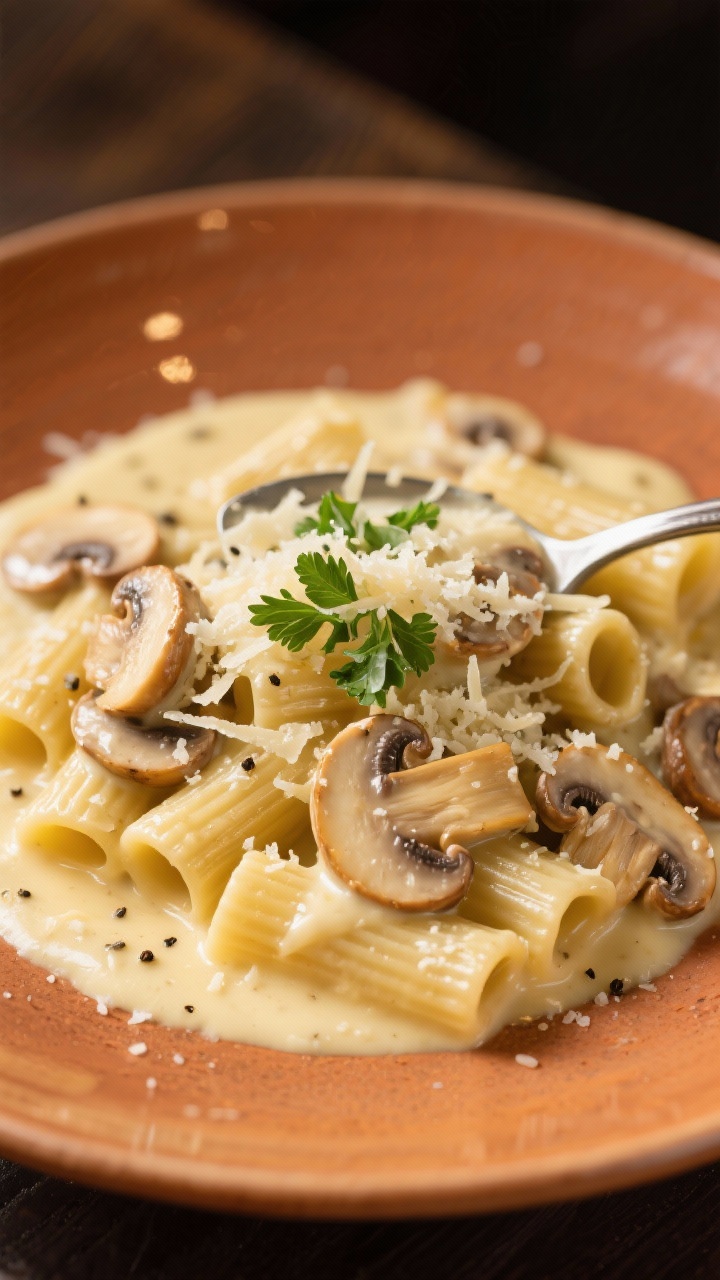
- Mushroom Garlic Alfredo: Sauté mushrooms in butter, add garlic, splash of white wine, then cream.
Stir in Parmesan and cracked pepper. Cozy, restaurant-level vibes.
- Salsa Verde Shrimp Toss: Warm salsa verde with a splash of cream or coconut milk. Add cooked shrimp and corn.
Top with cilantro and a squeeze of lime. Unexpected? Yes.
Delicious? Also yes.
- Putanesca-ish Shortcut: Leftover tomato sauce + olives + capers + anchovies + chili flakes. Briny, bold, and done fast.
- Veggie Bolognese Hack: Pulse roasted veggies in a processor, then simmer with marinara and a bit of broth.
Thick, hearty, and sneaky-healthy.
FAQ
Can I make this without any leftover sauce?
Yes. Use olive oil, garlic, and pasta water as your base, then add cheese and herbs. A squeeze of lemon and a pat of butter at the end makes it taste intentional, not improvised.
What if my sauce is too thick?
Add more hot pasta water or broth, a little at a time, and stir.
The goal is glossy and clinging—not gloopy. Keep it moving in the pan.
How do I fix a sauce that’s too acidic?
Add a pinch of sugar or a knob of butter to mellow it out. Cream, ricotta, or mascarpone also help balance sharp tomato sauces.
Can I use gluten-free or veggie noodles?
Totally.
Chickpea, lentil, or zucchini noodles work. If you’re missing the starch from pasta water, add a teaspoon of cornstarch slurry to help the sauce cling.
Is it safe to reheat leftovers more than once?
Ideally, reheat only what you’ll eat. Repeated reheating can dry things out and affect food safety.
Store in single-serve containers for convenience, IMO.
What herbs are best at the end?
Basil, parsley, and chives shine when added off heat. Woody herbs like thyme and rosemary should be cooked earlier so they mellow out.
Can I make it dairy-free?
Yes—use olive oil, broth, and pasta water for body. For creaminess, try coconut milk or a spoon of tahini, then finish with nutritional yeast for cheesy vibes.
Wrapping Up
Easy Leftover Pasta Sauce Recipes for Busy Weeknights isn’t a single recipe—it’s a system.
You’re leveraging what’s already cooked to build big flavor fast, saving money and time without sacrificing taste. Start with fat and aromatics, layer in your leftovers, choose a sauce path, and emulsify with pasta water. Finish with acid, herbs, and cheese, and pat yourself on the back.
Dinner? Handled. Your fridge just became your secret weapon.
Printable Recipe Card
Want just the essential recipe details without scrolling through the article? Get our printable recipe card with just the ingredients and instructions.