
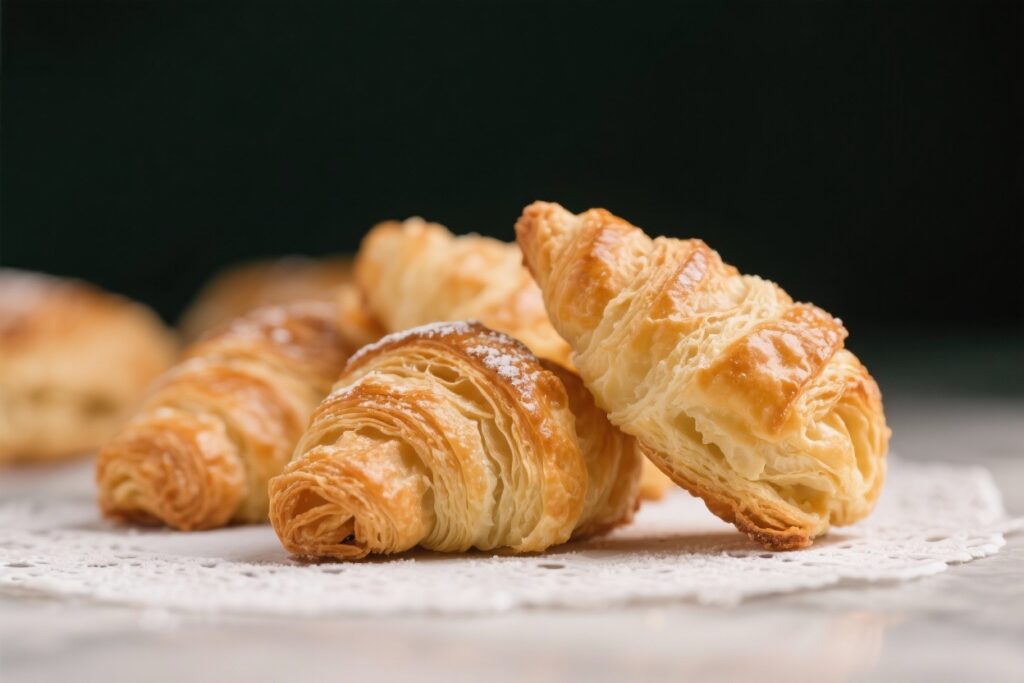
Forget croissants. Sfogliatelle are the pastry equivalent of a mic drop—crisp, layered shells that shatter like glass and reveal a citrusy, creamy ricotta center. They look impossible, but with a little patience and a rolling pin, you’ll bake something your nonna would flex on Instagram.
And the payoff? Buttery crunch, fragrant orange zest, and a texture that makes your coffee feel underdressed. Ready to level up your pastry game without a culinary school tuition?
What Makes This Special

Sfogliatelle—Naples’ crown jewel—combine two contrasting textures: ultra-crisp layers outside with warm, creamy semolina-ricotta inside.
The dough is rolled paper-thin, laminated with fat, and shaped into seashells that puff and crisp in the oven. The filling is perfumed with orange zest, vanilla, and cinnamon—like cannoli’s sophisticated cousin. It’s a bake that commands attention, yet it’s surprisingly doable at home with a few pro moves.
Shopping List – Ingredients
- For the dough:
- 2 1/2 cups (300 g) all-purpose flour
- 1/2 tsp fine sea salt
- 3/4 cup (180 ml) warm water
- 2 tbsp granulated sugar
- 2 tbsp unsalted butter, softened (for the dough)
- 1/2 cup (115 g) lard or unsalted butter, very soft (for laminating)
- For the filling:
- 1/2 cup (90 g) fine semolina
- 1 cup (240 ml) whole milk
- 1 cup (250 g) ricotta, well-drained
- 1/2 cup (100 g) granulated sugar
- 1 large egg
- Zest of 1 orange (preferably organic)
- 1 tsp vanilla extract
- 1/2 tsp ground cinnamon
- Pinch of salt
- Optional: 1/3 cup (50 g) candied orange peel, finely chopped
- For finishing:
- Powdered sugar, for dusting
Cooking Instructions
- Make the dough: In a bowl, mix flour, salt, sugar.
Add warm water and 2 tbsp softened butter. Knead until smooth and elastic, about 8–10 minutes by hand. The dough should be supple, not sticky.
Wrap and rest 30 minutes.
- Prep the lamination fat: If using lard, let it come to very soft, spreadable consistency. If using butter, beat it until creamy. You want it easily spreadable without melting.
- Roll the dough thin: Divide dough into two pieces.
Using a pasta machine or rolling pin, roll each piece into a long, very thin sheet—nearly translucent. Aim for at least 3 feet (90 cm) long if you can. Pro tip: Lightly flour only as needed to prevent sticking.
- Laminate into a log: Brush the sheet lightly with the soft lard/butter.
Roll it tightly like a jelly roll, stretching gently as you roll to keep tension. Repeat with the second sheet, wrapping it around the first log to grow the spiral. Coat the outside with a little fat.
Wrap and chill 1–2 hours to firm up.
- Cook the semolina base: In a saucepan, heat milk to simmer. Rain in semolina while whisking. Cook 2–3 minutes until thick and smooth.
Transfer to a plate, spread thin to cool faster.
- Make the filling: In a bowl, whisk ricotta, sugar, egg, orange zest, vanilla, cinnamon, and salt until smooth. Stir in cooled semolina and optional candied peel. The mixture should be thick yet spoonable.
Chill 30 minutes.
- Cut the dough slices: Remove dough log from fridge. Slice into 1/2-inch (1.25 cm) discs. Keep slices covered so they don’t dry out.
- Form the shells: Take one disc and press the center with your thumbs while rotating, gently pushing outward to expand the layers into a cone or seashell shape.
Do not flatten—coax it. If it resists, let it warm slightly and try again.
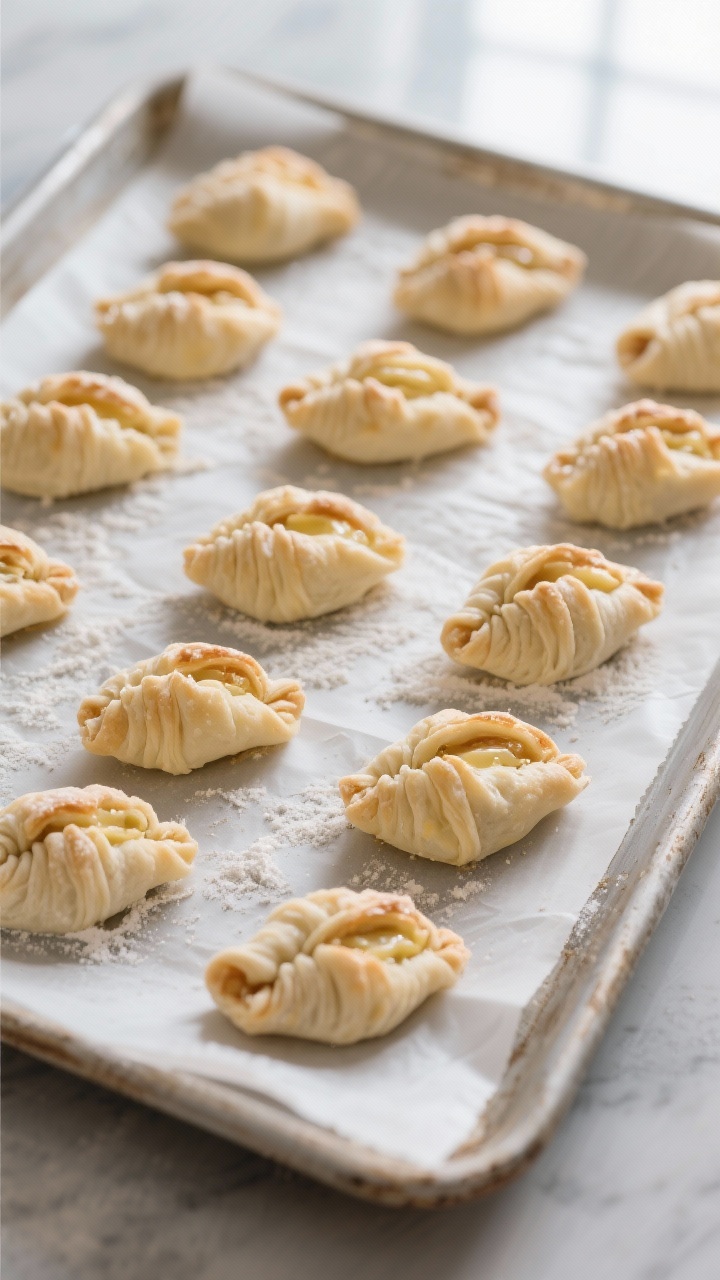
- Fill and seal: Spoon 1–2 teaspoons of filling into the cavity—don’t overfill. Pinch the open edge closed to create the classic shell silhouette.
Place on a parchment-lined tray. Repeat with remaining pieces.
- Chill briefly: Refrigerate the formed pastries 20–30 minutes to help them keep their shape in the oven.
- Bake: Preheat oven to 400°F (200°C). Arrange sfogliatelle with space between.
Bake 20–25 minutes until deeply golden and crisp, rotating the tray once. They should look puffed and flaky with visible layers.
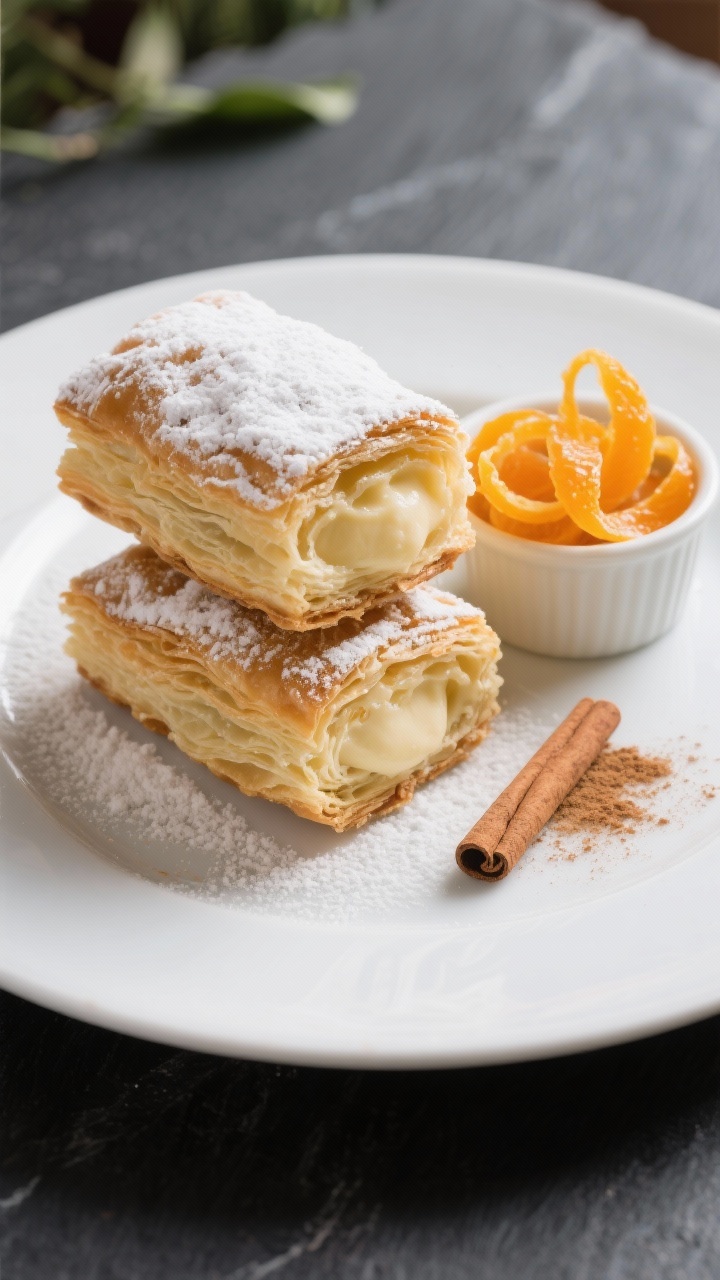
- Finish: Cool slightly, dust generously with powdered sugar, and serve warm. Cue applause.
Preservation Guide
- Room temperature: Best the day they’re baked.
Keep in an airtight container up to 24 hours; re-crisp at 350°F (175°C) for 5–7 minutes.
- Refrigeration: Filled, baked sfogliatelle can be refrigerated for 2 days, but the crust softens. Always reheat to revive the crunch.
- Freezing (recommended for make-ahead): Freeze formed, unbaked pastries on a tray, then store in a bag up to 1 month. Bake from frozen at 400°F (200°C) for 25–28 minutes.
- Filling storage: Keep leftover ricotta filling covered in the fridge up to 2 days.
Stir before using.
Health Benefits
- Protein from ricotta: Ricotta offers a decent protein hit and contains calcium for bone health.
- Portion-friendly energy: These are rich, so one pastry delivers satisfying carbs and fats—great with coffee as a treat, not a meal plan.
- Orange zest antioxidants: Citrus zest adds flavonoids and fragrance without extra sugar.
- Customization potential: You can reduce sugar slightly or use part-skim ricotta to moderate calories, IMO without crashing flavor.
Avoid These Mistakes
- Rushing the rest times: Warm dough won’t hold layers. Chill the log and the filled shells as directed.
- Over-flouring the dough: Too much flour while rolling prevents the layers from fusing. Use just enough to prevent sticking.
- Overfilling: If the filling leaks, the shell won’t puff right.
Less is more.
- Using cold, hard fat for lamination: It must be soft and spreadable. Hard fat causes tears; melted fat makes greasy layers.
- Skipping the thin roll: The drama comes from wafer-thin layers. Get that sheet as long and thin as your counter allows—no shortcuts.
Different Ways to Make This
- Riccia (classic) vs.
Frolla:
This recipe is the layered sfogliatella riccia. For frolla, use a shortcrust dough with the same filling—easier, softer, less flaky, still delicious. - Chocolate twist: Add mini chocolate chips to the filling and a whisper of espresso powder. Naples meets mocha.
- Pistachio upgrade: Fold in finely ground pistachios and swap orange zest for lemon.
Finish with pistachio dust after baking.
- Candied citrus deluxe: Use both orange and lemon peel, plus a few drops of orange blossom water for a bakery-level aroma.
- Savory riff (non-traditional): Ricotta, pecorino, black pepper, and chopped spinach. Skip the sugar and cinnamon. FYI, purists might gasp.
FAQ
Can I use store-bought puff pastry?
No.
Puff pastry is a different structure and won’t give the signature shell layers. It’ll taste fine, but it won’t be sfogliatelle.
Is lard mandatory?
No, but it yields the crispiest result. Unsalted butter works well; just keep it very soft for spreading.
Flavor will be slightly different but still excellent.
My dough won’t stretch into a cone. What now?
Let the slices warm for 5 minutes and try again with gentle, even pressure from the center outward. If the layers separate, your fat may have been too firm—adjust next round.
Why is my filling grainy?
Semolina needs to cook fully and cool before mixing with ricotta.
Also, drain ricotta well to avoid watery, curdled texture.
Can I make them ahead for a party?
Yes. Form and freeze unbaked shells on a tray. Bake straight from frozen the day of—no one will know you prepped ahead, except your freezer.
What size should they be?
About 3–4 inches long after shaping is standard.
Smaller bakes faster and looks cute; larger needs more filling control.
Do I need a pasta machine?
Helpful, not required. A rolling pin and patience work. Roll, rest, roll again to achieve translucency without tearing.
The Bottom Line
Sfogliatelle are the pastry that says, “Yes, I bake—and I mean it.” With thinly rolled dough, a citrus-kissed ricotta filling, and smart chilling, you’ll pull a tray of golden shells that snap and sigh at first bite.
It’s craftsmanship you can taste, a little dramatic, and totally worth the effort. Bake a batch, dust with sugar, and accept your compliments like a pro.
Printable Recipe Card
Want just the essential recipe details without scrolling through the article? Get our printable recipe card with just the ingredients and instructions.